A Quiet Star from Korea's Coastal Waters
So here's a question: when people around the world talk about Korean food, they usually go straight to kimchi, bibimbap, or Korean BBQ. But what about the foods that have been quietly sustaining Korean coastal communities for centuries — the ones that never quite made it onto the global K-food radar? Today, we're talking about one of those hidden gems: ganjami, the small ray fish of Korea's western and southern seas, and why it's worth knowing about.
This week's column comes from Choi Man-soon, a food columnist and the founder of Korean medicinal cuisine — known in Korean as yakson yori. He studied under Professor Peng Mingqian, the pioneer of Chinese medicinal cuisine, and went on to serve as chair of the Korea-China-Japan Medicinal Cuisine Association. In short, when Choi talks about food as medicine, he knows what he's talking about.
What Exactly Is Ganjami?
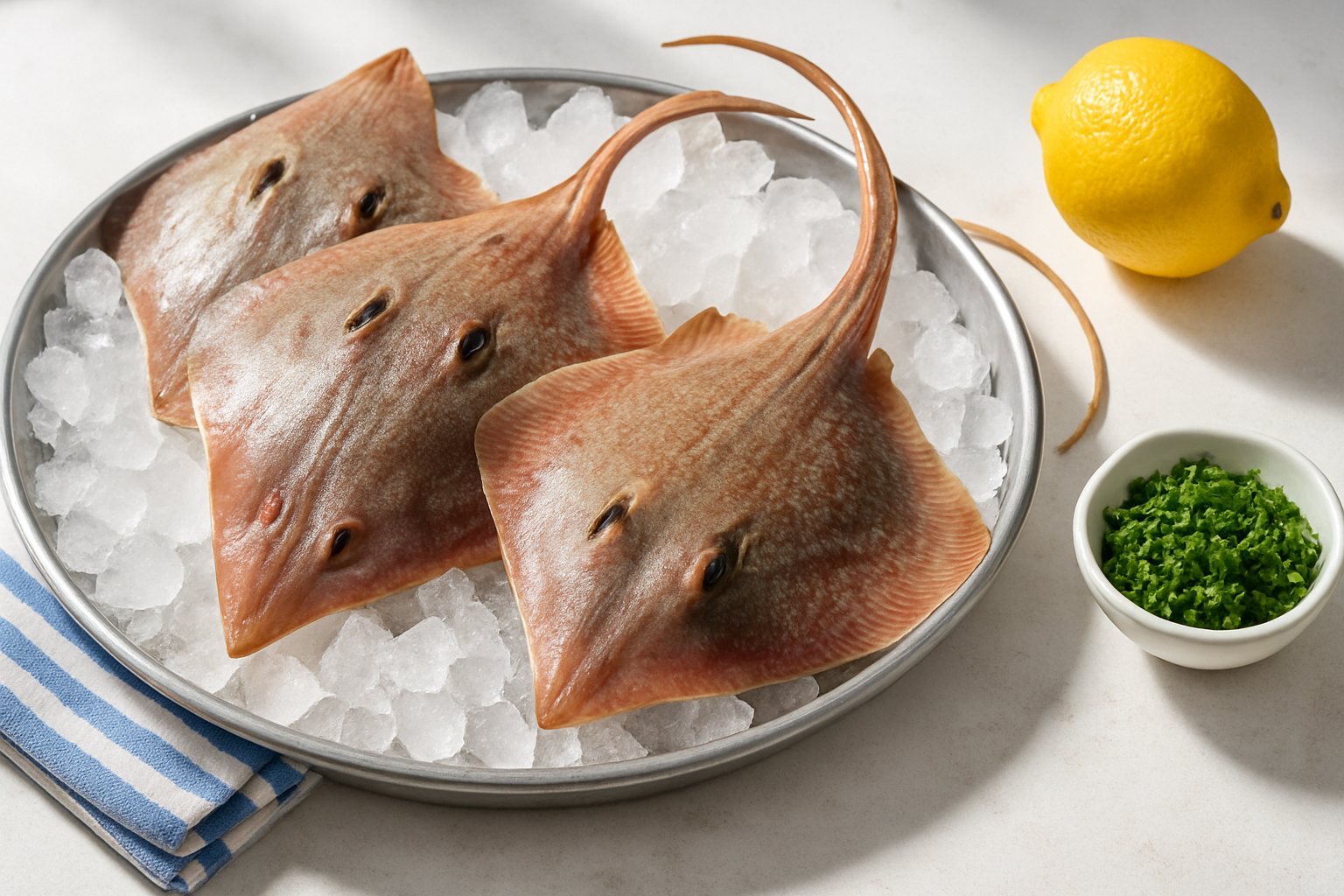
Ganjami is a type of ray fish — a flat, cartilaginous sea creature — that lives on the gentle, sandy seabeds of Korea's Yellow Sea and South Sea. If you've heard of hongeo, the famously pungent fermented skate that divides opinions even among Koreans, ganjami is essentially its milder, more approachable cousin. In fact, the late Joseon-era scholar Jeong Yak-jeon — best known for his encyclopedic work on sea life, Jasaneobo — recorded ganjami under the name "sobun," carefully distinguishing it from hongeo, and praised its thick, flavorful flesh.
Where hongeo makes its presence known with an intense, ammonia-like aroma, ganjami is subtle. Its taste is clean and mild, its texture soft, and its personality, if you'll allow the metaphor, is one of quiet confidence rather than dramatic flair.
Food as Medicine: The Traditional Case for Ganjami
What's really interesting is how deeply ganjami is embedded in Korea's tradition of yangsaeng — the philosophy of nourishing and preserving the body through daily habits, including food. In East Asian wellness theory, ganjami is classified as sweet in flavor and neutral to slightly warm in nature. That's a good combination: it's thought to support the digestive system, promote the smooth circulation of energy and blood throughout the body, and gently strengthen the liver and kidneys.
In traditional Korean medicine, the liver governs blood storage and muscle health, while the kidneys oversee the bones and bone marrow. That's why ganjami has historically been recommended for people recovering from illness, for those with joint weakness, and for anyone feeling generally run-down. In fishing villages along the coast, it was a go-to recovery food — the kind of dish a grandmother would prepare when someone in the family needed building back up.
Ganjami was also valued as a hangover remedy and a food that aids detoxification. It was believed to help flush waste from the body, cool internal heat, and replenish the body's vital fluids. These ideas connect directly to the traditional Korean wellness ideal of keeping both body and mind clear and balanced.
What Modern Nutrition Says
Here's where traditional wisdom and modern science actually align rather nicely. Ganjami has a protein content of roughly 17 to 22 percent, while its fat content sits at under one percent. That's a lean, high-protein profile that would make any nutritionist nod approvingly.
It's also rich in essential amino acids — taurine, lysine, and leucine among them — which support muscle recovery and help fight fatigue. But perhaps the most distinctive nutritional feature of ganjami comes from the fact that it's a cartilaginous fish. That means it's naturally high in collagen and calcium. And because ganjami can be eaten bones and all, the body gets to absorb that calcium directly and efficiently. So when Korean ancestors said ganjami "strengthens the bones and muscles," they were describing something that modern nutrition now confirms in measurable terms.
Ganjami on the Table: A Dish for All Seasons and All People
The most beloved way to eat ganjami is as ganjami hoe-muchim — a fresh, tangy, spiced salad made from raw or lightly prepared ganjami mixed with water parsley, vegetables, and a vibrant dressing of vinegar, chili paste, and sesame. It's a dish of the spring and early summer, when ganjami is at its fattest and most flavorful, and it has deep roots in the food cultures of Korea's western and southern coastal regions.
The flavor profile is bright and punchy — sour, spicy, refreshing — the kind of thing that wakes up your appetite and shakes off the heaviness of a long winter. And it's traditionally a communal dish: people gather around a shared table, eat together, and that social dimension is just as much a part of the experience as the food itself.
Beyond the salad, ganjami shows up in other forms too. Ganjami-jjim is a slow-steamed preparation that draws out deep, mellow flavors over time. Ganjami-tang is a soup where the fish and supporting ingredients meld together into a rich, warming broth. All of these dishes share a philosophy: balance over intensity, harmony over dominance, patience over speed.
A Philosophy of Quiet Strength
Choi draws a compelling parallel between ganjami and the famous Chinese strategic text, Sun Tzu's Art of War. The chapter on strategy — "Mou Gong" — argues that the highest form of winning is to win without fighting at all. The best strategy isn't brute force; it's creating favorable conditions and letting things unfold naturally.
Ganjami, Choi suggests, embodies exactly that. It doesn't demand attention the way hongeo does. It doesn't overwhelm. It simply offers what it has — clean flavor, deep nutrition, quiet versatility — and holds its ground without needing to shout about it.
Strength is found not in intensity, but in balance. What lasts is not what is loudest, but what is most consistent.
Korea's ancestors ate ganjami seasonally — waiting for spring and early summer when the fish was at its peak, rather than forcing it into the diet year-round. That respect for natural timing, for letting things come in their proper season, is itself a form of wisdom that feels surprisingly relevant today.
Ganjami and the Slow Aging Movement
There's a growing conversation in Korea — and increasingly around the world — about what's being called "slow aging": the idea that healthy, graceful aging isn't something you achieve through dramatic interventions, but through consistent, balanced, seasonal eating and living. Ganjami fits this philosophy almost perfectly.
Its nutritional profile supports muscle and joint health without excess. Its traditional role as a restorative food aligns with the idea of giving the body what it needs, gently and regularly, rather than overwhelming it. And its cultural context — shared meals, seasonal eating, coastal community life — represents the kind of holistic lifestyle approach that longevity researchers keep pointing to.
So the next time you're exploring Korean cuisine beyond the usual classics, keep ganjami in mind. It may not be the flashiest item on the menu. But sometimes, that's exactly the point.
This article is based on reports from Yonhap News, Breaknews, Aitimes.