Food as Medicine, Food as Culture
Here is something worth thinking about: a young woman in Nairobi, Kenya has gochujang and sesame oil as permanent fixtures in her fridge. Meanwhile, on a volcanic island off the southern tip of the Korean peninsula, Buddhist monks are teaching people to slow down and treat every meal as medicine. These two stories are happening at the same time, and together they paint a pretty remarkable picture of where Korean food culture stands right now.
Let's start at Gwaneum-sa Temple on Jeju Island.
Jeju's Temple Kitchen: Where Food Becomes Medicine
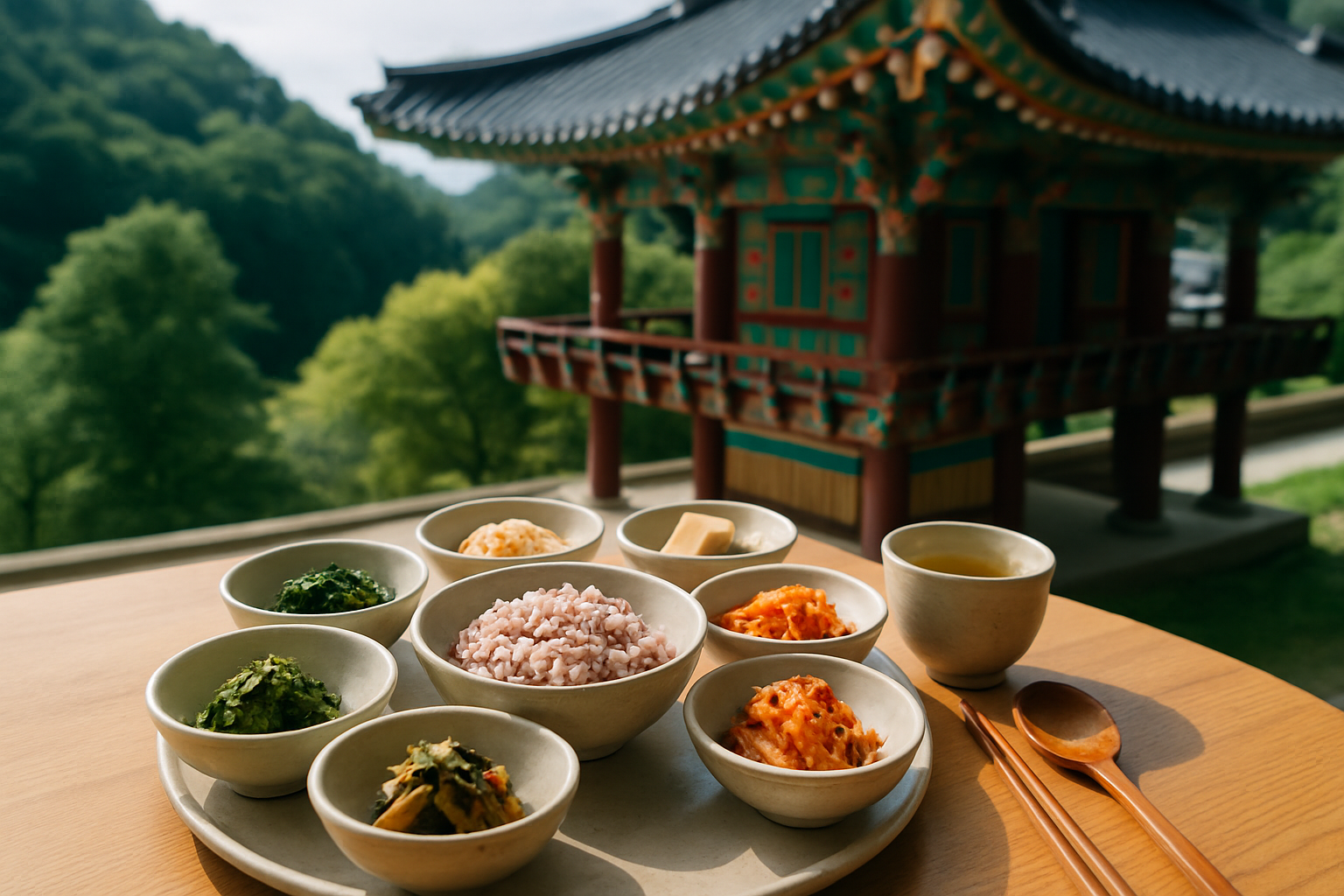
Over October 3rd and 4th, Gwaneum-sa — the head temple of the 23rd district of the Jogye Order of Korean Buddhism, which is the largest Buddhist order in Korea — opened its doors for a two-day event called "Temple Food as Medicine: A Cultural Experience and Healing Meditation." The sessions were held at Amihaeon, the temple's dedicated temple food experience hall, and led by Monk Seonghwa, a certified temple food artisan with the Buddhist Cultural Organization of Korea.
So here's the thing — temple food, or sachal eumsik in Korean, is not just vegetarian cooking. It's a centuries-old culinary philosophy rooted in Buddhist practice. No meat, no fish, and crucially, none of the five pungent vegetables that Buddhism considers stimulating to the mind — things like garlic, green onions, and chives. What you get instead is an incredibly mindful approach to ingredients, seasonality, and preparation.
Day One: Eating with All Five Senses
On the first day, participants didn't jump straight into cooking. Instead, they were guided through something called oegan myeongsang — a five-senses meditation using two of Jeju's most iconic ingredients: tangerines and peanuts. Attendees were asked to slowly examine the shape of a tangerine, feel the texture of its peel, listen to the sound it makes when peeled, and only then bring it to their nose and mouth.
It sounds simple, but that's kind of the point. Monk Seonghwa explained it well:
"Even with familiar food, slowing down and truly observing it can give you an entirely different experience. The way we approach food matters just as much as the food itself."
What's really interesting is the concept at the heart of this event: the idea of yaksik, which literally means "food as medicine." Monk Seonghwa described how temple food, by using seasonal ingredients in their natural state and avoiding artificial additives, is medicinal in itself. Traditional fermented condiments like doenjang (soybean paste), ganjang (soy sauce), and gochujang (red pepper paste) replace MSG and artificial flavor enhancers. Mushroom powder, dried kelp, and vegetable stock do the heavy lifting when it comes to depth of flavor.
But beyond ingredients, Monk Seonghwa also emphasized gratitude — recognizing the farmers who grew the food, the people who transported it, and the cooks who prepared it — as an essential part of treating food as medicine.
Day Two: A Feast of Twenty Dishes
The second day opened things up to the general public, with a live cooking demonstration and tasting session. And the menu was genuinely impressive — twenty dishes in total, all rooted in temple food tradition but given a distinct Jeju identity. A few highlights:
- Mucheongsiraegi-totbap — a rice dish made with dried radish greens and tot, a type of seaweed harvested off the Jeju coast
- Deulkkae-beoseot-dubu-tang — a hearty perilla seed, mushroom, and tofu soup
- Uido peanut and dried persimmon braised dish, using peanuts from Udo Island, a small island off Jeju's eastern tip
- A citrus dressing salad made with Jeju tangerines
- Jeju green tea yanggaeng — a traditional sweet jelly dessert
- Water kimchi made with beets and lotus root
Head monk Beopjeon reflected on what the event was really about:
"This was an opportunity to share not just the health and healing values of temple food, but also the Buddhist mindset around eating and the unique food culture of Jeju. Next time, we're planning to include a barugongyang experience as well."
For context, barugongyang is a traditional Buddhist communal meal ritual using a set of wooden bowls — one of the most meditative and disciplined eating practices in Korean Buddhist tradition. It's a natural next step for an event like this.
From Nairobi with Gochujang: A Kenyan K-Food Devotee
Now let's travel about 8,000 kilometers southwest to Nairobi, Kenya, where a young woman named Tabitha Joseph has made Korean food a central part of her daily life.
Tabitha, who was recently featured on YTN's segment "Welcome to My Fridge" — a show that visits people around the world and looks inside their refrigerators to explore food culture — walked viewers through her fridge and her kitchen. And yes, gochujang and sesame oil were right there front and center.
Her entry point into Korean food? Korean dramas. It's a pathway that will sound very familiar to a lot of people around the world.
"It started as I was getting familiar with Korean culture. I was watching a lot of Korean dramas, and at some point I thought, 'Why don't I try Korean food too?' There are actually Korean restaurants and Korean-related places in Kenya as well."
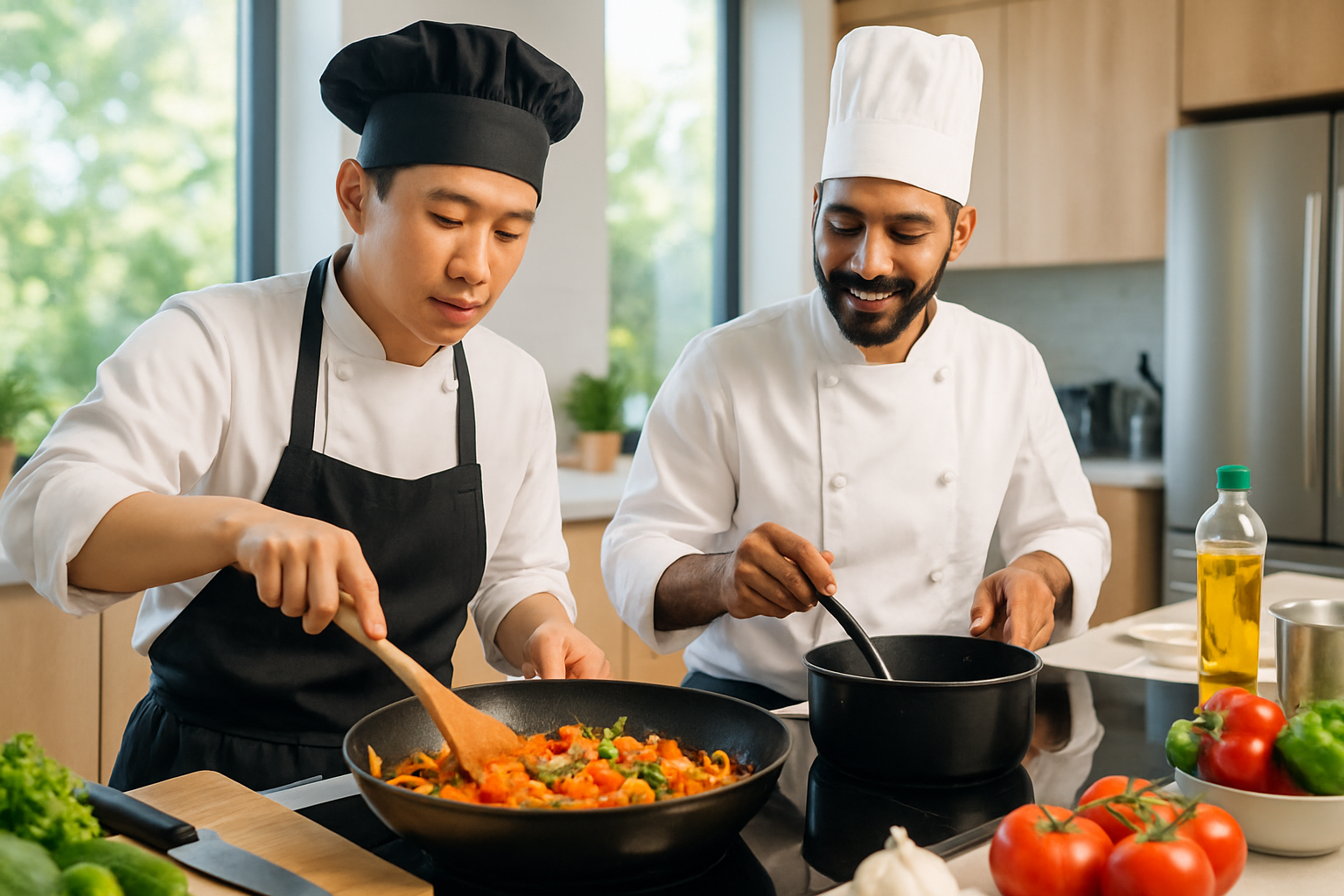
On the day of filming, Tabitha was making jeyuk bokkeum — spicy stir-fried pork, one of Korea's most beloved everyday dishes. She walked through her process with confidence, explaining how she balances the sweetness from sugar with the saltiness of soy sauce, and using a small amount of cooking wine substitute to round out the flavor.
A Language, a Competition, and a Bigger Vision
What's striking about Tabitha's story is that it didn't stop at food. Her interest in Korean culture led her to start studying the Korean language, and before long, she was entering — and winning — a Korean speech competition. That kind of trajectory, from K-drama viewer to language learner to competition winner, is increasingly common, and it says a lot about how deeply Korean soft power is embedding itself in places like East Africa.
Her friend Edith, who was also there for the meal, credited their Sejong Institute teacher — Sejong Institute being a global network of Korean language and culture centers run by the South Korean government, similar in concept to France's Alliance Française — for introducing them to Korean food experiences firsthand.
Tabitha also shared something that goes beyond fandom:
"Korea is also a challenge for me. I look at Korea and think, 'In a few years, could Kenya look like this?' Korea inspires me to imagine what transformation is possible."
Her friends, for their part, gave mixed reviews on the jeyuk bokkeum. Edith was enthusiastic. A friend named Ursami had a more honest reaction: "It was my first time trying it, and it was SO spicy. Really, really spicy."
Fair enough. Korean spice levels have a way of making an impression.
Two Stories, One Thread
What connects a Buddhist temple kitchen on Jeju Island and a young woman's apartment in Nairobi? In both cases, Korean food is doing something more than satisfying hunger. At Gwaneum-sa, it's being used as a tool for slowing down, reflecting, and healing. In Nairobi, it's opening doors to language, culture, and a broader sense of global possibility.
Korean food has always carried a philosophy — whether it's the careful balance of temple cuisine or the bold, fermented intensity of everyday home cooking. Right now, more people around the world than ever before are starting to notice.