Korean Food Culture Is Having a Moment, and the World Is Taking Notice
If you needed any more proof that K-food has gone fully mainstream, this week delivered it in three very different ways. We have a major Japanese convenience store chain dropping Korean-brand collab products, a record-breaking food festival in one of South Korea's most food-proud cities, and a Seoul cafe brand earning one of Korea's top consumer recognition awards. Let's break it all down.
Seven-Eleven Japan Goes All-In on Korean Flavors
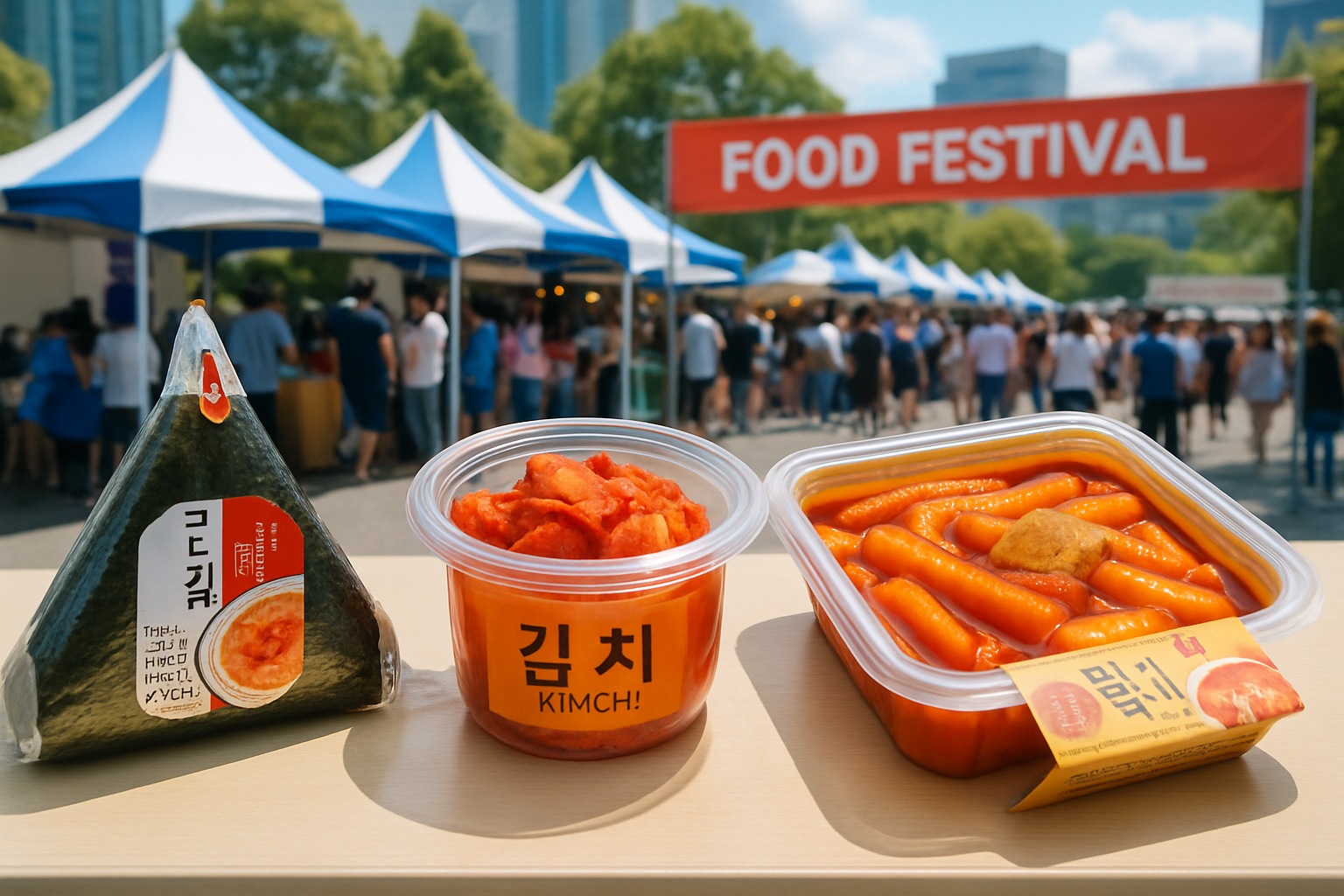
So here's the thing about Japanese convenience stores — they are not your average pit stop. Japanese konbini, as locals call them, are legendary for their food quality, and when a chain like Seven-Eleven Japan decides to launch Korean-brand collaborations as official private-label products, that is a pretty big statement about where K-food stands globally right now.
Starting May 26, Seven-Eleven Japan will roll out a new lineup of Korean-inspired products across its nationwide stores. The headline item is a collaboration with Beyogurt (Biyotte), one of Korea's most beloved yogurt dessert brands. If you have not had Biyotte in Korea, think creamy yogurt topped with crunchy chocolate bits — it is a staple in Korean convenience stores. The Japan-exclusive version translates that experience into a hard-bar ice cream format, layering smooth yogurt ice cream with the same chocolate crunch used in the original Korean product. The price? Just 218 yen before tax, which works out to roughly 2,000 Korean won. Honestly, that is a solid deal for a collab product.
Alongside the ice cream, Seven-Eleven Japan is also launching two drinks built around a Korean cafe trend that has been blowing up on social media: ashatchu. If you have not heard the term, ashatchu is a portmanteau of "iced tea" and "espresso shot added" — it is essentially iced tea with a shot of espresso mixed in, a combination Korean cafe-goers have been obsessing over for a while now. The two new drinks are the Georgia Ashatchu Peach and the Georgia Ashatchu Mango, both priced at 158 yen each (around 1,500 won). Seven-Eleven Japan will also be offering discount coupons through its app from launch day through June 15, with bonus coupons for repeat purchases during the promotional period.
What's really interesting is the dual-audience strategy at play here. These products are designed to appeal to Japanese consumers curious about Korean food trends, but they are equally aimed at the large number of Korean tourists who visit Japan every year — people who might get a kick out of finding a Japanese twist on something they already love back home. It is clever marketing, and it speaks to just how integrated Korean food culture has become in the Japanese market.
Gwangju Food Festival Opens Its Biggest Edition Yet
Meanwhile, back in Korea, the city of Gwangju — located in the South Jeolla Province and widely considered one of the country's food capitals — just kicked off the 2026 Gwangju Food Festival, and by all accounts, it is the largest the event has ever been.
The festival opened on May 21 at the Kimdaejung Convention Center, running through May 24, and is organized by the Gwangju Tourism Corporation with support from the Ministry of SMEs and Startups. This year's edition features around 300 exhibition booths, which is a record for the event. And the lineup is genuinely impressive — you have major national food companies like Nongshim (the ramen giant behind Shin Ramyun) and Hite (one of Korea's biggest beer brands) sharing floor space with beloved local names like Changeok Tteok and Gungjeon Bakery, as well as a wave of newer startups working in desserts, cakes, coffee, and craft spirits.
One of the standout features of this year's festival is its focus on what organizers are calling "local gastronomy" — the idea that regional food culture deserves as much spotlight as national brands. A special zone called ROCOL LOCAL brings together eight local specialty coffee roasters to showcase Gwangju's distinct cafe culture, which is a bigger deal than it might sound. Gwangju has long had a passionate independent coffee scene, and giving it a dedicated platform at a major food expo signals a real shift in how local food identity is being valued.
There is also a curated dessert zone featuring 12 brands handpicked by local food influencer Sugar Rabbit, a joint pavilion for social economy enterprises, and a tourism promotion section connecting Gwangju's food scene with its broader travel appeal. On the competition side, events include the Gwangju Chef Challenge organized by the Korean Chefs Association's Gwangju-Jeonnam chapter, a national sushi competition called the National Sushi King in Korea featuring master craftsman Ahn Yoo-seong, and an eco-friendly K-food startup cooking contest.
Jeong Jae-yeong, president of the Gwangju Tourism Corporation, said the festival was designed to be "a representative local food festival that anyone — young or old — can enjoy," particularly given that May is Family Month in Korea, a period packed with public holidays and family outings.
Pre-sales for the event reportedly ranked among the top festivals nationally on ticketing platform Ticket Link, and the opening day saw crowds lining up before the doors even opened. Safe to say Gwangju's food scene is not slowing down anytime soon.
Seoul Cafe Brand Fairground Earns Top Consumer Recognition
Rounding out the week on the cafe and dessert front, Seoul-based cafe brand Fairground has been named an outstanding business in the cafe and dessert category for the 2026 KCIA Korean Consumer Industry Evaluation — and specifically for the Seoul region, which is about as competitive a market as it gets.
Fairground is operated by Aramark, the global food services company, and has built a reputation in Seoul for high-quality coffee, thoughtfully designed spaces, and a brand philosophy centered on sustainability and fair trade. The KCIA evaluation, organized by the Korea Consumer Council and managed by Korea Consumer Evaluation, is not just a popularity contest — it is based on consumer review data collected between February and March of this year, starting from an initial pool of businesses in the top 33.76 percent of their category nationwide, and ultimately selecting only the top 0.3 percent as recognized brands. The evaluation criteria covered product satisfaction, accessibility, facility convenience, staff friendliness, interior and atmosphere, and overall satisfaction.
What makes this recognition meaningful in the broader context of Korean food culture is what it reflects about where the cafe industry is heading. As one industry observer put it, the cafe and dessert space in Korea has evolved far beyond just drinks and snacks — it has become a lifestyle destination, a cultural experience, and increasingly a marker of brand identity and values.
An Aramark representative noted that the recognition "reflects the positive reception of our customer-centered operations and brand philosophy," adding that the company plans to continue delivering differentiated experiences and high-quality service.
Korea Consumer Evaluation also announced that proceeds from this year's KCIA program will support low-income families through the Community Chest of Korea, specifically through a child sponsorship program providing living, education, and medical support to vulnerable children and youth.
The Bigger Picture
Step back and look at all three of these stories together, and a clear pattern emerges. K-food is not just a trend anymore — it is a fully developed cultural export with serious commercial momentum. Japanese convenience stores are launching collab products to capture Korean tourist dollars and local curiosity at the same time. A regional Korean city is drawing record crowds to celebrate its local food identity. And in Seoul, the cafe culture that helped put Korean lifestyle on the global map continues to raise its own standards through consumer-driven recognition.
Whether you are planning a trip to Japan, heading to Gwangju for the weekend, or just looking for your next great Seoul coffee spot, Korean food culture has something going on for you right now. And honestly, that is not going to change anytime soon.
This article is based on reports from Naver News, Namdonews, Sisunnews.