Seoul Is Rewriting the Fashion Map — And Tourists Are Taking Notes
If you think Seoul's fashion scene is confined to glitzy department stores or the trendy alleyways of Gangnam, think again. Right now, two very different corners of the city are making serious waves — a centuries-old traditional market and a hip industrial neighborhood — and together, they paint a fascinating picture of where Korean fashion culture is heading.
Lacoste Turns Seongsu Into a Polo Factory
So here's the thing about Seongsu-dong: it used to be a leather goods district. Now it's one of the most sought-after pop-up destinations in all of Asia. And Lacoste just added its name to that list in a big way.
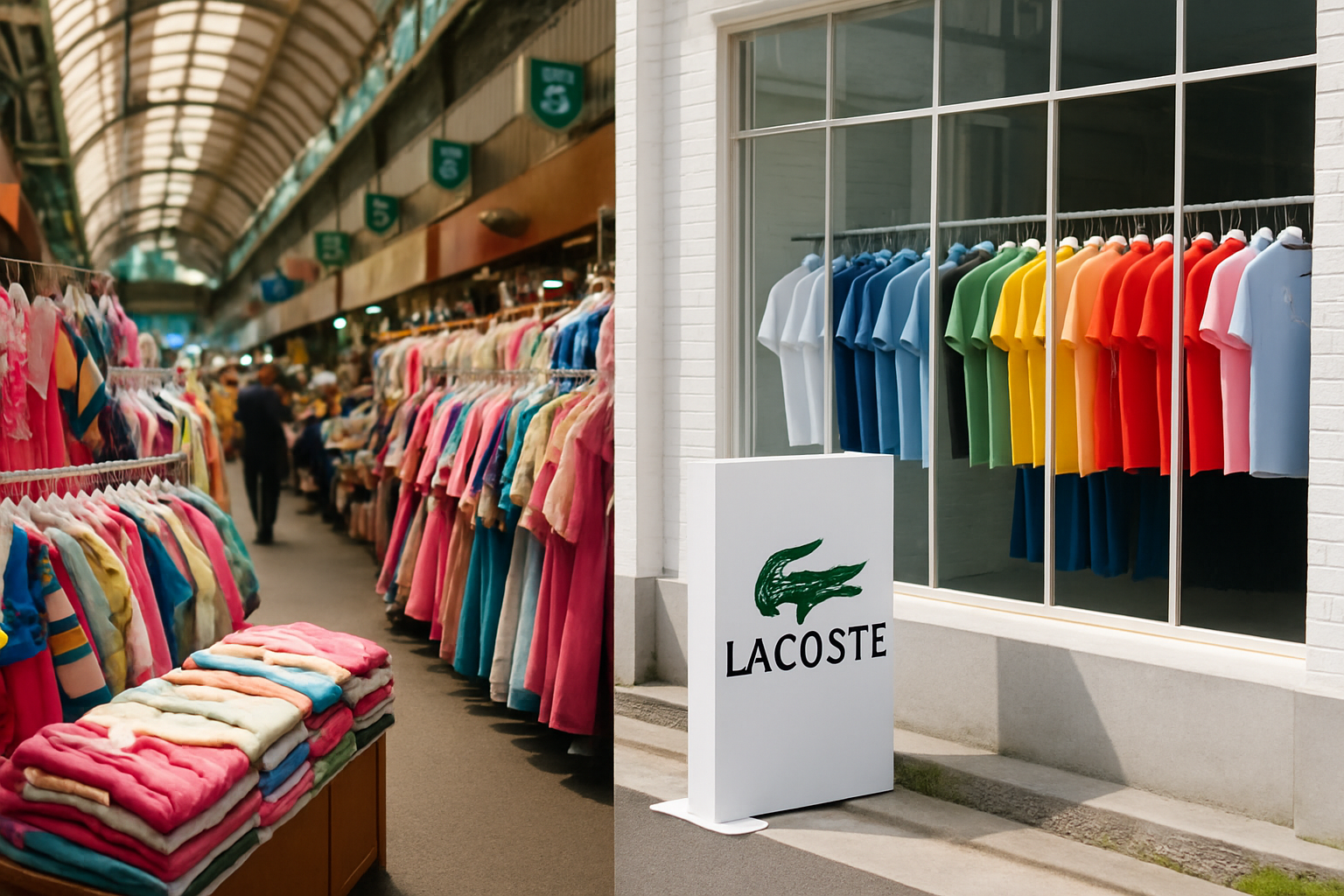
The French sportswear brand — distributed in Korea by Dongil de Rham — launched an immersive pop-up experience called the "LACOSTE POLO FACTORY" on May 22, running through June 3 at a multi-purpose cultural venue called Seongsu Between. This isn't just a showroom. The entire space is designed around the concept of a polo shirt manufacturing factory, guiding visitors through the brand's history, weaving techniques, and design evolution in a very hands-on way.
What's really interesting is just how deep the archive material goes. Visitors can trace the original design of Lacoste's very first polo shirt — created in 1933 by founder René Lacoste, a French tennis champion who wanted something more practical to wear on the court than the stiff long-sleeved shirts of the era. He developed a short-sleeved shirt using piqué cotton fabric with a soft collar, and that silhouette has barely changed in nearly a century. The pop-up walks you through that entire journey, with vintage archive pieces, year-by-year collection data, and interactive zones where you can actually feel the textures of different fabrics.
There's also a digital brand history exhibit running alongside the physical displays, blending old-school archival depth with modern storytelling. It's the kind of experience that rewards fashion nerds and casual browsers alike.
An Yujin Kicks Things Off
For the soft opening on May 21, Lacoste brought in its official global ambassador: An Yujin (Ahn Yu-jin), a member of K-pop girl group IVE. She toured the space, checked out the installations, and styled looks from the brand's current polo shirt lineup. IVE, for context, is one of the biggest girl groups in Korea right now — so her presence at the event guaranteed both media coverage and significant social media traction ahead of the public opening.
Gwangjang Market: From Bindaetteok to Brand Destination
Now let's talk about Gwangjang Market in Jongno-gu, because this one is a real story. For most international visitors to Seoul, Gwangjang is synonymous with street food — bindaetteok (mung bean pancakes), mayak gimbap (the addictive bite-sized rice rolls), and raw yukhoe beef. It's been a must-visit foodie destination for years. But something has shifted, and it's happening fast.
K-fashion brands are moving in. And not just any brands — some of the hottest Korean fashion labels right now have set up shop inside the market, turning it into what industry insiders are already calling a K-fashion pilgrimage site.
Who's There and Why It Matters
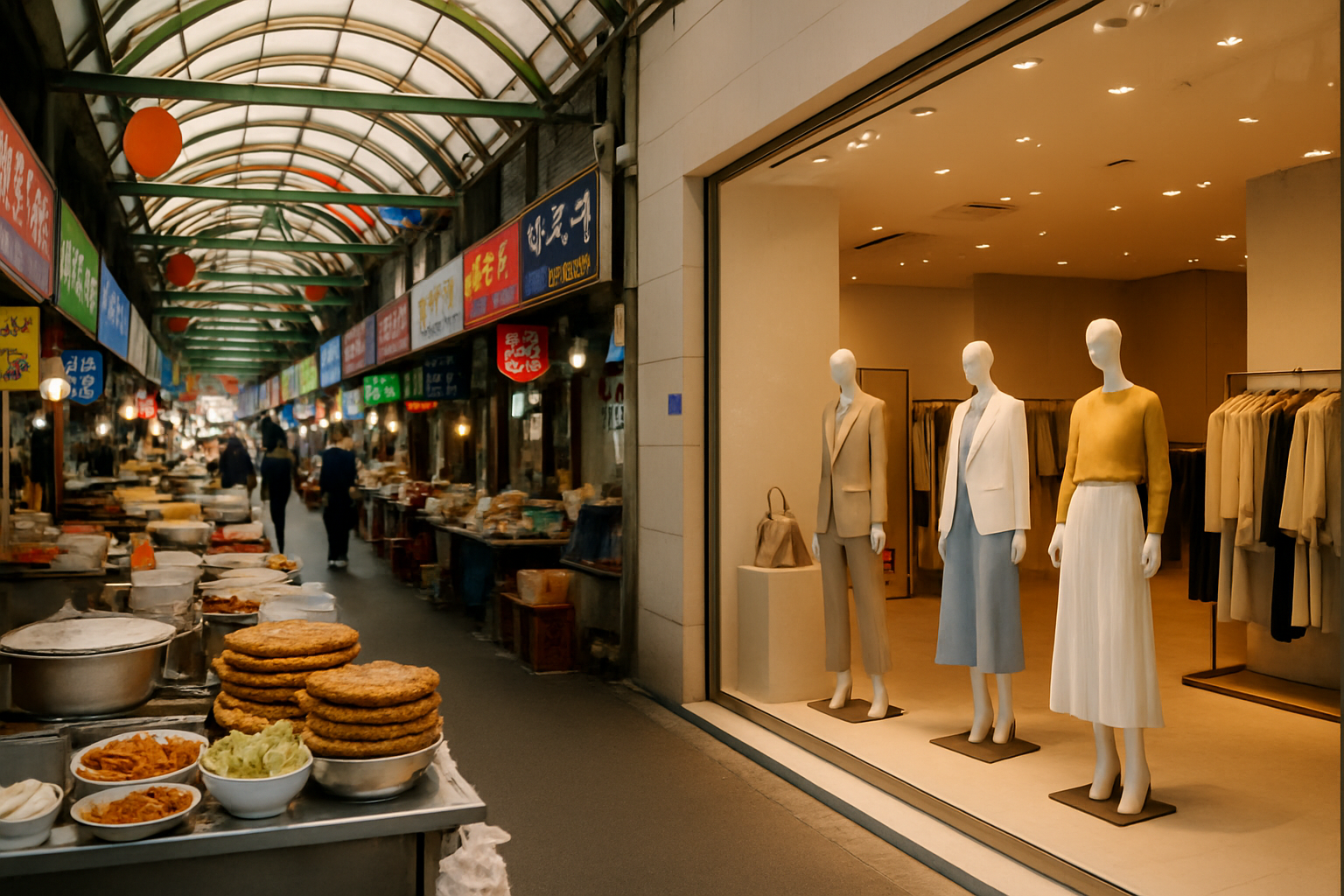
Walk through the market's west gate area and you'll spot a Matin Kim (마뗑킴) store operated by HAGO House — its sleek, design-forward exterior standing out sharply against the market's weathered signs and traditional stalls. Nearby, you'll find Marithe + Francois Girbaud, SATUR (세터), Kirsh, Fruit of the Loom (the Korean fashion version under DaeMyung Chemical group), Kodak Apparel, and Acme de la Vie, among others.
Matin Kim, one of Korea's most internationally buzzed-about streetwear labels, stocks its Gwangjang location with bestsellers and seasonal collections, but also carries lines specifically tailored to international shoppers — including its Seoul Exclusive line and Hangul line, which feature Korean lettering and local references that tourists love to take home.
"Gwangjang Market is one of Korea's most iconic traditional markets. We opened the Gwangjang location to expand our touchpoints with international customers — and since then, it's become a shopping destination in its own right, with social media mentions increasing significantly," a Matin Kim representative said.
That's not marketing fluff — on weekdays, up to 90 percent of visitors to some of these fashion stores are reportedly foreign tourists. Let that number sink in for a second. These brands aren't just catering to international shoppers as a bonus; tourists have become a primary driver of growth.
SATUR's Korean-Inspired Store Design
SATUR, a lifestyle fashion brand under Recipe Group known for its clean, classic aesthetic, has taken a particularly thoughtful approach to its Gwangjang location. The store interior incorporates traditional Korean materials — gwangmok cotton cloth, hanji paper sheets, and wooden lattice details — weaving them into the brand's signature clean sensibility. It's a smart move: the space feels distinctly Korean without being kitschy, and it gives tourists something visually memorable to photograph and share.
Beyond clothing staples like knitwear and cardigans, SATUR has also stocked up on accessories — hats, keyrings, and other small-format items that are perfect for souvenir-style purchases.
"Visitors tend to spend longer in our store compared to other locations because of the tourism dynamic — they're exploring, not just shopping," a SATUR representative noted. "Repeat visits are lower, which is expected, but the overall sales trend has been positive since opening."
Why Gwangjang Makes Business Sense
There's a practical reason behind all of this beyond just tourist foot traffic. Rental costs in prime Seoul neighborhoods like Seongsu-dong and Yeonnam-dong have skyrocketed in recent years as they've become increasingly trendy. Gwangjang Market, by contrast, offers comparatively affordable commercial space with a built-in flow of visitors — both Korean and international — year-round.
But there's also a brand identity angle. Gwangjang's rawness and traditional character gives K-fashion labels a physical backdrop to express a "K-local" identity that a polished mall unit simply cannot provide. The contrast between a sleek modern brand and an old-school market setting creates exactly the kind of visual tension that looks great on Instagram and reinforces the authenticity that global consumers increasingly want from Korean brands.
The Bigger Picture: K-Fashion and Tourism Are Feeding Each Other
What both of these stories — the Lacoste pop-up and the Gwangjang fashion migration — have in common is that they reflect a broader shift in how fashion and tourism are interacting in Seoul right now.
K-fashion is no longer just a domestic industry with some export ambitions. International visitors are now walking into stores, buying pieces, posting about them, and effectively becoming unpaid global ambassadors for Korean brands. Meanwhile, brands are designing their physical spaces and product lines with that international audience explicitly in mind.
"Tourists are doing more than generating additional demand — they're becoming a core engine of brand growth," a Matin Kim representative explained. "As key stores in Seongsu, Myeongdong, and Gwangjang become must-visit stops on tourists' itineraries, both brand awareness and sales are expanding rapidly."
As SATUR put it, the relationship between K-fashion and tourism isn't a simple cause-and-effect — it's a two-way interaction. Tourism amplifies fashion, and fashion gives tourists another reason to explore beyond the usual sights. Seoul, it turns out, is becoming one of the world's great fashion cities — not just in the pages of a magazine, but on the ground, in the markets and pop-ups where culture actually lives.
This article is based on reports from Woodkorea, Smartbizn, 4th.