A Week of Highs and Lows for One of Korea's Biggest Conglomerates
If you follow Korean business news, you know that CJ Group — the massive South Korean conglomerate behind brands like Bibigo, CJ Olive Young, and CJ ENM — rarely has a quiet week. And this one was no exception. On one hand, the company is making serious moves to plant its K-Food flag across Europe and America. On the other, it's dealing with an uncomfortable internal data breach that exposed the personal information of hundreds of its own employees. Let's unpack both stories, because together they paint a pretty revealing picture of where this company stands right now.
The Data Breach: An Inside Job at CJ Group
So here's the thing that caught a lot of people off guard. CJ Group confirmed on Tuesday, May 19th, that a data leak had exposed the personal information of 330 female employees. We're talking mobile phone numbers, job titles, office contact details, and photographs — the kind of data that, in the wrong hands, can lead to harassment or worse.
What makes this especially unsettling is where the leak appears to have come from. CJ said the compromised data was accessible via the company's internal intranet — not an external system. That strongly points to an insider leak rather than a hack from outside the organization.
"We're seeing this as an internal leak since it involved intranet data. We're also planning to launch a task force to prevent follow-up damage by the leak," a CJ official said.
And if that wasn't troubling enough, the leaked information reportedly surfaced on a Telegram channel with around 2,800 subscribers. That's a significant audience for what is essentially stolen employee data. CJ has said it is now preparing to request a formal police investigation and is actively tracing the cause and pathway of the breach.
What's really interesting — and concerning — here is the nature of the target. The breach specifically affected female employees, which raises serious questions about motivation. Was this targeted? Was it opportunistic? CJ hasn't said. But for a company with global ambitions and a workforce that spans multiple countries, the reputational stakes of mishandling this are high. The company says it is taking the matter "extremely seriously," and we'll be watching how this investigation unfolds.
The Global Play: Bibigo's European Ambitions
Now, let's shift gears to the part of the CJ story that the company would much rather have you talking about — and honestly, it's a genuinely impressive chapter in the K-Food expansion story.
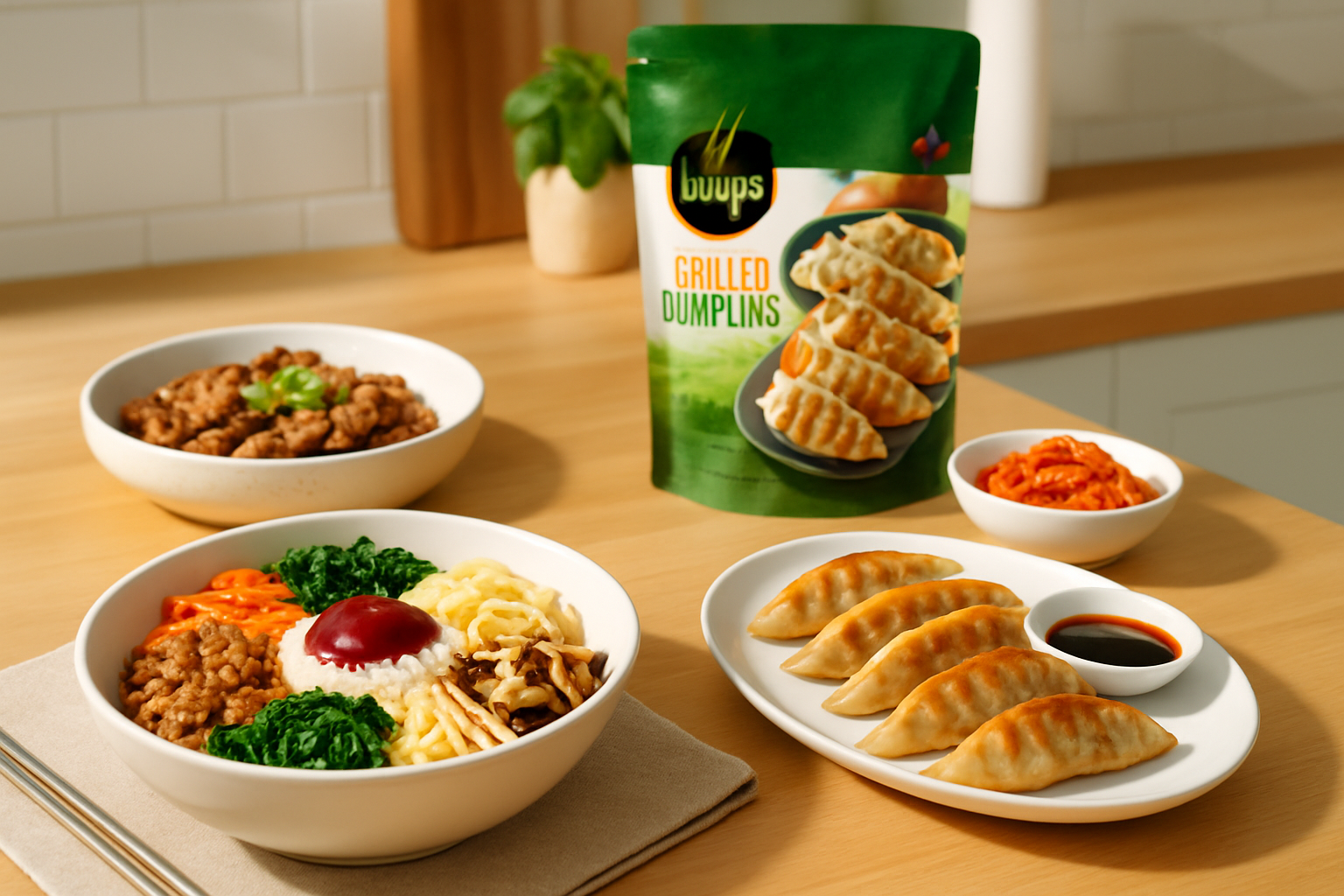
CJ Cheiljedang, the food arm of CJ Group, has been on a mission to turn Korean food into a global staple. Most people outside Korea are probably most familiar with Bibigo, the brand behind those frozen dumplings (mandu) you might have spotted at Costco or your local supermarket. But the scale of what CJ is building is much bigger than a freezer aisle product.
Europe Is the New Frontier
For a long time, the United States was CJ Cheiljedang's primary overseas battleground. And they won that battle convincingly. Bibigo dumplings currently hold a 47% share of the U.S. B2C dumpling market — that's nearly half the market, and more than three times the share of the second-place brand. The company operates 20 factories across the U.S., producing dumplings, fried rice, kimchi, Korean-style sauces, and chicken products. They even broke ground on a new factory in South Dakota that will be the largest Asian food production facility in North America when it opens next year.
But with growth in Korea's domestic market slowing, CJ Cheiljedang needs a new engine. Enter Europe.
The numbers already tell a promising story. CJ Cheiljedang's European food sales crossed the 100 billion Korean won mark — roughly 70 to 75 million U.S. dollars — for the first time in 2024. In the first quarter of 2025 alone, the European business grew 17% year-on-year, driven by dumplings, chicken, and noodle products. Bibigo dumplings now hold a 48% share in Germany's B2C frozen dumpling market and a 55% share in the Netherlands — both number one positions.
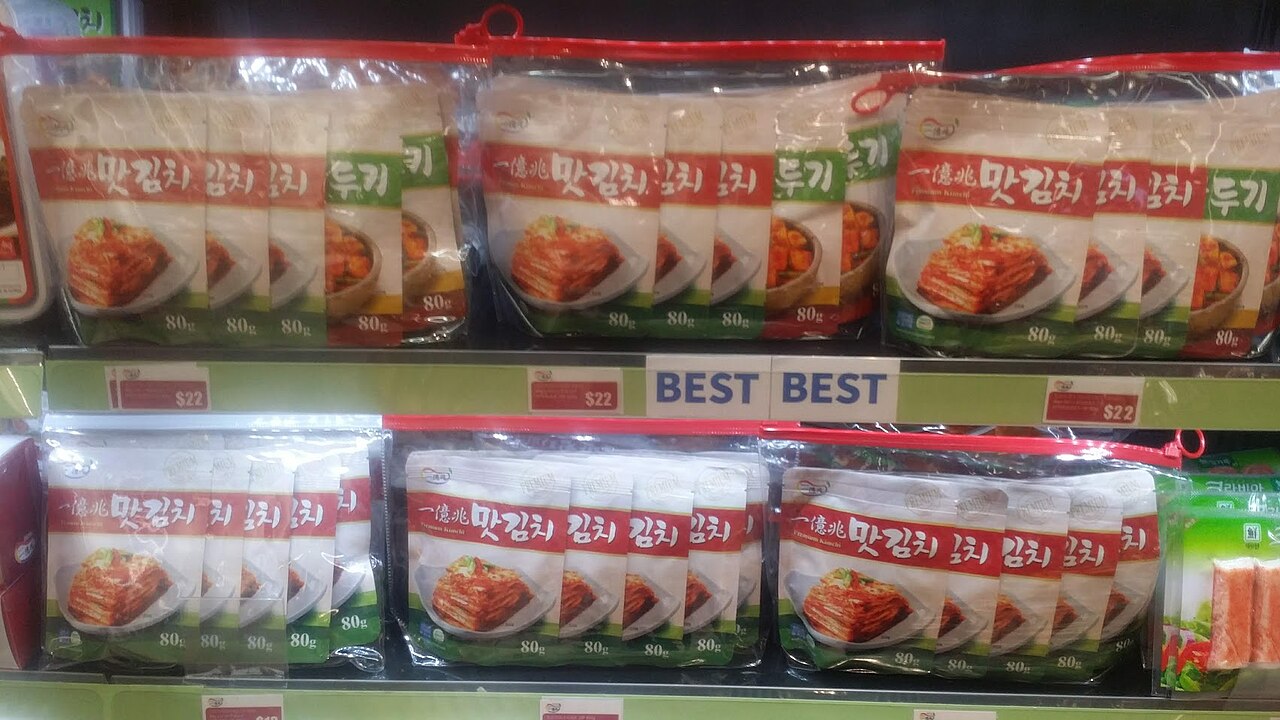
The brand is now sold in 27 European countries, with distribution through major retail chains including Sainsbury's and Morrisons in the UK, Carrefour in France, Rewe in Germany, and Albert Heijn in the Netherlands. If you're a European grocery shopper, chances are Bibigo is already on a shelf near you — or will be soon.
Hungary: The Factory That Changes Everything
The real game-changer in CJ's European strategy is a brand-new factory being built near Budapest, Hungary. The company finalized the site in late 2024 and has committed about 100 billion Korean won — roughly 70 million dollars — to building a state-of-the-art automated production facility. Bibigo dumpling production is set to begin there in the second half of this year.
This is significant because, until now, CJ's only European production base was a factory it acquired when it bought German frozen food company Mainfrost back in 2018. The Hungary plant is its first purpose-built European facility, and the plan is to use it as a hub to push further into Central and Eastern Europe — Poland, Czech Republic, Slovakia, and the Balkans are all on the radar.
The logic mirrors what CJ did in America. Back in 2019, the company spent 2 trillion Korean won to acquire Schwan's, a major U.S. frozen food company, gaining an instant nationwide distribution network. The idea now is to replicate that growth model on European soil — building production capacity locally to serve local markets faster and more efficiently.
CJ Group Chairman Lee Jae-hyun has been personally invested in this push. In September last year, he led a delegation of senior executives to London — his first-ever hands-on visit to Europe for business — to assess expansion opportunities. His message was direct: "We must not miss the K-Wave spreading across Europe, and we must leap forward to become a pan-European top-tier player."
Using Golf to Sell Dumplings
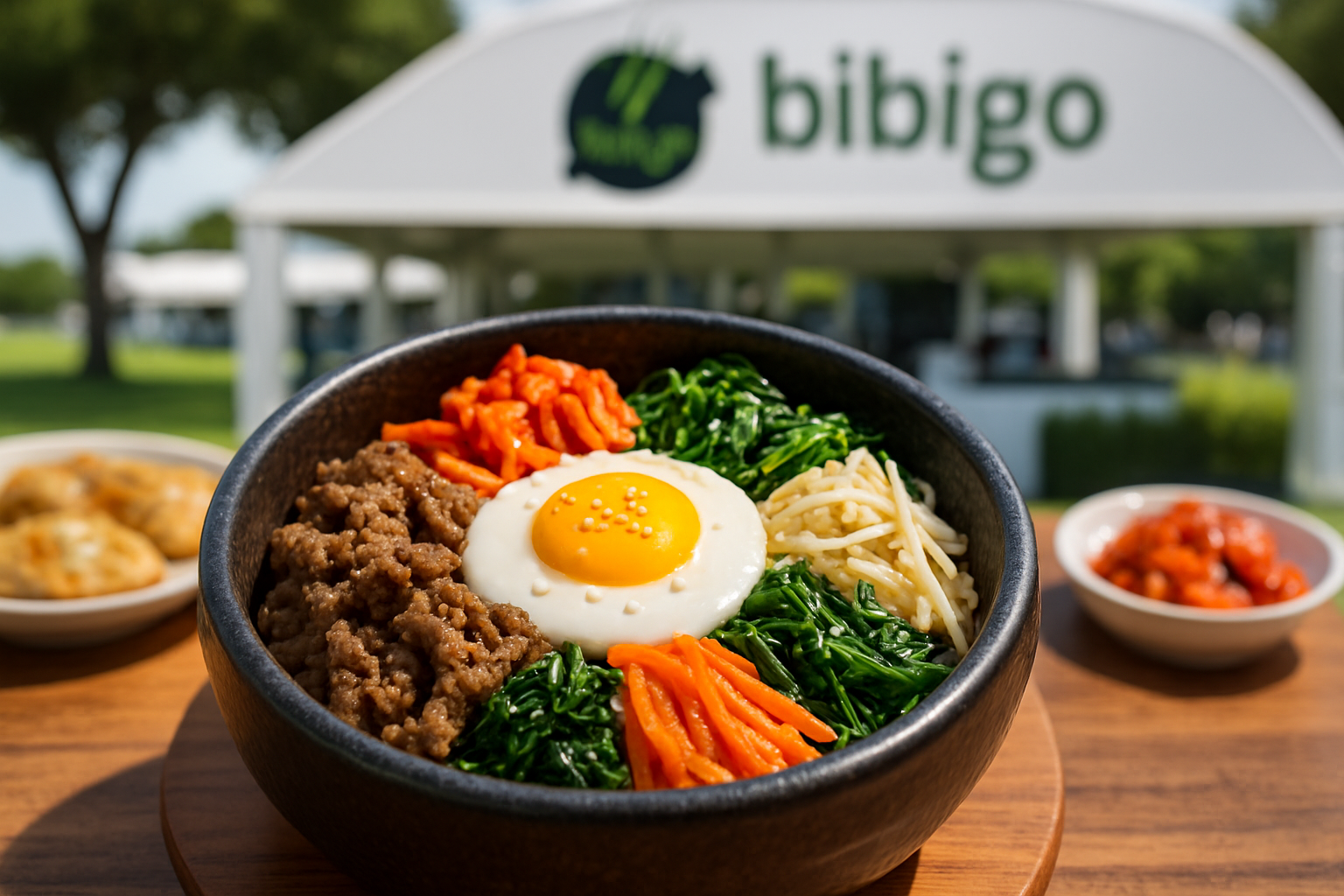
One of the more creative elements of CJ's global marketing strategy is its sponsorship of a PGA Tour event — THE CJ CUP Byron Nelson, held annually in Texas. The tournament, which celebrated its 10th anniversary this May with four days of play starting on the 21st, has become a core marketing platform for the Bibigo brand.
CJ uses the event to operate a branded concession area and an experiential space called "House of CJ," where attendees get introduced to K-Food and Korean culture. It sounds like a fun activation, and the scale suggests it's working. Attendance has grown from 35,000 people when the event launched in 2017 to 180,000 last year. The PGA Tour estimates the tournament generates an economic impact of around 200 billion Korean won for the host region.
Perhaps more tellingly, since the CJ CUP moved to the U.S. in 2020, CJ Cheiljedang's American sales have increased by 47.6%. Correlation isn't causation, of course, but it's hard to ignore that kind of parallel growth.
The Bigger Picture
Taken together, these two stories reveal a company at a fascinating crossroads. CJ Cheiljedang's global food strategy is genuinely bold and, by most measures, succeeding. The overseas food business grew from 4.13 trillion Korean won in 2020 to 5.92 trillion won last year — a 43.5% jump — and overseas sales now account for more than half of total food revenue.
But the data breach is a reminder that rapid growth and global expansion can't come at the expense of the basics — like protecting your own employees' privacy. How CJ handles the investigation, and whether it takes meaningful steps to address internal security gaps, will say a lot about the kind of company it is becoming. The world is watching — and so are 330 women whose personal information is now circulating on Telegram.
This article is based on reports from Dailypop, Koreatimes, Insightkorea.