A Summer Unlike Any Other
So here's the thing — South Korea has seen its fair share of hot summers. But what's happening right now is something else entirely. As of Monday, August 3, 2026, the country is in the grip of a heat wave that is not just uncomfortable — it is historically dangerous, and it is killing people.
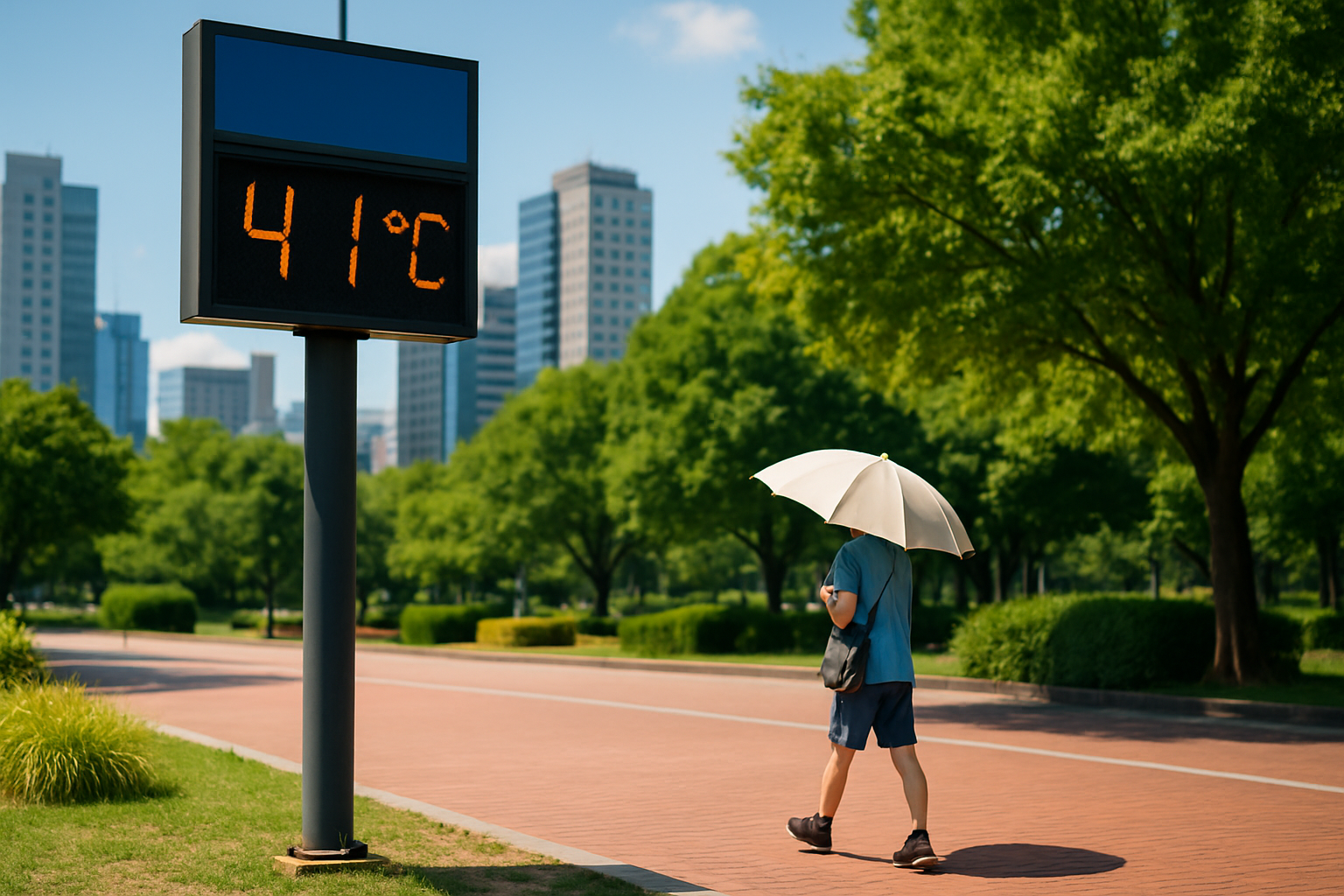
Let's start with the numbers, because they are genuinely staggering. The southeastern city of Daegu — one of South Korea's major urban centers, home to about 2.4 million people — recorded a temperature of 40.9 degrees Celsius on Monday. That might not sound extraordinary until you realize that Daegu had not crossed the 40-degree mark since August 1, 1942. That is more than eight decades ago. And on the same day, nearby Goryeong County, roughly 230 kilometers southeast of Seoul, actually pushed even higher, hitting 41.2 degrees Celsius at 3:37 in the afternoon.
And Sunday was arguably even more extreme. The city of Yangsan, also in the southeast, recorded a peak temperature of 42.5 degrees Celsius — the highest temperature ever measured in South Korea since modern weather observations began all the way back in 1904. Just let that sink in for a moment. In over 120 years of recorded history, the country has never been this hot.
What Is Driving This Extreme Heat?
The Korea Meteorological Administration, or KMA — the country's national weather agency — has been tracking this closely, and their explanation points to a particularly nasty combination of atmospheric conditions. Essentially, overlapping high-pressure systems have parked themselves over the Korean Peninsula, trapping hot air and blocking any relief. On top of that, clear skies mean direct, unfiltered sunlight is beating down on the ground all day long. There is nowhere for the heat to go, and nothing to block it from coming in.
What's really interesting — and alarming — is how far north this extreme heat is now spreading. Severe heat wave warnings have been active across southwestern parts of the country for days. But starting Tuesday morning, those highest-level warnings are set to expand into southern Seoul and parts of Gyeonggi Province, which surrounds the capital. That would mark the first time Seoul's greater metropolitan area has been placed under the top-tier heat warning since that warning system was even introduced, back in June.
To put it plainly: the worst of the heat is no longer just a regional problem in the south. It is moving toward the heart of the country.
The Human Cost Is Already Severe
This is not just a weather story. This is a public health emergency, and the toll on human life has been real and growing.
On Monday morning in Incheon, a city just west of Seoul, a man in his 40s died after being rushed to the hospital the previous day. His body temperature was approaching 40 degrees Celsius when he arrived — a sign of severe heatstroke. On Sunday, two farmers — one in their 60s, another in their 80s — were found dead in South Chungcheong Province, in the central part of the country. The Korea Disease Control and Prevention Agency confirmed that a total of 108 people were treated in emergency rooms for heat-related illnesses on Sunday alone.
Since mid-May, when the agency began tracking heat-related cases for the season, the cumulative number of patients has reached 2,025. Sixteen deaths have now been officially linked to heat-related illness across the country. Seoul alone has reported 185 heat patients since mid-May, with 18 just on Sunday.
The country has so far recorded 16 deaths linked to heat-related illnesses, with over 2,000 people treated for heat emergencies since mid-May.
The most vulnerable, as is almost always the case in extreme heat events, are the elderly, outdoor workers, and those without access to air conditioning. The deaths of two elderly farmers working in the fields on one of the hottest days on record is a painful illustration of that reality.
What Happens Next
There is little immediate relief in sight. The KMA has not signaled any significant break in the heat pattern in the coming days. With severe warnings now set to extend into the Seoul metropolitan area — home to roughly half of South Korea's entire population — the stakes for the coming days are extremely high.
Authorities are urging people to stay indoors during peak afternoon hours, hydrate regularly, and check in on elderly neighbors and family members. Cooling centers have been set up across the country, particularly in areas where residents may not have home air conditioning.
For a country that has dealt with difficult summers before, this one is testing limits that have not been tested in living memory. The combination of record-shattering temperatures, a rapidly growing casualty count, and expanding geographic reach makes this one of the most serious weather emergencies South Korea has faced in decades.
This article is based on reports from Econovill, It-b, Yonhap News.