A Crisis Unfolding in the Himalayas
So here's the situation as it stands: a devastating flash flood and mudslide tore through Nepal's Rasuwa district on Wednesday, August 26, and South Korean nationals working at a major construction site were right in the middle of it. By Thursday, the picture was becoming clearer — but not entirely reassuring.
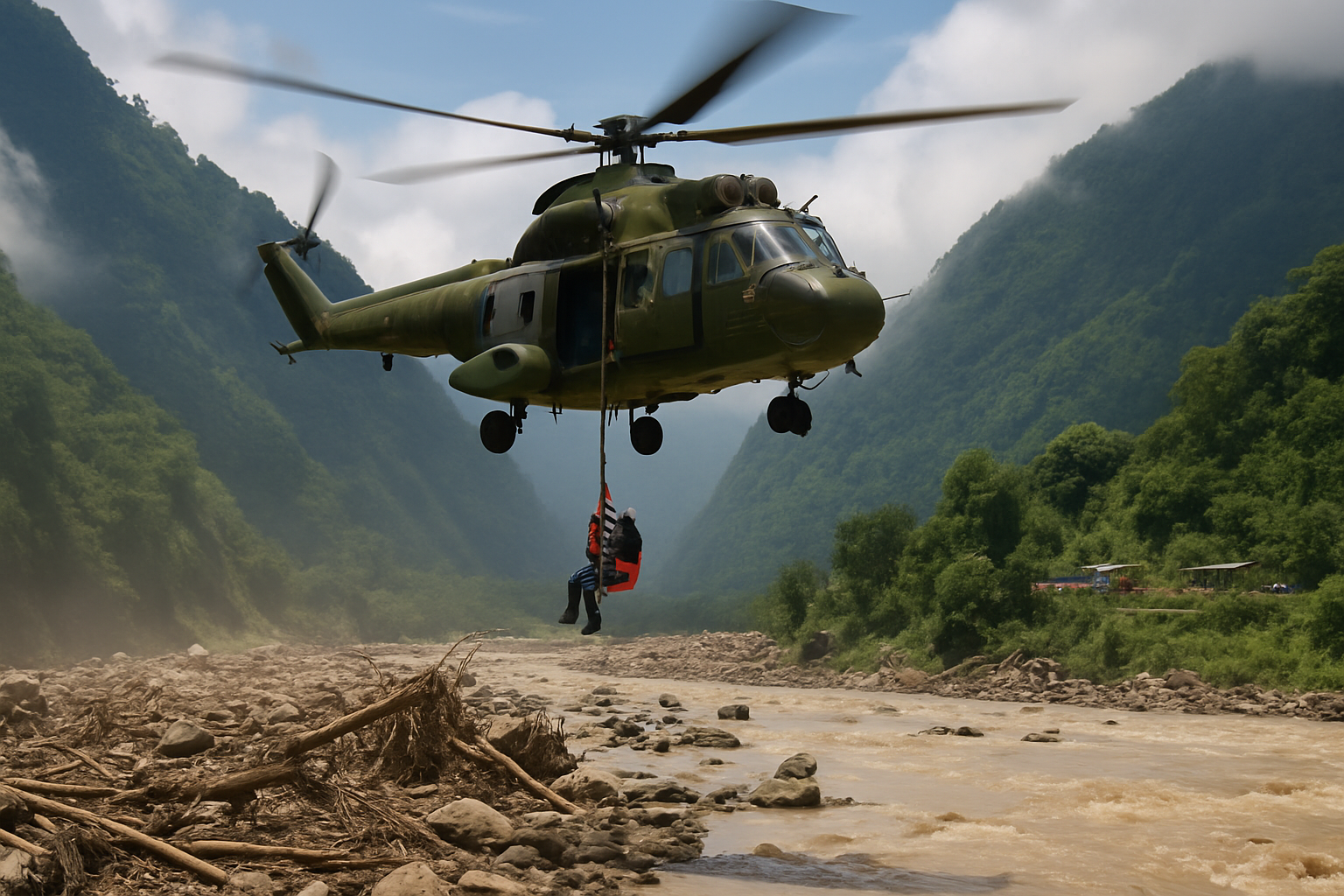
Nine out of ten South Koreans who had been isolated after the disaster were successfully airlifted to safety by a Nepalese military helicopter on August 27, according to Seoul's foreign ministry. All ten had been affiliated with Doosan Enerbility, a major South Korean plant construction company, and had initially taken shelter in a temporary facility along with roughly 200 other foreign workers at the site.
The one person who chose to stay behind? A Doosan site manager — and it was a deliberate decision. A ministry official explained the reasoning clearly: "The remaining person will stay at the site until all other employees, including local workers, have been evacuated." All ten were reported to be in good health, with plans to travel to Kathmandu the following day.
Nine Others Still Missing — and the Search Is Not Easy
What's really concerning is the situation of a separate group of nine South Koreans who remain completely unaccounted for. Six are Doosan employees; three others work for Korea South-East Power Co., a state-run energy firm. These workers had been staying in a different part of the site from the group that was rescued — and that distinction matters a lot here.
Officials believe many of the offices and accommodations where the missing workers had been staying were simply swept away by the floods. That makes search and rescue enormously difficult. The terrain in Rasuwa is rugged and remote, roughly 70 kilometers northwest of Kathmandu, and the widespread damage has severely limited access to the area.
The U.S. Geological Survey confirmed that the disaster was triggered by a glacial collapse and subsequent debris flow — which means this wasn't just heavy rain. A massive wall of ice, rock, and water came down from the mountains, and the destruction downstream was catastrophic. As of the latest reports, at least 165 people have been confirmed dead across Nepal, with over 826 missing — many of them foreign nationals.
South Korea Mobilizes a Full Government Response
Seoul moved quickly. An 11-member rapid response team — drawn from the foreign ministry, police, and fire authorities — departed for Nepal on Thursday and was scheduled to arrive in Kathmandu that same evening. That team is working alongside the South Korean embassy in Nepal and local Nepalese authorities.
Foreign Minister Cho Hyun held a phone call with his Nepalese counterpart, Foreign Minister Shisir Khanal, to express condolences and formally request active support in finding the missing Koreans. Cho also signaled that if the situation demands it, Seoul is prepared to send a much larger team. "If we send additional personnel, it would have to be dozens of people," he said.
President Lee Jae Myung convened an emergency meeting on Thursday and directed officials to mobilize all available resources. Following that meeting, the government announced it would dispatch an Air Force KC-330 transport aircraft to support the operation — though the specific logistics are still being coordinated with the foreign ministry.
Both Doosan Enerbility and Korea South-East Power Co. have also set up their own emergency response teams and sent field personnel directly to the affected area.
The Project at the Center of It All
Here's a bit of context that helps explain why so many South Koreans were at this remote Himalayan site in the first place. The two Korean companies were jointly involved in constructing the Upper Trishuli-1 (UT-1) hydropower plant along the Trishuli River — a 216-megawatt facility that broke ground in January 2022 and had been on track to begin commercial operation by the end of this year.
That timeline is now almost certainly off the table. The flood damage at the construction site is expected to cause significant delays to the project, though the full extent of the damage is still being assessed.
A Wider Warning for Korean Travelers in Nepal
One detail from Thursday's press briefing is worth flagging for anyone planning a trip. Ministry spokesperson Park Doo-soon noted that approximately 20,000 South Koreans visit Nepal every year — largely for trekking and tourism in regions like the Himalayas. The ministry confirmed it is actively checking whether any other Korean nationals beyond the construction workers may have been caught up in the disaster.
Given the scale of what happened — a glacially-triggered flood that wiped out entire settlements and left hundreds missing across multiple districts — that's a check that absolutely needs to happen.
As of Thursday evening, the search and rescue mission was still in its early stages. The coming days will be critical, and South Korea's government has made clear it is treating this as a national priority. We'll be keeping a close eye on developments as they unfold.
This article is based on reports from Traveltimes, Koreaittimes, Yonhap News.