A City Opening Its Doors — and Its Payment Terminals
So here's the thing about traveling in a foreign country: you can plan the perfect itinerary, find that hidden-gem alley cafe everyone's been posting about, and then — nothing. Your phone app doesn't work at the counter, the shop doesn't take foreign cards, and the moment is gone. That exact frustration is what Busan is now trying to eliminate, permanently.
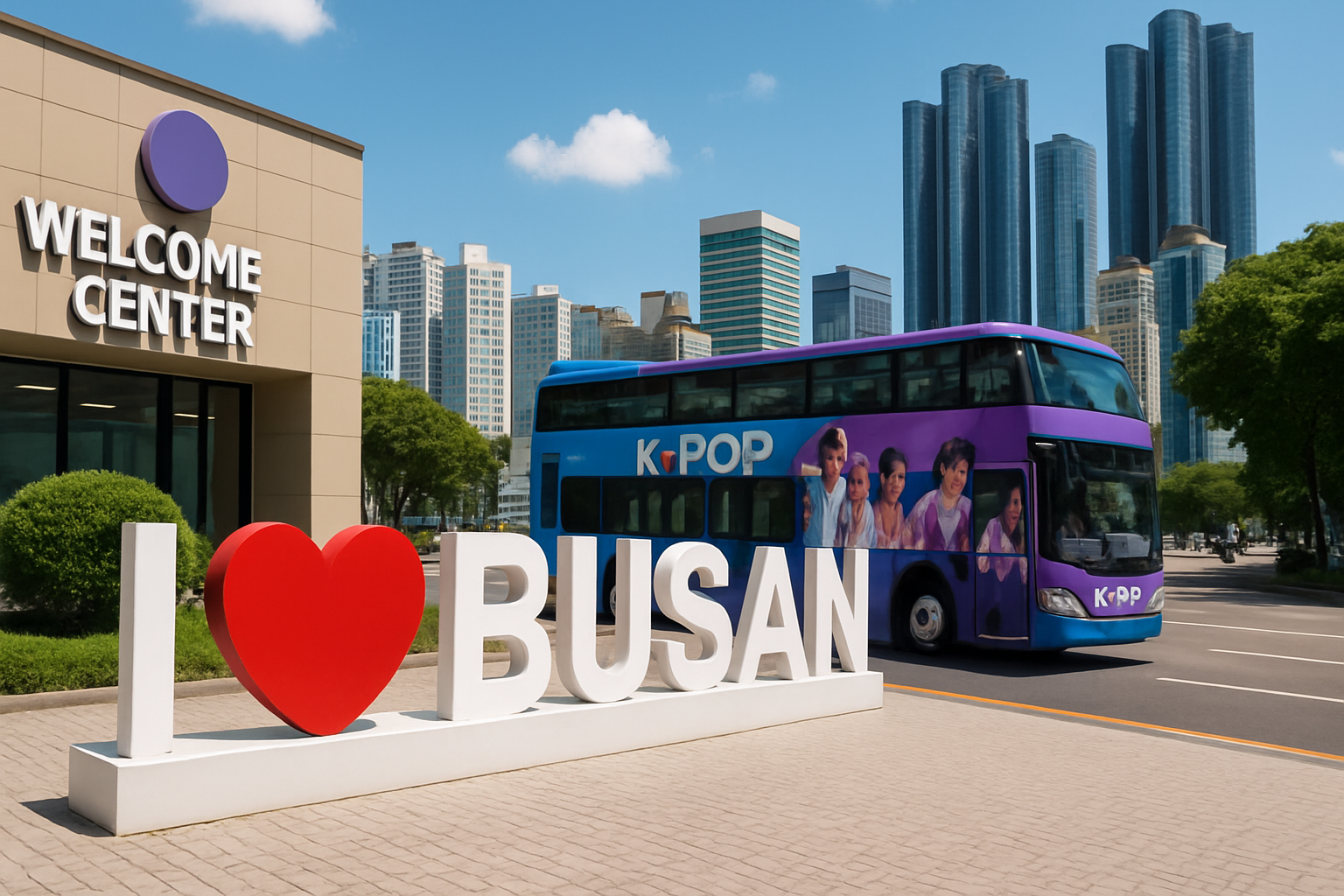
On May 19, three major South Korean institutions signed a landmark agreement that could fundamentally change how foreign tourists spend money in one of Korea's most visited cities. The Korea Simple Payment Promotion Institute (Chairman Kwon Dae-su), the Busan Tourism Organization (President Lee Jeong-sil), and the Busan Economic Promotion Agency (President Song Bok-cheol) joined forces to link 71 mobile payment platforms from 21 countries directly into Busan's existing local merchant payment infrastructure, known as Zero Pay.
This isn't just a tech upgrade. It's a strategic move to redirect tourist spending away from large duty-free stores and department stores — and into the beating heart of Busan's economy: its neighborhood alleyways, traditional markets, and independent local shops.
What Is Zero Pay, and Why Does It Matter?
A quick bit of context for global readers: Zero Pay is South Korea's government-backed QR code payment system designed specifically for small and micro businesses. The name comes from its near-zero transaction fee structure for merchants — a major advantage over traditional credit card processing, which can charge small business owners anywhere between 2.5% and 3.2% per transaction. For a tiny dessert cafe or a traditional craft shop, those fees add up fast.
By connecting 71 foreign apps to Zero Pay's infrastructure, overseas visitors can simply open the payment app they already use back home, scan a QR code, and complete a purchase — no currency exchange, no foreign card rejections, no awkward moments at the register.
The apps included in this network span the biggest names in Asian mobile finance: China's Alipay and WeChat Pay, Taiwan's JKOPay, Singapore's NETS, and Thailand's PromptPay, among dozens of others. Together, these platforms cover the most significant tourist-sending markets for South Korea.
The Numbers Behind the Decision
What's really interesting is just how fast Busan's tourism has been growing — and how the nature of that tourism has shifted. The city welcomed 3.64 million foreign visitors in 2024. And in just the first quarter of this year alone, that number had already crossed the one million mark. That's a sharp upward curve, and city officials are clearly paying attention.
But it's not just the volume. The type of traveler coming to Busan has changed dramatically. The era of the group tour — buses full of visitors shuttled between major landmarks — is giving way to what's being called "hyper-local" individual travel. These are tourists who want to wander independently, find the cafe that went viral on social media, buy a small handmade souvenir from a side-street artisan, and eat where the locals actually eat.
According to a McKinsey Global Payments Trends Report cited in the agreement documents, more than 85% of individual tourists from major East Asian countries now rely on mobile payment apps as their primary spending tool. The same data shows that for Chinese and Taiwanese travelers in particular, whether or not a merchant accepts mobile payment can influence their total spending by as much as 34%. And analysis from the Asian Development Bank suggests that once the payment friction is removed, per-capita tourist spending could rise by at least 18% year-on-year.
In other words, the infrastructure gap wasn't just an inconvenience — it was leaving real money on the table.
On the Ground: What Local Merchants Are Saying
The reaction from Busan's local business community has been enthusiastic, to put it mildly. Two neighborhoods in particular have become reference points for this conversation: Jeonpo Cafe Street in Busanjin District, and흰여울 (Huinnyeoul) Cultural Village on Yeongdo Island — both of which have seen a surge in foreign foot traffic in recent years.
A merchant running a dessert cafe on Jeonpo Cafe Street, where foreign visitors now make up nearly 40% of daily customers, put it plainly:
"Foreign credit cards have frequent processing errors, and the transaction fees — between 2.5% and 3.2% — hit small merchants like us directly. With Zero Pay-based transactions, the fee burden is minimal. A foreign customer just holds up their phone, shows a barcode, and the payment goes through instantly. For alley merchants like us, this is genuinely like rain after a drought."
A shop owner in Huinnyeoul Cultural Village echoed the sentiment, noting that many individual travelers had been passing up small purchases — street food, traditional crafts, items costing just a few hundred Korean won — simply because mobile payment wasn't an option. "Now they can pay intuitively, even for something worth a thousand or two thousand won, using their own home app," they said. "That changes everything for micro-transactions."
The Bigger Picture: Sustainable and Inclusive Tourism
This development also fits into a broader conversation happening across the global travel industry right now. As tourism rebounds strongly post-pandemic, there's growing pressure on destinations to make that tourism work better — not just for big commercial players, but for the local communities that give those places their character in the first place.
The concept of "hyper-local" travel is closely tied to a wider rethinking of what good tourism looks like. A recent study published in the journal Nature Communications by researchers at the University of Queensland estimated that global tourism accounts for approximately 5.2 gigatons of carbon emissions annually — roughly 8.8% of total global greenhouse gas output. That figure has pushed both travelers and the industry to think more carefully about the footprint of each trip.
Part of that rethinking involves spreading economic activity more evenly. When tourists spend only at airport shops and hotel restaurants, the benefit to local communities is limited. When they can easily buy a handmade soap from a grandmother's shop in a quiet alley, or pay for a bowl of fish soup at a market stall without fumbling for cash, the economic ripple extends much further — and in a far more meaningful direction.
South Korea's tourism industry has been grappling with some of these same tensions. Neighborhoods like Bukchon Hanok Village in Seoul have faced overtourism pressures, with residents pushing back against the sheer volume of visitors disrupting daily life. By channeling tourists into a wider range of smaller, more dispersed destinations — and making it frictionless to spend money there — Busan's approach could offer a model worth watching.
What Comes Next
The 71-platform network is now officially operational across Busan. The three institutions behind the agreement have said the goal is to eventually expand Zero Pay's global connectivity citywide, ensuring that every registered small merchant — from the fish cake vendor at Gukje Market to the vintage clothing shop tucked behind Gamcheon Culture Village — is reachable by a tourist paying with their phone from home.
For travelers planning a trip to Busan, the practical takeaway is simple: if you've got Alipay, WeChat Pay, JKOPay, PromptPay, or any of the dozens of other supported apps on your phone, you're now covered across the city's local commerce network. No cash, no currency conversion stress, no awkward declines at the register.
And for Busan's neighborhood merchants, many of whom have watched foreign visitors window-shop but walk away without buying, it may finally be the moment that changes the dynamic — one QR code scan at a time.
This article is based on reports from Ttlnews, Newspenguin, Joongdo.