The Most-Talked-About Festival in Korea
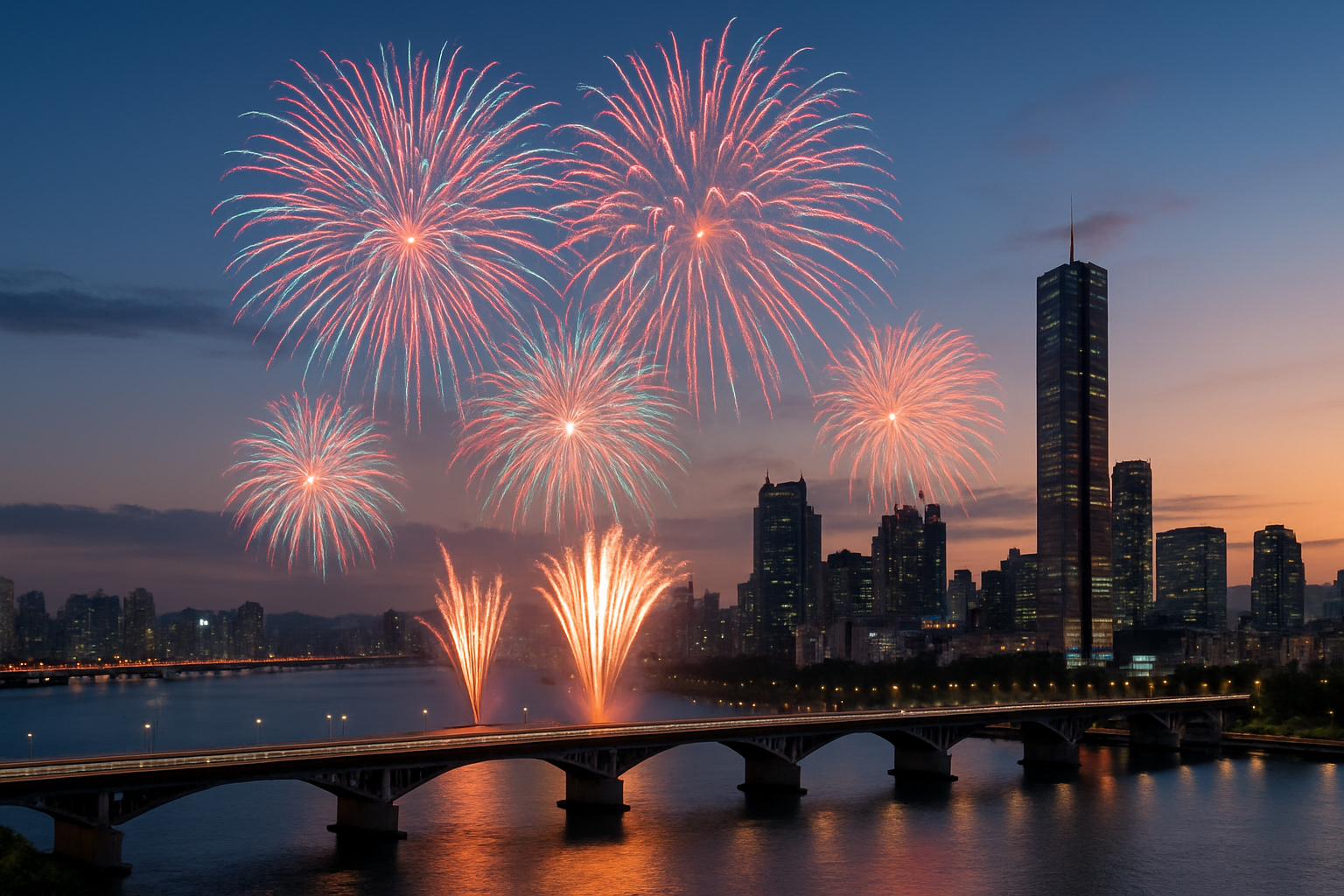
So here's a number that puts things in perspective: one million people. That's roughly how many visitors descend on Seoul's Yeouido district for a single fireworks show that lasts just about 70 minutes. And yet, according to new research data, that event — the Hanwha Seoul International Fireworks Festival — has just been ranked the number one festival in all of South Korea.
The ranking comes from Yanolja Research, a travel and tourism industry research institution, which published its Korea Festival Attractiveness Index, or KFAI. Out of 1,452 festivals evaluated nationwide, the Seoul fireworks festival came out on top with a composite score of 9.34 out of 10. Its name recognition score? A perfect 10. That's based on social media buzz volume, and the numbers back it up — online mentions of the festival grew 18 percent year-on-year, jumping from about 20,554 posts to 24,258 posts in the most recent measurement period.
What's really interesting is that this festival achieves all of that despite being a one-day event. Most major festivals build their audience over multiple days or even weekends. This one packs everything into a single evening in Yeouido, a riverside district in western Seoul known for its financial institutions and the iconic Han River parks.
What Makes It So Special
The Seoul International Fireworks Festival has been running since 2000, organized by Hanwha Group — one of South Korea's largest conglomerates — as part of its corporate social responsibility initiatives. What sets it apart from a regular fireworks display is the competition format: each year, teams from different countries are invited to showcase their pyrotechnic artistry, each bringing a distinct national style and technical approach to lighting up the Seoul skyline.
Last year's 21st edition featured teams from South Korea, Italy, and Canada. For the upcoming 2026 edition — the 22nd — the competing nations will be South Korea, the United States, and the United Kingdom. The competitive element means the show feels fresh every single year, and online communities spend a surprising amount of time debating which team put on the best performance.
There's also the accessibility factor. The festival is free to attend, which makes it a genuine public event for families, couples, and groups of friends. Food trucks, picnic zones, and photo spots are set up around the venue to help fill the hours of waiting before the main show begins. And after the fireworks, the natural flow of foot traffic toward the restaurants and scenic spots in the Yeouido and Mapo neighborhoods has become a beloved part of the evening ritual for many Seoulites.
"The Seoul International Fireworks Festival secured the most dominant public attention among all 1,452 festivals nationwide despite the physical constraint of being held on a single day. It is a result that proves the authenticity and content quality of the festival through data." — Jang Su-cheong, Director of Yanolja Research and Professor at Purdue University, USA
The Problem With One Million People in One Place
Here's the thing, though. While the festival scored a perfect 10 for awareness, its actual visitor experience score — the attractiveness rating based on real attendees — came in at 8.67 points, placing it seventh in the country. That gap between recognition and satisfaction tells an important story.
The logistics of handling a million people in one neighborhood, for a single evening, are genuinely staggering. The most common complaints year after year center on transportation. The Yeouinaru subway station — the closest stop to the festival grounds — frequently has to skip stopping there entirely due to dangerous crowding, with exits closed and trains passing through without halting. After the show ends, getting home can take hours.
Securing a good viewing spot requires arriving at least four hours in advance. Some viewing areas suffer from poor sound quality, which undercuts the multimedia experience of watching fireworks choreographed to music. Vendors and convenience stores routinely run out of food and drinks long before the event ends, and restroom lines stretch to extraordinary lengths. Nearby hotels and restaurants raise their prices significantly, and bookings fill up weeks in advance.
The 2026 Edition Comes Early — and Faces New Challenges
The upcoming festival on September 5 this year is scheduled 22 days earlier than last year's event, which was held on September 27. Organizers moved the date forward to better align with the Chuseok holiday period — Korea's major autumn harvest celebration — and to capture more international tourist visits during that window.
But moving the festival into early September introduces a significant new variable: extreme heat. South Korea has been experiencing record-breaking summer temperatures, and forecasters warn that intense heat could persist well into September. Authorities are already treating heat-related illness prevention as a priority concern for an outdoor event of this scale.
The Seoul Metropolitan Government is planning shaded cooling shelters with air conditioning units at key points around the venue, along with free cold water distribution. Should a heat wave warning be officially issued on the day of the event, misting vehicles and air-conditioned buses will be deployed as temporary cooling stations where visitors can take breaks.
For the first time in the festival's history, a pre-event celebration will be held on the evening of September 4, the day before the main show. And Hanwha has committed to deploying approximately 4,700 safety and crowd management personnel over the two days — a record number — including 1,200 company employee volunteers.
Smarter Crowd Management This Year
Organizers are also rolling out more sophisticated tools to manage the inevitable crowd surge. A system called "Orange Safety," developed in partnership with major telecommunications providers, will measure real-time crowd density using mobile network data. Circuit TV cameras positioned across the Yeouido outer zone, Wonhyo Bridge, and the Mapo and Ichon areas will monitor foot traffic patterns, allowing authorities to redirect crowds before dangerous concentrations form.
Seoul city is also working with the three major domestic telecom companies to install temporary cell tower equipment in the area to prevent communication blackouts during peak attendance. Additional portable restrooms and facilities will be set up in the Yeouido and Ichon Han River Park areas. Expanded subway runs on Lines 5 and 9, coordinated bus rerouting, and increased police and fire service presence are all part of the comprehensive safety plan being finalized with relevant agencies.
Whether these measures will finally close the gap between the festival's sky-high name recognition and its on-the-ground visitor experience remains to be seen. But for now, one thing is clear: when it comes to getting a million people excited about a 70-minute show, the Seoul International Fireworks Festival has no equal in Korea.
This article is based on reports from Kdfnews, Maeil Business, Yonhap News.