Your Weekly Korean Consumer and Market Snapshot
So here is the thing about Korean retail and business news — there is always a lot happening at once, and this week is no different. From a supermarket chain teaming up with a Tesla accessories brand to budget-friendly sake hitting shelves, plus some eye-catching moves on the Korean stock market, let us break it all down in a way that actually makes sense for a global audience.
Emart Gets Into the Tesla Game
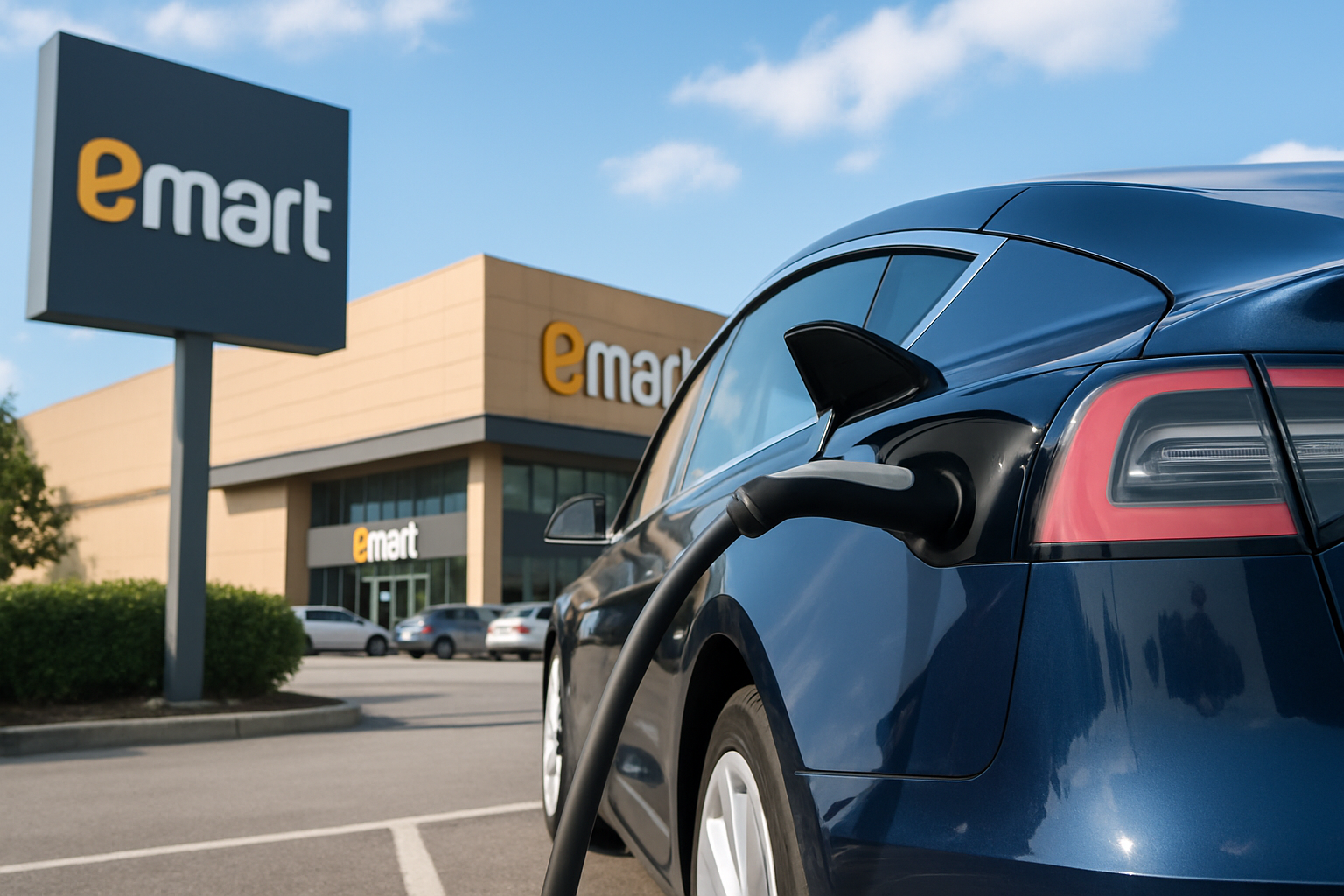
Let us start with something that genuinely caught our attention. Emart — South Korea's largest hypermarket chain, think of it as the Korean equivalent of Walmart or Tesco — has become the first offline retailer in the country to partner with T PARTS, a premium customization accessories brand made specifically for Tesla vehicles.
What's really interesting here is the scope of it. T PARTS supplies over 200 types of products, ranging from full electronic components all the way down to tire valve caps. Through this new collaboration, 26 of those products are now available in around 30 Emart locations, with plans to roll out to more stores gradually.
If you are a Tesla owner in Korea, you can now pick up key fob and card key cases, phone and tablet mounts, LED lighting, a "Cyberheart" air freshener (yes, that is a real product), multi-hubs, in-car cushions, wiper brush sets, and storage organizers — all under one roof while doing your grocery shopping. It is a clever move by Emart, signaling that Korean retailers are taking the electric vehicle lifestyle seriously as a consumer category.
And the Tesla tie-up is just part of a broader autumn automotive push from Emart. The chain is running discounts of up to 40 percent on over 130 car care products through October 29, timed to the fall season when more Koreans are heading out for camping trips and weekend drives. The sale includes wiper blades, fuel additives, car shampoos, glass cleaners, and wax and coating products. A few standout deals worth mentioning: silicon water-repellent hybrid wipers in all sizes for under 5,000 Korean won (roughly under four US dollars), Bullsone fuel additives for around 9,000 won, and a Bullsone spray chain and frost remover kit for around 10,000 won.
Lotte Goes Big on Budget Sake
Over at Lotte Mart and Lotte Super — another major Korean retail chain — the story is all about value drinking. The retailer has just launched a 1.8-liter version of "Sumo," a Japanese sake brand that has built a loyal following in Korea thanks to its clean and smooth flavor profile. To put that in context, the new format doubles the volume of the existing 900ml bottle while cutting the price per 100ml by about 10 percent. So you are getting more sake for less money per sip — which, in the current high-inflation environment in Korea, is exactly the kind of message that resonates with shoppers.
The packaging has also been refreshed, swapping the original light blue wrapping for a new purple design to make it stand out more on shelves. And this is not a one-off stunt. Sumo currently ranks fifth in Japanese sake sales at Lotte Mart for 2025 year-to-date, which tells you this brand already has a real fanbase.
Lotte has been leaning into the "value alcohol" category for a while now. Their 1.8-liter version of "Ganbare Otosan," another Japanese sake, launched back in June last year and has since climbed to third place in the category's year-to-date sales rankings. The strategy is clear: give budget-conscious consumers a reason to trade up in volume without trading up in cost.
What Is Moving on the Korean Stock Market
Now, let us zoom out to the broader Korean financial picture, because there are some genuinely significant signals worth understanding.
Samsung Electro-Mechanics Riding the AI Wave
Samsung Electro-Mechanics, the component manufacturing arm of the Samsung Group, is having a strong moment. Analysts are calling it a "structural boom" driven by AI server demand — specifically for two key components: MLCCs (multi-layer ceramic capacitors, which are tiny but essential parts in virtually every electronic device) and FC-BGAs (flip-chip ball grid arrays, which are advanced semiconductor packaging substrates). Simply put, the more AI data centers get built, the more of these components are needed, and Samsung Electro-Mechanics is well positioned to benefit.
LG Electronics Jumps 11 Percent on Robotics News
LG Electronics saw its stock surge approximately 11 percent after the company announced it is accelerating its robotics business. This is part of a broader pivot LG has been making away from traditional home appliances and toward higher-tech, higher-margin sectors. An 11 percent single-day jump is a significant move for a company of LG's size, and it signals that the market is paying close attention to where Korean conglomerates are placing their bets for the next decade.
APR Cosmetics Hits Record Earnings
APR — a Korean beauty and lifestyle company perhaps best known internationally for its Medicube skincare brand — posted record-breaking earnings, sending its stock up around 9 percent. Crucially, the broader cosmetics sector rose alongside it, reflecting continued investor confidence in Korea's beauty industry as a global export powerhouse. If you follow K-beauty trends, this one is worth keeping an eye on.
Studio Dragon Takes a Hit
On the flip side, Studio Dragon — the production company behind many of Korea's most successful dramas, including hits that have traveled well internationally through Netflix — saw its share price fall sharply. The reason cited is rising costs associated with producing content for OTT (over-the-top streaming) platforms, which is squeezing the company's profit margins. This is a tension that production companies around the world are navigating right now, and Studio Dragon is no exception.
The KOSPI's Long-Term Horizon
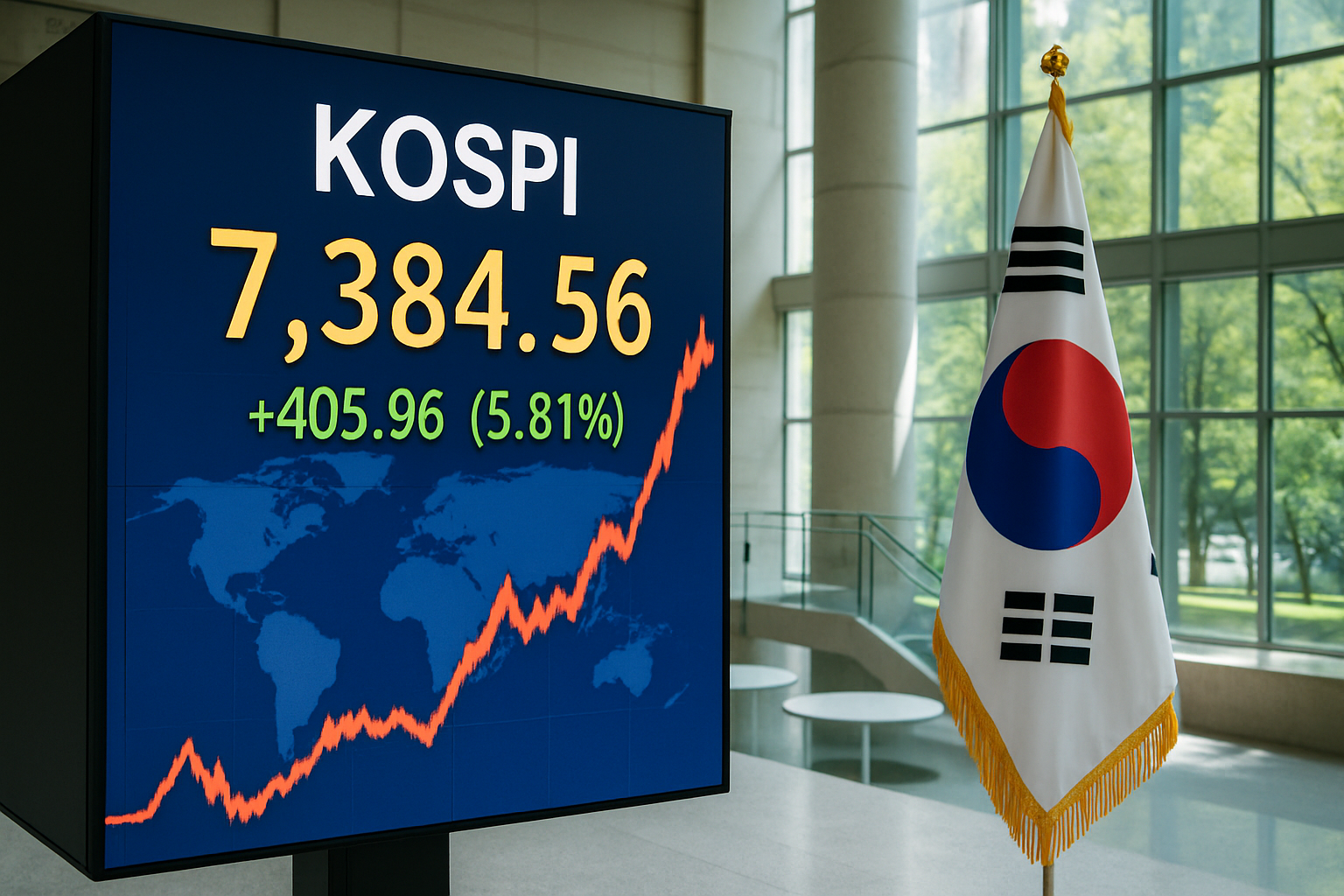
The KOSPI, South Korea's main stock index, briefly touched the 8,000-point level before pulling back — a milestone that generated significant discussion in Korean financial media. While analysts acknowledge the index is in a short-term correction phase, many are projecting a long-term target of 10,000 points for the KOSPI. For context, the index spent years hovering in the 2,000 to 3,000 range before recent momentum, so a 10,000 target represents a very different vision of where Korean equities could go over the next several years.
A Few Other Stories Worth Noting
- DB Insurance reported a 40 percent drop in first-quarter net profit, attributed to one-off accident claims and a deteriorating loss ratio — a reminder that even established Korean insurers are feeling pressure from unpredictable external events.
- Korea Hydro and Nuclear Power (KHNP) is doubling down on a dual strategy under its new leadership direction, simultaneously advancing AI integration and nuclear power development — a combination that reflects South Korea's ambitions in both the energy and tech sectors.
- Kia President Song Ho-sung received a commendation from South Korea's Minister of Employment and Labor for the automaker's contributions to employing people with disabilities — a recognition that highlights corporate social responsibility efforts within Korea's major auto industry players.
So that is your Korean business and consumer roundup for the week. Whether you are a K-beauty investor, a Tesla owner shopping at Emart, or just someone trying to understand where the Korean economy is heading, there is clearly no shortage of interesting developments to follow. We will keep watching and keep you posted.
This article is based on reports from Biztribune, Biztribune, Newsprime.