K-Beauty Is Having a Moment — But the Real Story Is What's Behind It
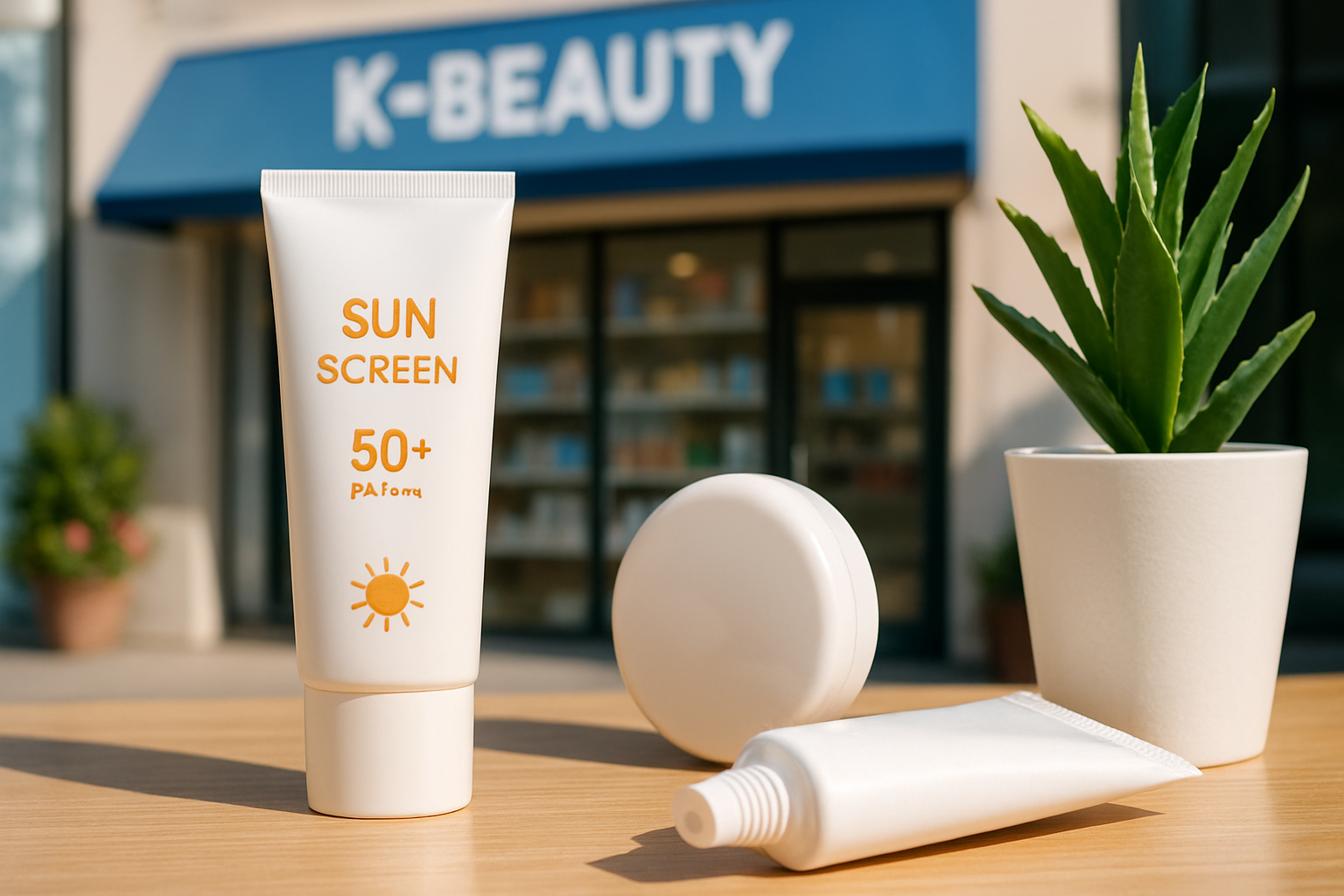
If you've been anywhere near the beauty section of Amazon lately, you've probably noticed something: Korean sunscreens are perpetually sold out. Not just one brand — multiple. And if you've dug into the comment sections, the reviews are almost universally glowing. So here's the thing: while the world is busy buying the products, there's an entire ecosystem quietly powering that boom from behind the scenes. Today, we're pulling back the curtain on the companies making K-beauty's global rise not just possible, but sustainable.
The Ingredient Maker Nobody Talks About: Sunjin Beauty Science
Let's start with a company most people outside the industry have never heard of — Sunjin Beauty Science. And honestly, that's kind of the point. This is a business that thrives in the background, supplying the core raw materials that go into the K-beauty products consumers worldwide are obsessing over.
The company's origin story is surprisingly humble. Back in 1978, it launched as a general chemical manufacturer called Sunjin Chemical, making surfactants — those are the compounds that help water and oil mix together, found in everything from shampoos to dish soap. Not exactly glamorous. But the commodity chemical market is brutally competitive with thin margins, and the company knew it needed to pivot.
That pivot came in the late 1990s. In 1997, Sunjin became the first company in South Korea to successfully mass-produce silica beads for cosmetics — a specialty ingredient used to give skincare products that smooth, refined texture. CEO Lee Seong-ho, who joined the manufacturing side in 1999 after leaving a stable job in what was then South Korea's booming IT sector, recalls that the niche was so overlooked at the time that it actually gave the company room to grow freely.
"The Korean cosmetic ingredients industry was being left alone as a small niche — which gave us the space to grow and create real impact," Lee said.
By 2004, Sunjin was landing global luxury beauty brands as clients. Today, roughly 80% of the company's revenue comes from exports. In 2024, that translated to annual sales of approximately 80.7 billion Korean won — or roughly 58 million US dollars — up from 72.6 billion won just two years earlier.
Why Hawaiian Coral Reef Laws Changed Everything for Sunjin
What's really interesting is how a piece of environmental legislation thousands of miles away became a massive business accelerator. Hawaii — along with several other coastal resort destinations — banned certain chemical sunscreen ingredients that were found to bleach and kill coral reefs. This created an urgent demand shift in the global sunscreen market.
Here's a quick explainer for context: sunscreens come in two main types. Chemical (or organic) sunscreens absorb UV rays and convert them to heat. Mineral (or inorganic) sunscreens — made from zinc oxide and titanium dioxide — sit on top of the skin and physically reflect UV rays like a mirror. The mineral variety doesn't get absorbed into the body and is considered far gentler on both skin and marine ecosystems.
Sunjin Beauty Science's core products are zinc oxide and titanium dioxide — the exact ingredients at the heart of mineral sunscreen. And in 2019, the US Food and Drug Administration made things even clearer by declaring those two ingredients the only ones it recognizes as both safe and effective for sunscreen use in the American market. That same year, Sunjin became the world's first company to develop and mass-produce rod-shaped non-nano zinc oxide, a refined form of the ingredient that improves texture and performance.
The timing was almost perfect. As global beauty brands scrambled to reformulate their products with mineral ingredients, Sunjin already had the technology, the production capacity, and — crucially — FDA-compliant manufacturing facilities. The company's factory in the Janghang National Industrial Complex in South Chungcheong Province was the first cosmetic ingredient facility in South Korea to pass an on-site FDA inspection with zero deficiencies, back in 2019.
Last year, Sunjin went further, investing approximately 18 billion won to build a dedicated OTC (over-the-counter drug) cosmetics finished-goods manufacturing facility — because in the US, sunscreens are regulated as OTC drugs, not cosmetics, which means the entire supply chain must meet pharmaceutical-grade standards. Many brands trying to break into the US market can't find compliant manufacturers. Sunjin is positioning itself as exactly that solution.
CJ Olive Young Is Bringing the Full Korean Beauty Store Experience to America
While ingredient makers lay the groundwork, CJ Olive Young — South Korea's dominant beauty retail chain — is making a very different kind of move. On May 29, the company opens its first-ever US store in Pasadena, California, on Colorado Boulevard in the heart of one of the Los Angeles area's most upscale lifestyle districts. We're talking neighbors like Apple Store, Alo, and Tiffany and Co. This is not a soft launch.
The Pasadena store spans 803 square meters across a single floor — comparable in size to one of Olive Young's larger "Town" format stores back in Korea. It will carry around 400 brands and over 5,000 products across eight categories: skincare, makeup, hair care, body care, ingestible beauty and snacks, lifestyle, beauty tools, and fragrance. About 80% of those brands are Korean.
Selling a Culture, Not Just Products
What makes this launch genuinely interesting is the philosophy behind it. CJ Olive Young is not trying to be another shelf at Sephora. The company has framed this store explicitly as a space for exporting K-beauty culture — not just products.
And there's a real logic to that. Even as the US has overtaken China to become K-beauty's largest export market, the way Korean cosmetics are sold in America has largely been fragmented. You might find a Korean toner at Ulta, a Korean sunscreen on Amazon, and a Korean essence at a specialty shop — but nobody's really connecting the dots for consumers. Nobody's teaching the method.
Olive Young's answer is to recreate the full Korean beauty retail experience. That includes skin diagnostic devices, a "Skincare Lesson" service where staff walk customers through routines like double cleansing and layering serums, and product displays organized not just by brand but by skin concern, ingredient, and routine step. There's a dedicated washbasin area where customers can actually try cleansing products, plus scalp diagnostic services.
K-beauty's famous multi-step skincare routine — sometimes referred to as the "8-step" system — encompasses things like double cleansing, using both a serum and a cream, and consistent sun protection. These aren't concepts that translate automatically through product packaging. Olive Young wants to be the place where American consumers actually learn how to use what they're buying.
Staff training has been a major investment. In other US retail environments, K-beauty brands often get a section of shelf space but minimal support — store employees typically don't have deep knowledge of the products. Olive Young's Pasadena team has been specifically trained in K-beauty products, trends, and consultation techniques to bridge that gap.
Cosmax Is Taking K-Beauty Upmarket — and Going Global
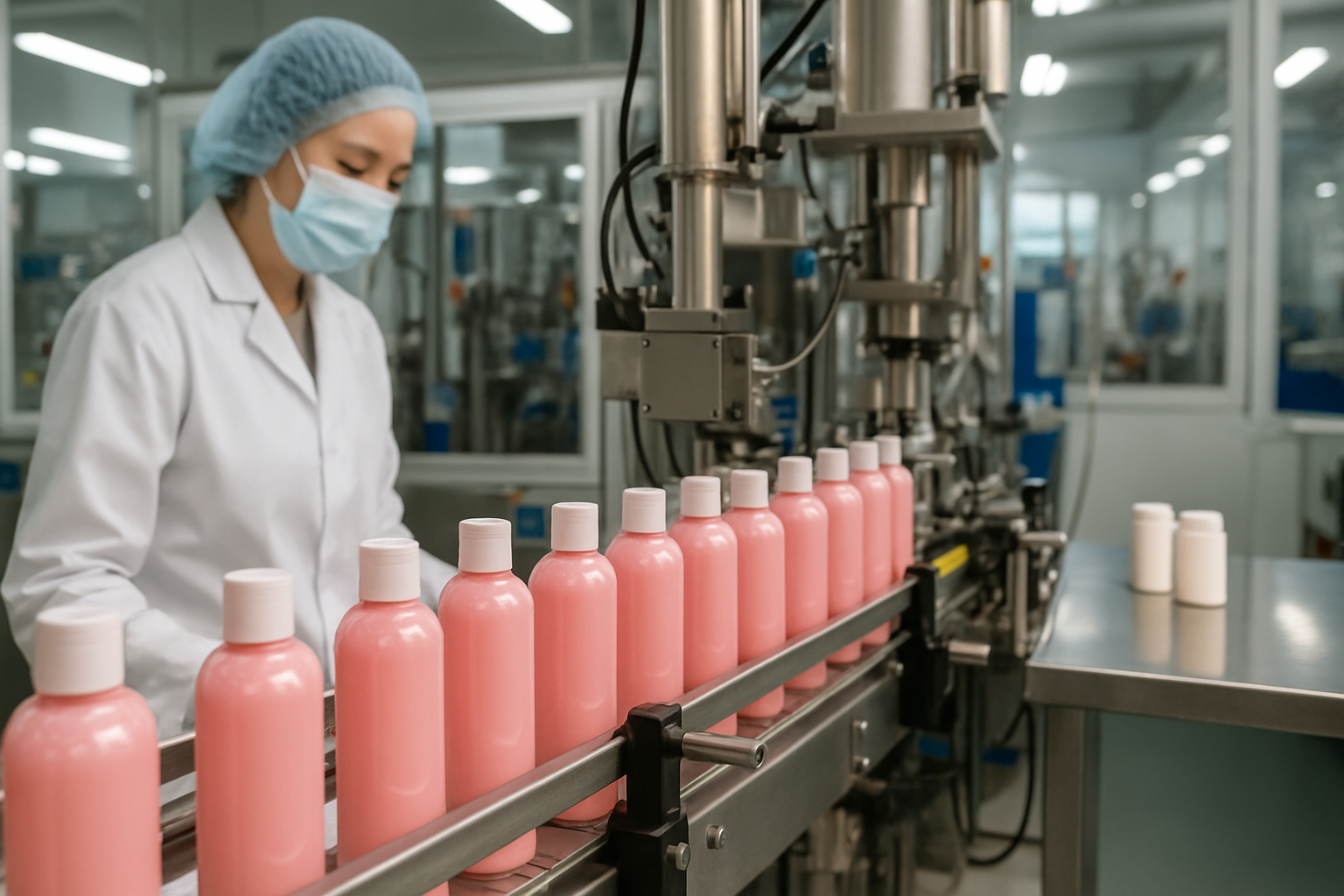
Then there's Cosmax, one of the world's largest cosmetics ODM — or original design manufacturing — companies. If you're not familiar with the ODM model, here's the short version: brands come to Cosmax with an idea, and Cosmax handles the research, development, and manufacturing. It's how many K-beauty products actually get made, even if the brand name on the label belongs to someone else entirely.
Cosmax has been riding the K-beauty wave aggressively, and its US operation is showing serious momentum. In the first quarter of 2026, Cosmax's American subsidiary posted revenue of 42 billion won — a 46.5% jump compared to the same period last year. The growth is being driven by indie beauty brands on the US West Coast, with demand expanding beyond just color cosmetics into skincare and body products.
The strategic vision behind this is being credited largely to Lee Byung-joo, the vice chairman and CEO of Cosmax BTI, the group's holding company. Lee previously served as head of Cosmax USA and has been driving a restructuring of the North American operation — including closing an Ohio factory, consolidating into a New Jersey facility, and launching a California-based entity to better serve the West Coast market.
In February 2026, Cosmax made its first-ever move into European manufacturing by acquiring a 51% stake in Keminova, an Italian cosmetics ODM company with over 40 years of experience in derma cosmetics and clean and vegan beauty formulations. The acquisition gives Cosmax a production base inside Europe — a significant step for a company looking to compete at the premium end of the global market.
At the Cosmoprof Bologna trade fair in March 2026 — one of the world's largest professional beauty industry events — Cosmax won the top prize in the skincare category for what it's calling its "1,000 Trillion Moisturizer," a formulation designed to signal its capabilities in the high-end market.
The company is also investing in AI-powered personalization, setting up an "AI Innovation Group" within its digital business division to develop customized cosmetics platforms. As hyper-personalized beauty becomes a stronger consumer trend globally, Cosmax is betting that ODM expertise can evolve into a technology-driven service offering.
The Bigger Picture
Put all three of these stories together and you get a pretty complete picture of how K-beauty is maturing as an industry. It's no longer just about viral products or celebrity endorsements. There's a full supply chain — from specialty ingredient producers to ODM manufacturers to retail chains — that is systematically building the infrastructure for long-term global dominance.
South Korea's food and drug safety authority reported that last year, Korean cosmetics were exported to 202 countries — 30 more than the year before. The US is now the top destination. The question isn't whether K-beauty has arrived on the world stage. It clearly has. The question is how deep those roots go. And based on what these companies are building right now, the answer seems to be: very deep indeed.
This article is based on reports from Naver News, Dnews, Naver News.