A New Chapter for Korean Beauty and Pharma
If you've been paying attention to the global beauty and healthcare space lately, you already know that "K-beauty" has moved well beyond sheet masks and glass skin tutorials. What's really interesting right now is what's happening behind the scenes — the manufacturers, the pharmaceutical companies, and the ODM giants (that's short for Original Design Manufacturers, companies that design and produce products that other brands then sell under their own names) that are quietly driving one of the biggest industrial shifts in Korean business today.
So let's break down three major stories happening right now across Korea's cosmetics and pharma sectors, because together they paint a pretty compelling picture of where this industry is heading.
Dong-A Pharmaceutical: The Old Guard Still Has Plenty Left in the Tank
First up, let's talk about Dong-A Pharmaceutical — a company that has been headquartered in Yongdu-dong, Dongdaemun District, Seoul since 1958. That's right, nearly seven decades in the same neighborhood, which is why locals call them the area's "anchor tenant." And based on their recent numbers, they're not going anywhere.
In 2025, Dong-A Pharmaceutical posted revenue of 726.3 billion won, up 7% from the previous year, with operating profit growing 2% to 86.9 billion won. Then in the first quarter of this year, they kicked things up another notch with revenue of 188 billion won — a 10.5% jump year-on-year. Look at the three-year trend and it's a clean upward line: 631 billion won in 2023, 678.7 billion won in 2024, and 726.3 billion won in 2025.
Here's the thing — a lot of this growth still comes from their classic products, the kind of thing every Korean household has in the medicine cabinet. Bacchus-D, their iconic taurine energy drink that's been a staple of Korean fatigue recovery culture for decades, brought in 142.6 billion won last year, up 1.1%. The broader Bacchus family, including Bacchus-F and their newer Eol Baksa line, grew nearly 12% to 143.8 billion won. Their cold medicine Panpyrin hit 47.4 billion won, mouthwash brand Garglin grew 8% to 32.4 billion won, and digestive aid Venacio climbed 11.1% to 19 billion won.
Not everything went up — their premium vitamin brand Orthomol dipped 8.3% to 119.4 billion won, likely because a wave of similar dual-format multivitamins flooded the market last year. But here's the context: Orthomol was still the best-selling multivitamin in South Korea. A dip from the top is still the top.
Pharma Meets Beauty: The Derma-Cosmetic Play
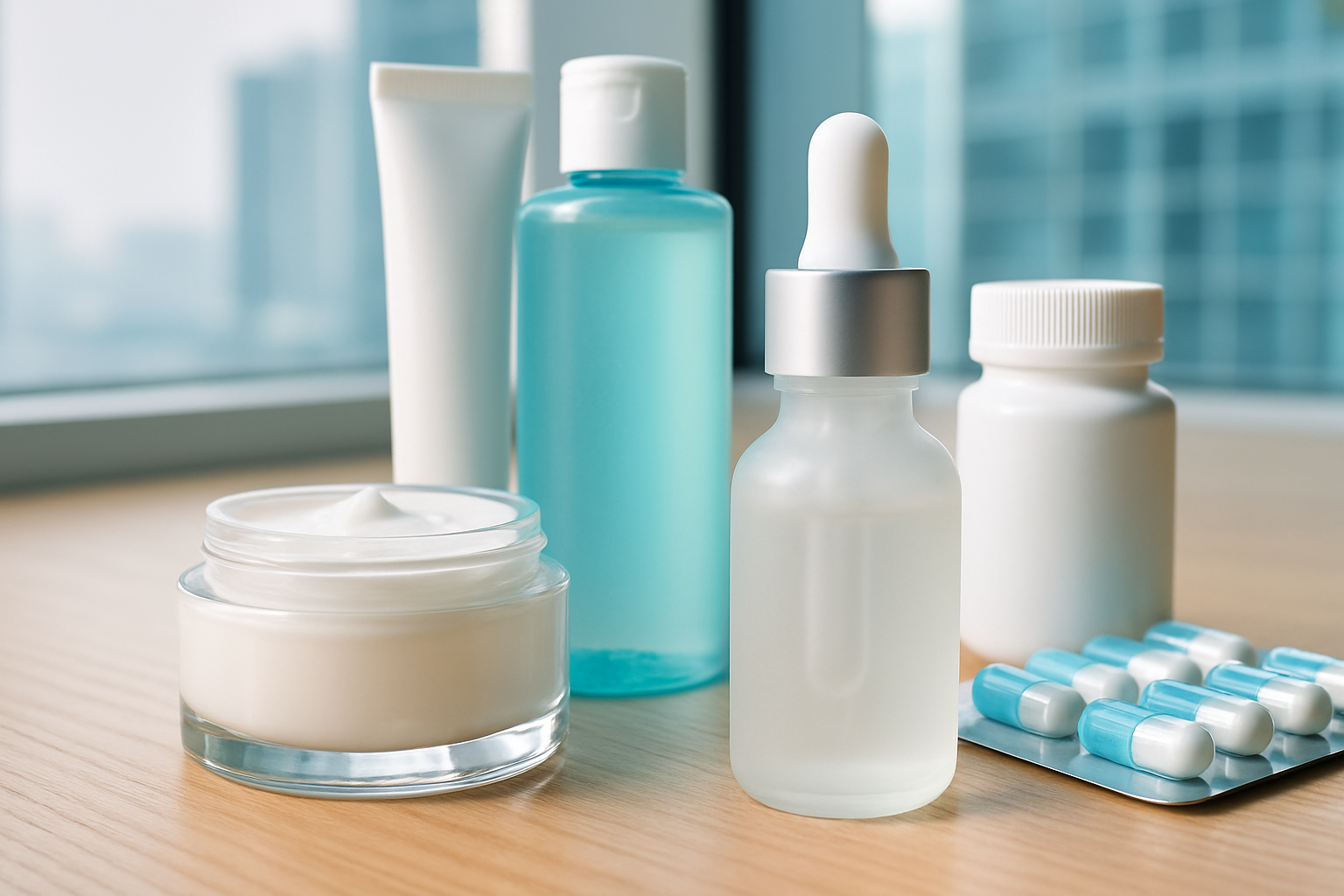
What's really caught the industry's eye, though, is Dong-A's move into "derma-cosmetics" — that blurry, high-value intersection between pharmaceutical-grade skincare and traditional cosmetics. Their skin-brightening treatment Melatonin Cream recorded a massive 58.6% revenue jump last year to 18.4 billion won, and has now surpassed 3 million units sold in just five years since launch. That's a compelling proof of concept for their strategy of blending medical credibility with beauty appeal — and it's carving out a new lane in the pharmacy retail channel.
67 Years of Community, Not Just Commerce
Beyond the balance sheet, Dong-A has built something that's harder to quantify: genuine community trust. Every May, they host a charity bazaar in Yongdu-dong, open to local residents. Since the first event in 2009, the cumulative donations have reached approximately 1.6 billion won — all directed to the Dongdaemun District Social Welfare Council to fund scholarships for low-income students, free meal programs, and emergency living support. It's the kind of ESG — Environmental, Social, and Governance commitment — that isn't just a press release, but a decades-long relationship with a neighborhood.
Cosmax: Engineering the Premium Wave from the Inside
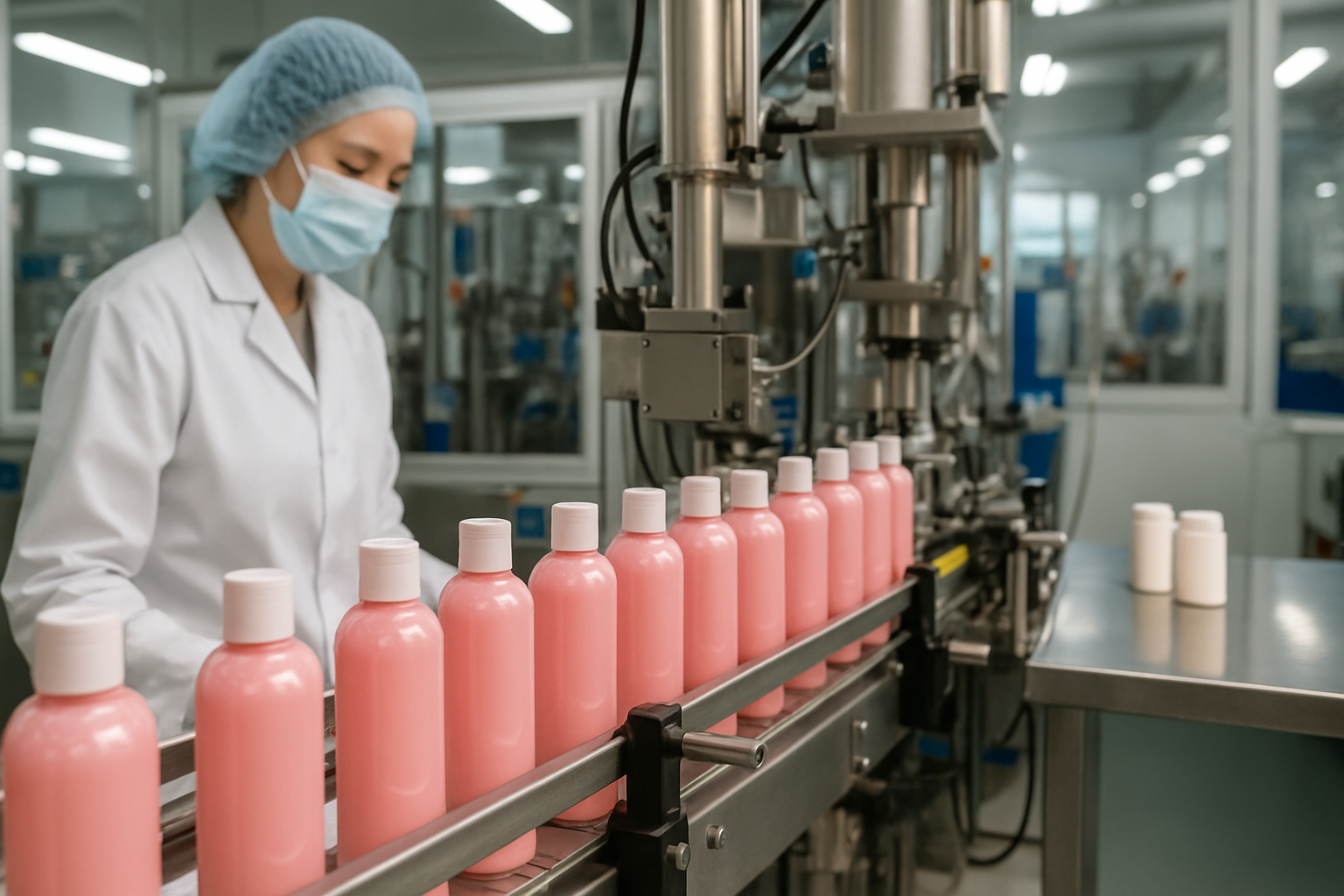
Now let's shift to Cosmax, one of Korea's largest cosmetics ODM groups and a company that's been quietly enabling the global K-beauty boom from behind the scenes. When a trendy indie brand in Los Angeles launches a viral serum, there's a reasonable chance Cosmax made it.
The latest data from Korea's Ministry of Food and Drug Safety tells you everything you need to know about the moment we're in: last year, Korean cosmetics were exported to 202 countries — 30 more than the year before. K-beauty isn't just trendy anymore. It's mainstream.
Cosmax has been riding that wave strategically, and the numbers back it up. Their U.S. subsidiary posted first-quarter revenue of 42 billion won, up a staggering 46.5% year-on-year. The growth is coming from indie brand customers on the West Coast, expanding from color cosmetics like lip products and blushers into skincare and body care — a sign that the relationship is deepening, not just broadening.
Analysts at Shinyang Securities are projecting the U.S. subsidiary's full-year 2026 revenue at 160.5 billion won, up 21% from the prior year, with a quarterly breakeven on operating profit expected once revenues hit the 40 billion won per quarter threshold. They're nearly there.
Europe, AI, and the Man Behind the Strategy
A lot of the credit for Cosmax's global restructuring is being directed toward Lee Byung-joo, Vice Chairman and CEO of Cosmax BTI, the group's holding company. Since taking the role in 2023, Lee — who previously ran Cosmax USA — led the consolidation of U.S. operations, shutting down the Ohio factory and integrating into a New Jersey hub while launching a California entity to better serve the West Coast market.
On the European front, Cosmax made history in February by acquiring a 51% stake in Keminova, an Italian cosmetics ODM company with over 40 years of expertise in derma-cosmetics and clean beauty formulations. It's the first time in Cosmax's history that they've established a European production base — and Lee reportedly oversaw the entire acquisition process personally.
Then there's the AI angle. Cosmax has established an "AI Innovation Group" within its digital business unit, working to build a personalized cosmetics platform powered by artificial intelligence. In an era where hyper-personalization is becoming a genuine consumer expectation rather than a gimmick, this is the kind of infrastructure play that could define the next decade of ODM competition.
"We are doing our best to ensure that K-beauty can be established as a symbol of premium quality in the global market, backed by Cosmax's R&D capabilities," a Cosmax Group spokesperson said.
Kolmar Korea: From Sunscreen to Luxury Skincare Contracts
The third piece of this puzzle is Kolmar Korea, another heavyweight in the ODM space, and they're having a genuinely remarkable quarter. In Q1 2026, the company's domestic entity posted revenue of 343 billion won and operating profit of 51.2 billion won — up 25% and 51% respectively from the same period last year. Those are record-breaking quarterly figures.
Their product breakdown is interesting: skincare accounts for 55% of revenue, suncare 26%, and color cosmetics 14%. What's driving the margin improvement isn't just volume — it's who they're selling to. Kolmar has been steadily winning over global luxury brand clients for skincare contracts, and higher-end orders naturally come with better pricing and stronger margins.
The Sunscreen Secret Weapon
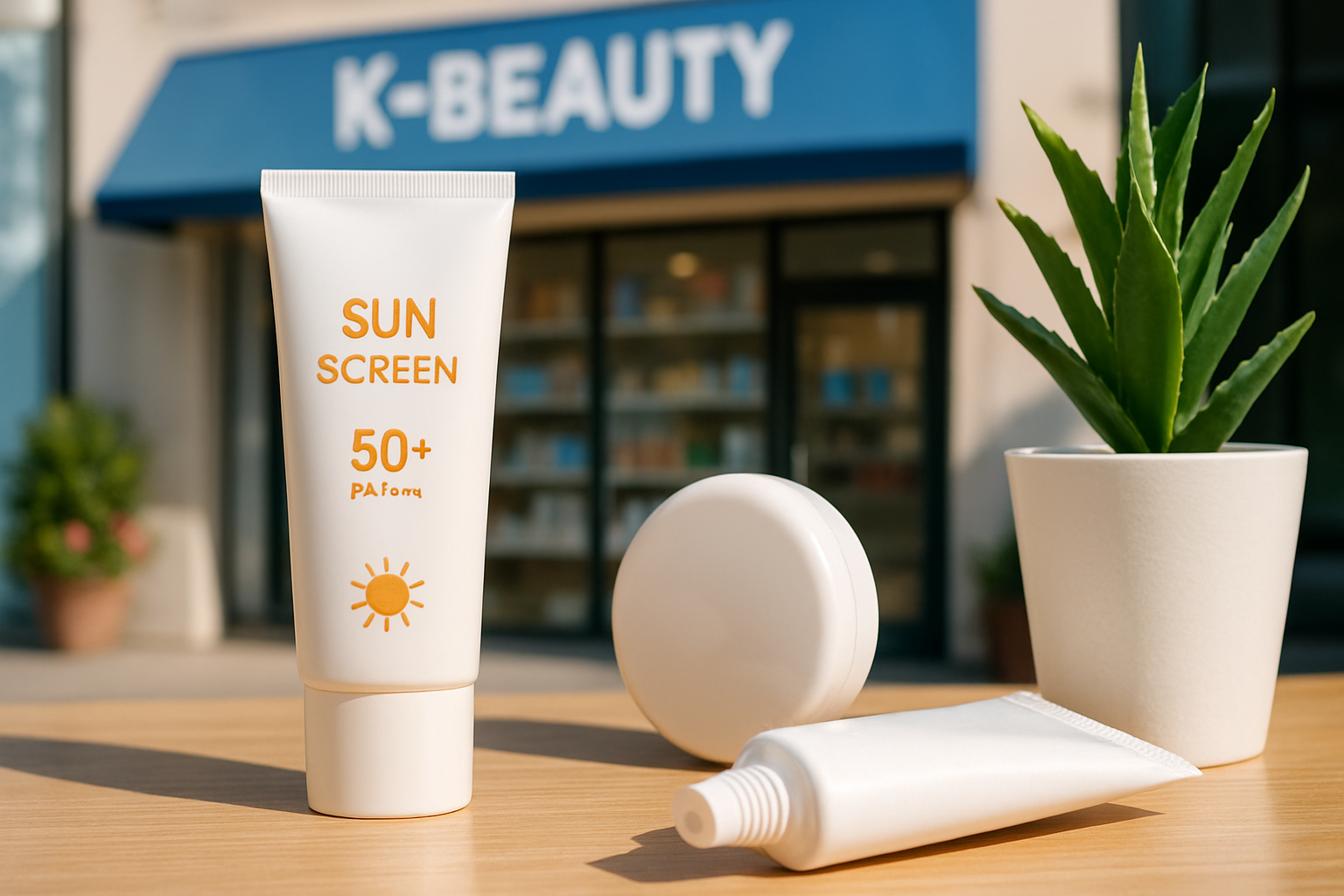
So here's what makes Kolmar's skincare push particularly credible: they built their reputation in suncare, which is actually one of the most technically demanding product categories in cosmetics. A good sunscreen has to deliver verified SPF and PA ratings, minimize the dreaded white cast, feel lightweight on skin, bond properly to the surface, and remain chemically stable under UV exposure — all at the same time. Getting that right requires serious formulation expertise.
The logic is straightforward: if a manufacturer can nail all those variables in suncare, skincare clients — who care deeply about texture, skin feel, and stability — are going to trust them. Kolmar is essentially leveraging its sunscreen credibility as a calling card to luxury skincare buyers globally.
To support the scale-up, Kolmar has been making structural moves. They launched a new "Global Growth and Innovation Division" in March, consolidating overseas operations, global sales, and international business development under one roof to speed up decision-making with major global clients. And on the production side, their second U.S. factory in New Jersey has been running at full capacity since the second half of last year, giving them the local manufacturing footprint that global brands often require.
Vice Chairman Yoon Sang-hyun of Kolmar Holdings appears to be the strategic force behind this expansion push — the through-line connecting the suncare expertise, the luxury skincare push, and the infrastructure investments.
The Bigger Picture
Step back and look at all three of these companies together, and you see a consistent thesis emerging: Korean health and beauty companies are no longer content to compete on value. They're building for premium. Dong-A is merging pharma credibility with cosmetics. Cosmax is acquiring European manufacturing and building AI platforms. Kolmar is parlaying its sunscreen science into luxury skincare contracts.
The global appetite for K-beauty and K-health products isn't slowing down — 202 export markets is proof of that. The question now is whether Korean companies can own the top end of those markets, not just the accessible end. Based on what we're seeing in Q1 2026, they're giving it a serious shot.
This article is based on reports from Industrynews, Naver News, Businesspost.