A Industry in Motion
So here's the thing about K-beauty right now — it is not just a trend anymore. It is a full-scale industrial story, and the pieces are moving fast. From a Korean cosmetics giant rewriting its global strategy after a bruising China setback, to ODM manufacturers hitting record highs, to a department store chain quietly becoming a foreign tourist magnet — K-beauty in 2025 is looking less like a cultural moment and more like a structural shift in the global beauty industry.
Let's break it all down, because there is a lot happening at once.
Amorepacific's Long Road Back
If you follow Korean beauty, you know Amorepacific — it is the group behind household names like Sulwhasoo, Laneige, and Innisfree. But what you might not know is just how hard the company was hit when South Korea deployed the THAAD missile defense system back in 2017. China, in retaliation, effectively froze Korean cultural and commercial activity on its soil. For Amorepacific, which had built much of its growth story around the Chinese market, the fallout was severe. Revenue collapsed. Stores closed. The company had to take a hard look in the mirror.
Fast forward to May 2025. Amorepacific CEO Kim Seung-hwan (김승환) was standing on stage at the WWD Beauty CEO Summit in Palm Beach, Florida — an event hosted by Women's Wear Daily, the fashion and beauty trade publication that has been running since 1910. This year marked the summit's 28th edition, drawing over 500 top executives from companies like L'Oreal, Estee Lauder, LVMH's Sephora, and Amazon.
And there was Kim, representing K-beauty on one of the industry's biggest stages.
K-beauty's competitiveness comes not from trends, but from structure — a unique ecosystem built on demanding Korean consumers, constant product innovation, and an open manufacturing infrastructure.
That quote gets at something really important. Amorepacific's argument is that K-beauty is not a fad that the world will eventually move past. It is the product of a specific, repeatable industrial system. And that system — not any single viral product — is what gives it staying power.
Redrawing the Map
What's really interesting is the strategic pivot that has been underway behind the scenes. Amorepacific has been deliberately reducing its dependence on China and rebalancing toward other markets, especially the United States. In a landmark development, U.S. revenue surpassed China for the first time — a milestone that signals just how dramatically the company has reoriented itself.
Part of that rebalancing came through a major acquisition: Amorepacific purchased COSRX, a skincare brand that had built a massive organic following in the West, particularly on social media platforms where its snail mucin products became near-legendary. COSRX gave Amorepacific a direct, credible line into the Western skincare consumer — something its more premium, heritage-driven brands had struggled to establish on their own.
The company has also been investing in research credibility. Having a product featured on the cover of ACS Nano — a prestigious journal from the American Chemical Society — is not the kind of achievement most beauty companies publicize. But for Amorepacific, it reinforces the narrative that K-beauty is science-backed, not just aesthetically appealing.
Group chairman Seo Kyung-bae (서경배) has anchored all of this under a long-term vision called "Create New Beauty," with a stated goal of reaching 15 trillion Korean won in revenue by 2035. That is a bold number — and a clear signal that this is not a company in defensive mode anymore.
The Factory Giants: Kolmar vs. Cosmax
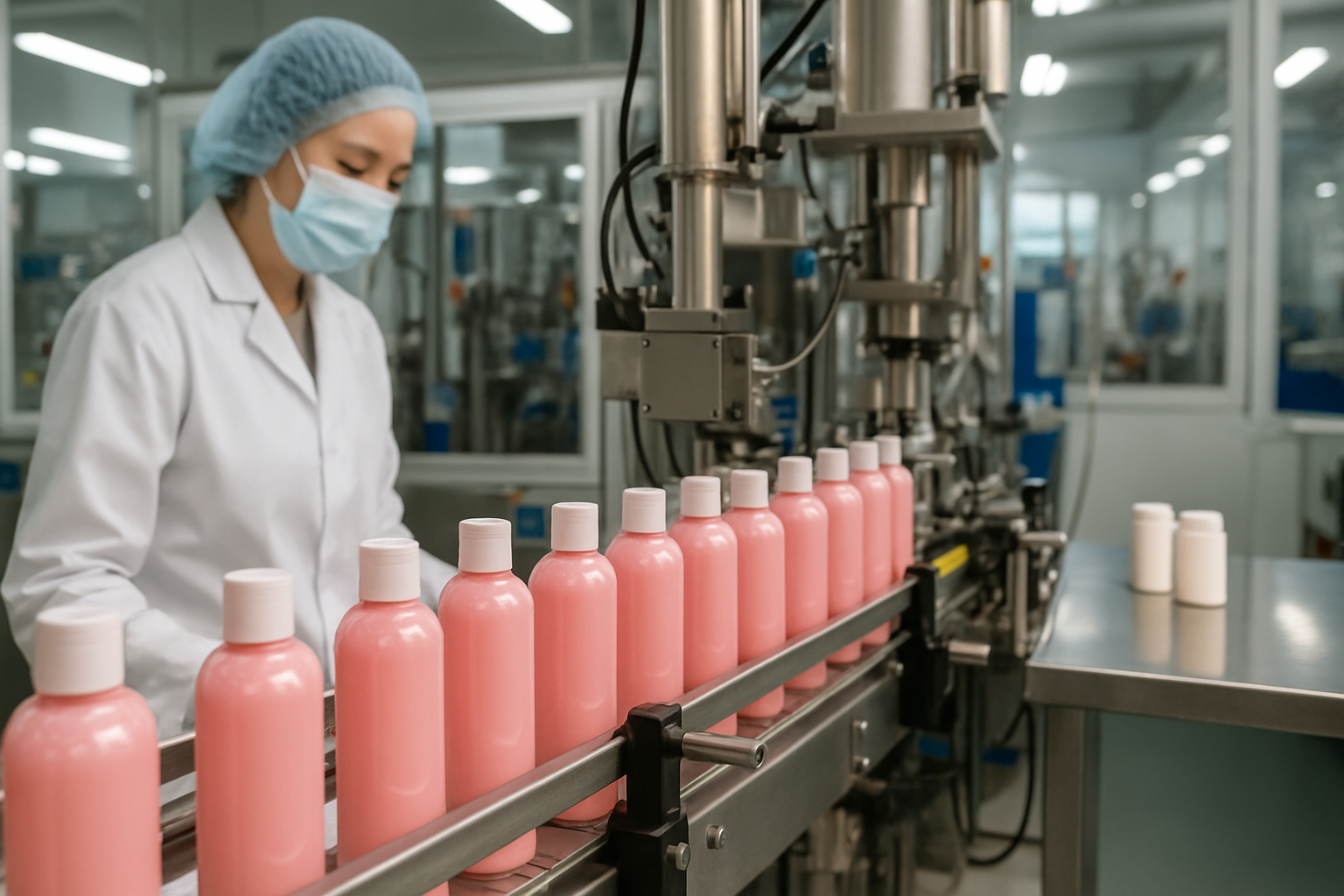
Now, here is a part of the K-beauty story that does not get enough attention globally: the ODM manufacturers. ODM stands for Original Design Manufacturing — these are companies that do not just make products on behalf of brands, they actually develop the formulas and own the intellectual property. The brand comes to them with a brief, and they deliver a finished, scientifically developed product. It is a fundamentally different model from simple contract manufacturing.
Two companies dominate this space in Korea: Kolmar Korea (한국콜마) and Cosmax (코스맥스). And right now, there is a genuine power shift happening between them.
Kolmar's Record-Breaking Run
Kolmar Korea just hit a string of record highs. In Q1 2025, the company posted revenue of 728 billion Korean won — up 11 percent year-on-year — with operating profit of 78.9 billion won, a staggering 65 percent jump. The Korea Fair Trade Commission officially designated the broader Kolmar Group as a large-scale corporate conglomerate in April 2025, making it the first ODM cosmetics group in Korea to receive that classification. That is a significant institutional recognition of how big this company has become.
The Kolmar Group has also built a diversified portfolio that analysts find attractive: cosmetics through Kolmar Korea, pharmaceuticals through HK Inno.N, and health supplements through Kolmar BNH. That triangular structure gives the group a stability that a pure-play beauty company simply cannot match.
In terms of market cap, Kolmar Group's combined valuation reached approximately 4 trillion won — nearly double that of Cosmax Group's 2.35 trillion won. Even on a head-to-head basis, Kolmar Korea's market cap of 2.1 trillion won has edged ahead of Cosmax's 2 trillion won.
Cosmax Feels the Pressure
Cosmax is not struggling, exactly — its Q1 revenue was up 16 percent to 682 billion won, and it still commands serious respect in the industry. But its operating profit only grew 3 percent, and analysts have started trimming their price targets. Yuanta Securities recently lowered its target from 290,000 won to 250,000 won per share.
The issue is structural. Global K-beauty demand has been shifting heavily toward skincare — particularly sun care and basic skin treatments — while color cosmetics, which Cosmax has traditionally relied on for high-margin volume, are losing some of their momentum. Cosmax's revenue mix is about 85 percent concentrated in its core cosmetics business, which limits its ability to hedge.
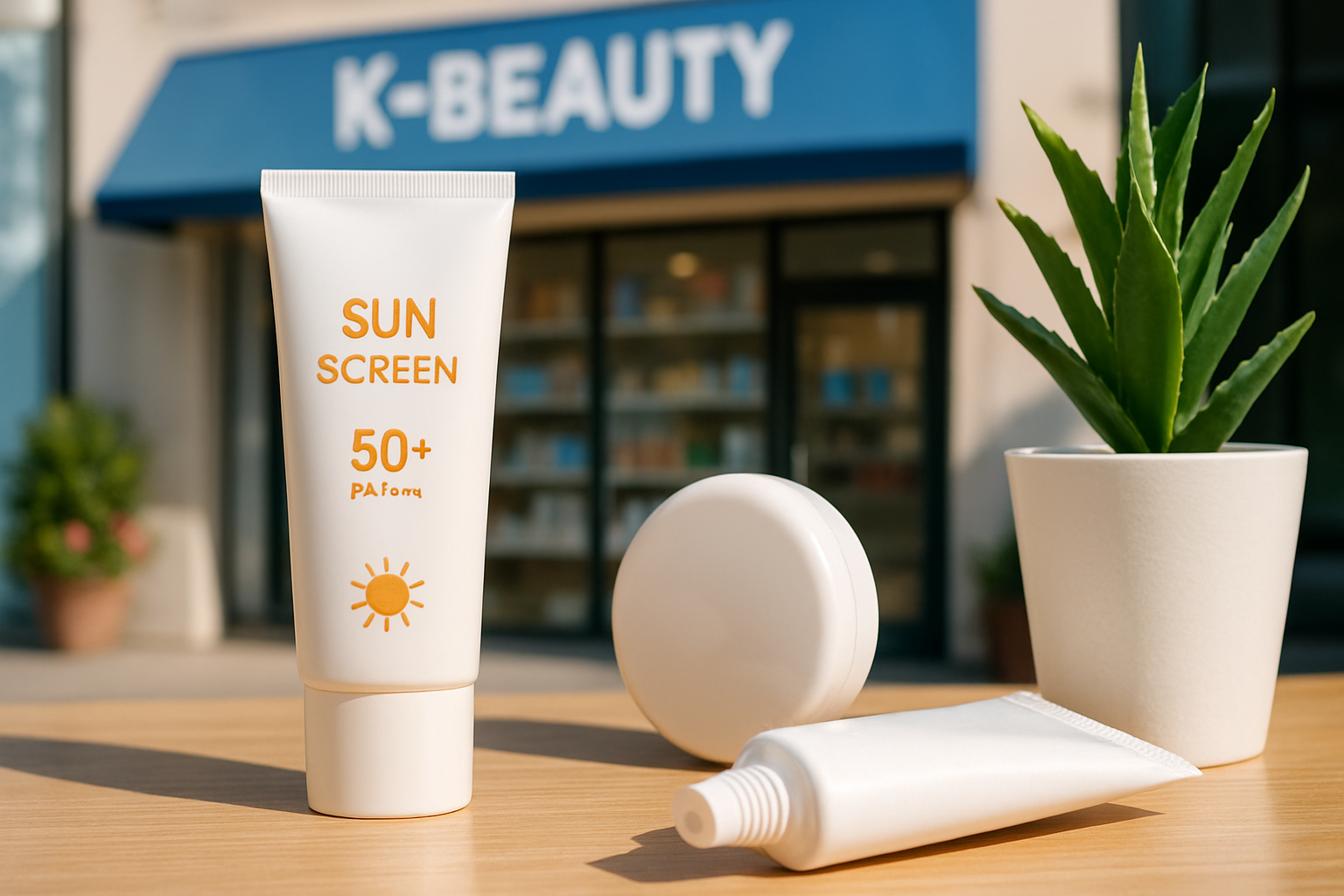
Analysts at Daol Investment Securities flagged that Kolmar's Q2 outlook looks especially strong because the April-to-June period is peak season for sun care products — and Kolmar happens to be a dominant player in that category. With its U.S. operations also showing improvement, the discount that some investors had applied to Kolmar's valuation may start to erode.
Shinsegae's Quiet Tourism Play
There is one more piece to this story worth flagging, even if it is a bit different in character. Shinsegae (신세계), one of Korea's biggest retail conglomerates, has been watching its multi-brand beauty format Chicor (시코르) transform into something it may not have fully anticipated: a destination for foreign tourists.
Chicor is essentially Korea's answer to Sephora — a curated, open-format beauty retailer that carries a wide mix of Korean and international brands. As inbound tourism to Korea has surged in the post-pandemic period, fueled in large part by the global appetite for Korean culture and beauty products, Chicor has become a go-to shopping stop. Shinsegae is now leaning into that dynamic, doubling down on K-beauty as a core pillar of its retail strategy.
It is a smart move. Beauty tourism — traveling specifically to buy cosmetics at the source — is a real phenomenon, and Korea is well-positioned to capitalize on it given the country's reputation for innovation and affordability in the beauty space.
The Bigger Picture
Step back and look at all of this together, and what you see is an industry that has matured considerably. Amorepacific is no longer over-reliant on a single market. The ODM backbone that powers K-beauty — companies like Kolmar and Cosmax — is operating at record scale. And retail formats designed to showcase Korean beauty are pulling in global visitors.
The story of K-beauty used to be told through individual viral products and celebrity endorsements. Now it is being told through earnings reports, corporate summits, scientific journals, and stock market valuations. That is not a less exciting story — if anything, it is a more durable one.
This article is based on reports from Polinews, Naver News, Wikileaks-kr.