The Great Economic Divide
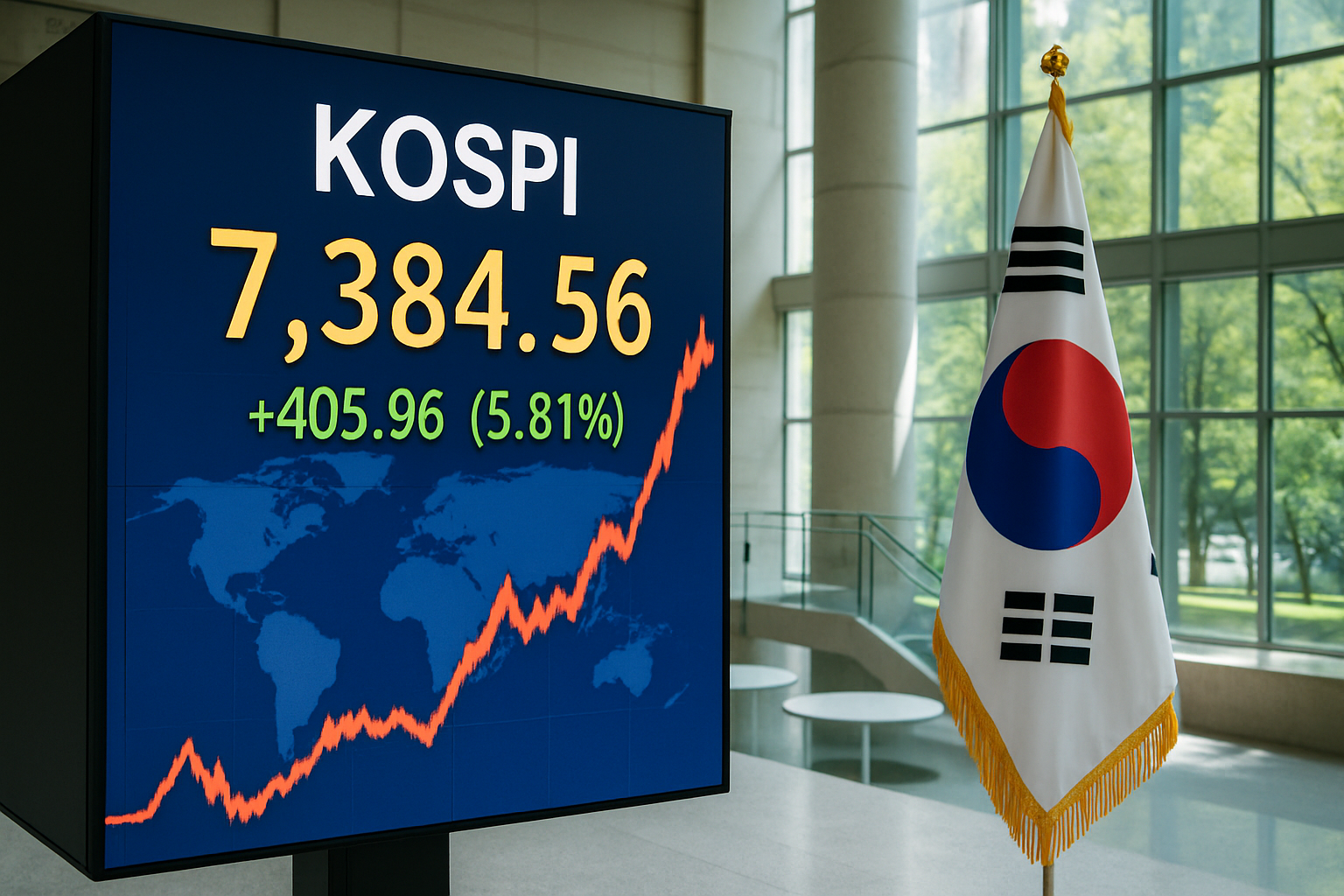
So here's the thing about South Korea's economy right now: depending on where you're standing, it either looks like a roaring success story or a slow-motion crisis. As of July 2026, the country is projected to hit a 2.7% GDP growth rate this year — a number that genuinely impresses, given that South Korea's estimated potential growth rate sits around 2.0%. Major institutions like the Bank of Korea, the OECD, and the Ministry of Economy and Finance are essentially in agreement: this is a strong year for the Korean economy on paper.
But step off the financial district of Yeouido — Seoul's Wall Street equivalent — and walk one block into the narrow alleyway commercial districts that line neighborhoods across the country, and the mood shifts dramatically. This is what economists are calling "K-shaped polarization," and it may be the defining economic story of Korea in 2026.
The Semiconductor Engine Is Running Hot
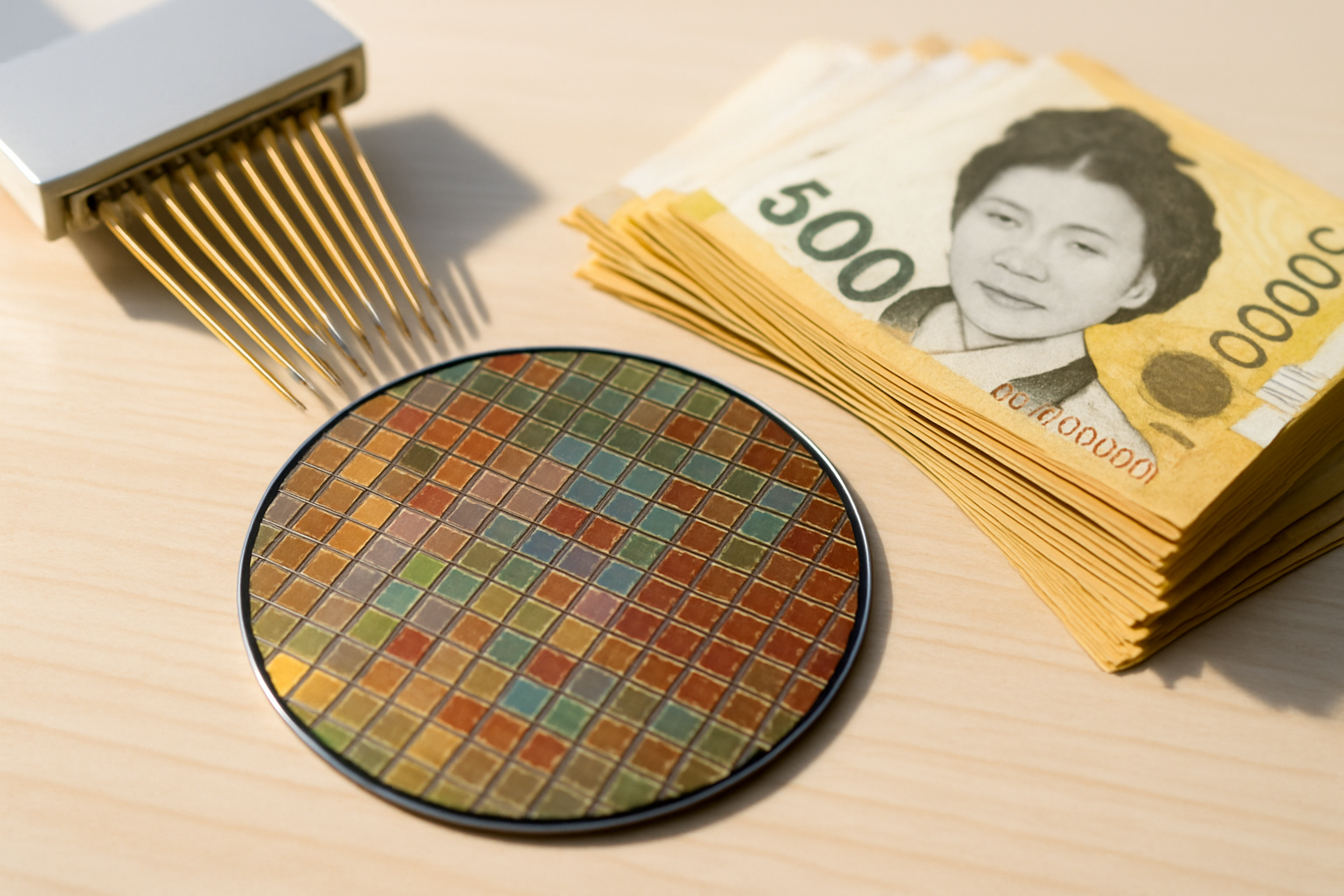
Let's start with the good news, because it is genuinely good. The global AI boom has been an enormous gift to South Korean exporters. As American and international tech giants race to build out mega data centers and next-generation AI infrastructure, they need one thing above almost everything else: premium memory chips. And South Korea's semiconductor industry — led by products like High Bandwidth Memory, or HBM, and server DRAM — is producing exactly what the world wants, in quantities that can barely keep up with demand.
The Korea Economic Research Institute recently analyzed that this export surge has snapped South Korea out of a prolonged low-growth trend, calling it "a definitive turn into an expansion phase for the first time in two years." Even more striking, some forecasts suggest South Korea's current account surplus could hit an all-time record of around $225 billion this year. That is an extraordinary number. Foreign investors have taken notice, sending consistent demand signals into Korean tech stocks.
On the surface, it reads like a comeback story. And in many ways, for the export sector, it genuinely is.
But the Warmth Isn't Reaching the Alleyways
Here's what's really interesting — and deeply concerning. All of that export wealth is largely staying within the capital markets and inside the balance sheets of large conglomerates. It is not trickling down into the domestic economy in any meaningful way. Economists describe this as a kind of "economic arteriosclerosis" — the circulatory system of the broader economy is blocked, and the lifeblood of liquidity simply isn't reaching the smaller businesses and everyday consumers who need it most.
The statistics released by the Ministry of SMEs and Startups are genuinely shocking. Last year, close to 976,000 businesses shut their doors in South Korea, with an average closure rate of 8.64%. But in the sectors where most small merchants operate — restaurants, retail shops, accommodation businesses — that closure rate has been hovering above 11% for three consecutive years running.
And it gets worse. According to trend analysis from the Korea Development Institute, the three-year survival rate for new small businesses has collapsed from 50.2% in 2020 to somewhere in the low 30% range as of early 2026. Think about that for a moment: if ten small businesses open today, seven of them will be gone within three years. One business owner put it bluntly in a field survey: "Sales drop by 40% or more, and we barely pay off our loans before we decide to close."
The average debt carried by a closing small merchant? Roughly 85.31 million won — about $65,600. These aren't people walking away from bad business ideas. Many of them are being forced out of the market under the weight of debt they accumulated just trying to survive.
Three Structural Reasons This Is Happening
1. High Inflation, High Interest Rates — The Double Squeeze
South Korea has been dealing with elevated inflation for several years now. The cumulative effect on household purchasing power has been brutal. Consumers are eating out less, spending less on discretionary goods, and funneling more of their income toward servicing debt. Private consumption growth is expected to land somewhere between just 1.6% and 2.0% this year — barely a pulse for an economy that needs domestic demand to complement its export engine.
2. Rising Costs Across the Board
Small business owners are caught in what analysts are calling a "triple hardship" — raw material prices going up, rental costs staying stubbornly high, and labor costs rising. Revenue is shrinking while fixed expenses grow. Margins are being crushed from both ends simultaneously.
3. The Structural Shift to Online
Chinese e-commerce platforms like AliExpress and Temu have made significant inroads into the Korean market, competing aggressively on price. Meanwhile, domestic delivery and online shopping apps continue to eat away at the customer base of traditional brick-and-mortar stores. This isn't a temporary headwind — it's a structural transformation that's accelerating the decline of offline retail and traditional markets.
The Bank of Korea's Impossible Dilemma
All of this is putting the Bank of Korea in an incredibly uncomfortable position. If you look purely at the headline growth numbers — 2.7%, record exports — the textbook response would be to hold interest rates steady or even consider raising them to prevent any inflation rebound. But if you look at what's happening on the ground — rising loan delinquency rates among self-employed workers, a cascade of small business failures, and a domestic demand recession — you'd want to cut rates immediately to give people some breathing room.
The Bank of Korea is essentially paralyzed between two realities. And while it hesitates, concerns are growing that the window for a timely policy intervention is slowly closing. Overseas hedge funds and macroeconomic analysts have flagged this tension too, warning that the collapse of small and medium-sized business ecosystems could eventually trigger rising non-performing loans in secondary financial institutions — savings banks, mutual finance companies — potentially creating broader credit risks across the financial system.
What Needs to Happen
Economists and policy watchers are largely aligned on what a real solution would look like. It's not enough to point at a growth rate figure and call it a win. Targeted fiscal policy needs to channel some of the wealth generated by the export boom into the domestic economy. Tax incentives, direct support for small merchants, and subsidized transition programs for aging business owners are all on the table.
More fundamentally, South Korea has one of the highest rates of self-employment in the developed world — a structural reality that creates enormous vulnerability whenever domestic demand softens. Reforming that structure, and building genuine pathways for small business owners to retrain and transition into new sectors, is a longer-term project but arguably the most important one.
The semiconductor dress South Korea is wearing right now looks magnificent from the outside. But underneath, the economy is dealing with a chronic illness that no export surplus alone can cure. True growth — the kind that shows up not just in quarterly reports but in the daily lives of people running noodle shops and corner stores — is still a work in progress.
This article is based on reports from Businesskorea, Fnnews, Yonhap News.