A Growth Upgrade Is Coming — And Chips Are the Reason
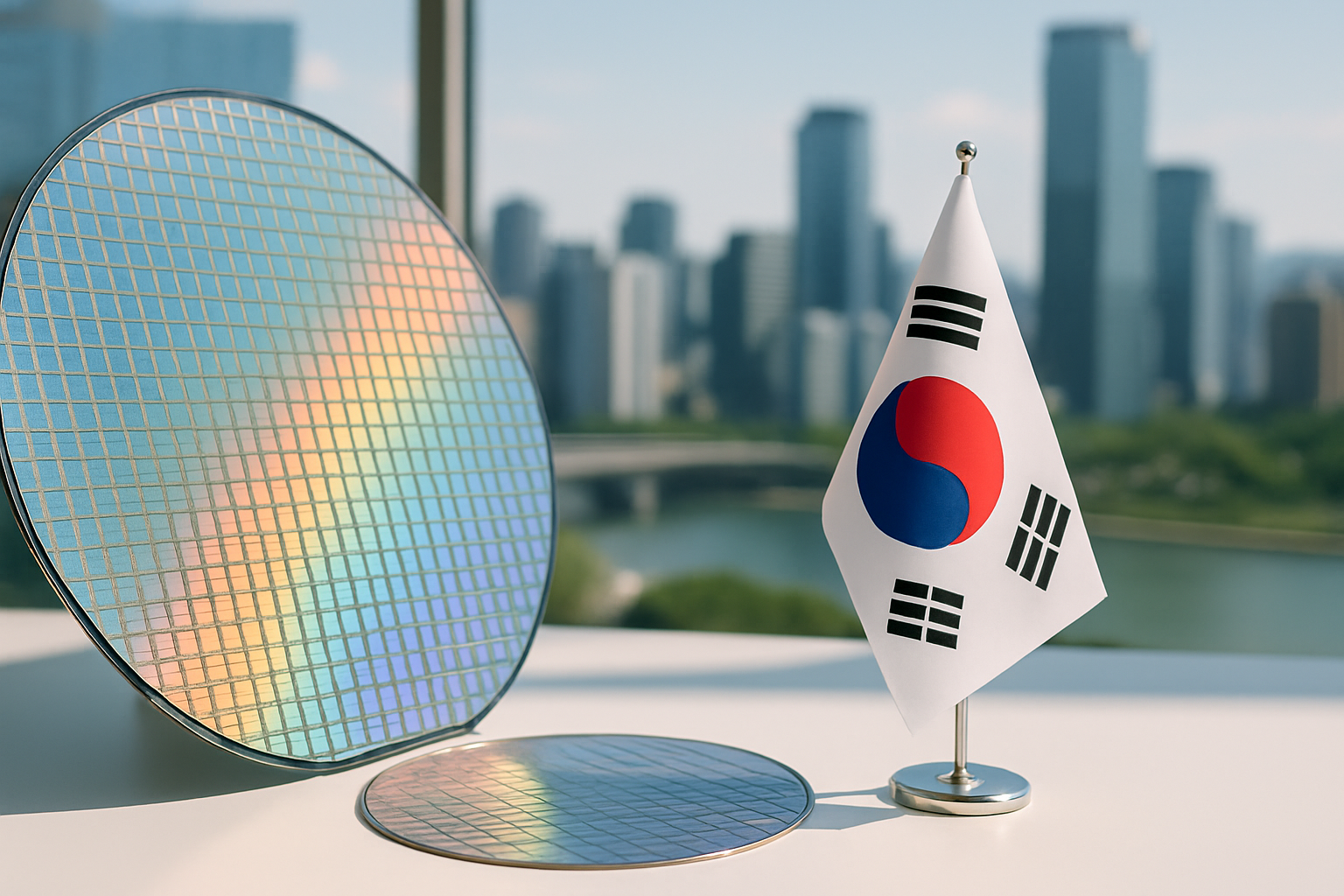
So here is some genuinely good news for the South Korean economy: the Bank of Korea is widely expected to revise its GDP growth forecast significantly upward when it releases its updated economic outlook on May 28. We are talking about a jump from the previous estimate of 2.0% all the way up to somewhere between 2.5% and 2.6% for 2025. That is a meaningful move, and the story behind it is pretty fascinating.
A survey of six economic experts conducted by Yonhap News Agency found broad consensus that the central bank will raise its forecast by at least 0.5 percentage points. The key driver? Semiconductors — specifically, the global surge in demand for AI infrastructure.
What really set the tone was the first-quarter GDP figure. South Korea's real GDP grew 1.7% quarter-on-quarter in Q1, blowing past the Bank of Korea's February estimate of just 0.9%. That kind of outperformance does not go unnoticed, and it has forced analysts to recalibrate their entire year outlook.
Why AI Is Doing the Heavy Lifting
What is really interesting here is the structural argument economists are making. This is not just another cyclical uptick in chip demand. Jang Min, a senior researcher at the Korea Institute of Finance, pointed out that this semiconductor cycle is rooted in a structural shift — AI demand — rather than the boom-and-bust patterns seen in previous cycles. That distinction matters, because it suggests the tailwind could last longer than usual.
An Jae-gyun, a research analyst at Korea Investment and Securities, estimates that semiconductor exports contributed roughly 35% of Korea's growth in Q1 alone. He also expects the volume effect to grow larger in the second half of the year as supply ramps up to meet demand.
Park Jung-woo, an economist at Nomura Securities, put it plainly: given the Q1 data and the momentum in exports, a large upward revision to the full-year growth forecast is essentially unavoidable.
The Other Side of the Coin: Inflation Is Getting Revised Too
Here is where things get a little more complicated. Along with the growth upgrade, experts believe the Bank of Korea will also raise its consumer price inflation forecast — from 2.2% up to a range of 2.5% to 2.7%. The culprits are familiar: high oil prices and a weak Korean won against the dollar, both of which push up the cost of imports.
Joo Won, research head at Hyundai Research Institute, flagged a particularly concerning scenario — a spike in global oil prices combined with potential disruption at the Strait of Hormuz, a critical chokepoint for global energy shipping. If that materializes, inflationary pressure could exceed current expectations.
Cho Young-moo, head of NH Financial Research, added that uncertainty remains high depending on how the situation in Iran develops and how the semiconductor industry performs over the rest of the year. So yes, the headline numbers look good, but there are real risks lurking in the background.
The simultaneous upward revisions to both growth and inflation put the Bank of Korea in a delicate position. When prices are rising and growth is accelerating at the same time, the case for cutting interest rates becomes harder to make — and that has implications for everything from mortgage rates to corporate borrowing costs.
A New Fed Chair and What It Means for Korea
Now let us zoom out, because there is another major development shaping Korea's economic environment. Kevin Warsh has officially been sworn in as the new Chair of the U.S. Federal Reserve — that is the American central bank, which effectively sets the tone for global financial conditions. Jerome Powell, the previous chair, served in an interim capacity until Warsh's formal investiture on May 22.
Warsh is not a well-known figure outside of financial circles, so here is some context: he previously served as a Fed governor and was present during the 2008 global financial crisis. Notably, he was a vocal critic of the second round of quantitative easing in 2011 — a policy of pumping money into the economy — and ultimately left the Fed over those disagreements. Markets do not see him as a simple "dove," someone who would rush to cut rates to stimulate growth.
In his first public remarks as chair, Warsh emphasized the Fed's dual mandate of price stability and maximum employment, while also stressing independence, decisiveness, and a reform-oriented approach. Analysts read this as a signal that he will not simply bend to political pressure from the Trump administration, which has repeatedly pushed for lower interest rates. Interestingly, President Trump himself said at the swearing-in ceremony that he wants Warsh to maintain independence — though the relationship between the White House and the Fed has been anything but smooth.
Why Korea Needs to Watch Washington Closely
For South Korea, the transition at the Fed is not just background noise. The U.S. dollar's value, American Treasury yields, and the flow of foreign capital into emerging markets like Korea are all shaped by Fed policy. When U.S. rates stay high, the dollar strengthens — and that puts upward pressure on the Korean won-to-dollar exchange rate.
A weaker won has a dual effect. On one hand, it makes Korean exports cheaper and more competitive abroad, which is a short-term positive for companies like Samsung and SK Hynix. On the other hand, it raises the cost of importing energy and raw materials, feeding directly into the inflation problem we just discussed. With Middle East tensions already keeping oil prices elevated, Korea is caught in a squeeze from multiple directions.
There is also the question of foreign investment. When U.S. assets offer higher returns, global investors tend to shift money toward American markets, pulling capital away from places like Korea. That can weaken the stock market and add further pressure to the currency.
K-Bio Caught in the U.S.-China Biotech Crossfire
And if all of that were not enough, South Korea's booming pharmaceutical and biotech sector is facing a new set of geopolitical headwinds. John Moolenaar, the Republican chairman of the U.S. House Select Committee on China, sent a letter on May 21 to Treasury Secretary Scott Bessent urging the inclusion of biotech in the COINS Act — the Comprehensive Outbound Investment National Security Act — which is designed to prevent U.S. capital from flowing into advanced technology sectors in adversarial nations, primarily China.
The backdrop here is striking. Last year, global licensing deals between multinational pharmaceutical companies and Chinese biotech firms totaled approximately 136 billion dollars. Perhaps even more telling: in 2024, 48% of all major drug licensing deals worth more than 50 million dollars globally were signed with Chinese companies. Back in 2020, that figure was exactly zero. China's rise in the pharmaceutical value chain has been extraordinarily rapid.
Moolenaar's letter specifically called for scrutiny of deals involving pharmaceutical intellectual property, drug development platforms, clinical research capabilities, and biopharmaceutical manufacturing know-how. His concern is that U.S. capital and technology flowing into Chinese biotech is effectively subsidizing a strategic competitor.
Could This Be an Opportunity for Korean Pharma?
So where does this leave Korean biotech companies? The picture is actually more nuanced than it might first appear. South Korea's drug licensing exports hit a record high of over 20 trillion Korean won last year — roughly 14.5 billion U.S. dollars — though the portion going to China was comparatively small, over 10 billion won.
The Korea Bio Association's BioEconomy Research Center noted that the domestic industry is watching U.S. regulatory developments closely, particularly around what deals might become restricted.
Heo Hye-min, an analyst at Kiwoom Securities, offered a relatively optimistic take for Korean firms. She argued that on the global stage, South Korean companies have a track record of reliable partnerships and high data credibility — a differentiated advantage compared to Chinese peers. Her view is that Korean biotech could actually benefit from a tightening of U.S.-China biotech ties, with more global pharmaceutical companies looking toward Korea as an alternative partner in the second half of the year.
Putting It All Together
So here is the big picture: South Korea's economy is entering a genuinely strong phase, driven by an AI-fueled semiconductor boom that has already surprised to the upside in Q1. But that positive story is unfolding against a backdrop of rising inflation risks, a new and unpredictable era at the U.S. Federal Reserve, a stronger dollar, elevated oil prices, and geopolitical realignments that are reshaping where global capital flows in the biotech space.
The Bank of Korea's revised forecast on May 28 will be a key moment — not just as an economic data point, but as a signal of how policymakers are weighing the trade-off between growth momentum and price stability. In a world this uncertain, getting that balance right matters more than ever.
This article is based on reports from Ddaily, Seoul Economic Daily, Ajunews.