A Routine Safety Check Turned Deadly
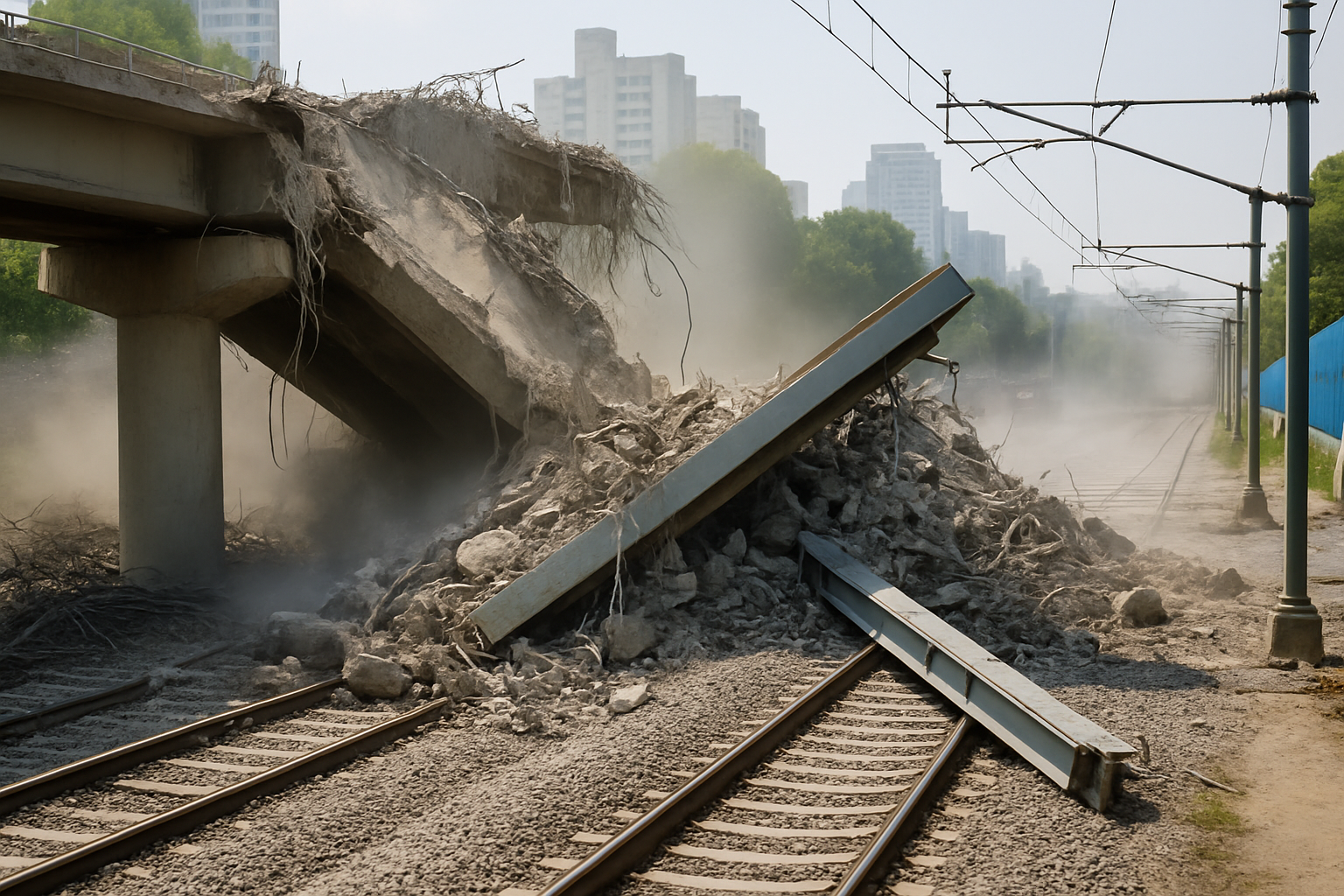
So here's the thing — when workers stepped between the steel girders of Seoul's Seosomun Overpass on the afternoon of May 26, they thought they were doing a routine safety inspection. What happened next was anything but routine. At 2:32 p.m., the aging structure gave way, sending concrete and construction debris crashing to the ground below and claiming three lives.
According to Lee Jong-woon, an official at the Seodaemun Fire Station, the demolition crew had actually paused overnight work when the incident occurred. "Workers had stopped overnight demolition work and entered between the girders for a safety inspection at around 2 p.m. when the girders appear to have collapsed," he said. Girders are the heavy horizontal support beams that bear the structural load of a bridge or overpass — and in this case, they failed catastrophically.
Of the 13 people present at the site at the time, seven managed to evacuate safely. Two men, one in his 50s and another in his 60s, were killed on the spot. A third victim, who had initially survived with injuries, was later pronounced dead at a medical facility, bringing the total death toll to three. The three surviving injured workers — men in their 30s, 40s and 50s — sustained injuries to the waist, head and ribs.
A Structure That Was Already on Its Way Out
What makes this tragedy particularly striking is that the Seosomun Overpass was already in the process of being taken down. Built back in 1966 — making it a six-decade-old structure — the overpass had been flagged for safety concerns and demolition began in August of last year. It was scheduled to be fully removed by early June 2026. In other words, it collapsed just weeks before it was supposed to be gone.
The debris from the collapse didn't just affect the immediate site. It also fell onto a nearby railway line, triggering a cascade of disruptions to public transit across the region.
Rail Disruptions Ripple Across the Capital Region
Korea Railroad Corporation, better known as KORAIL — the state-run operator that manages most of the country's intercity and metropolitan rail lines — moved quickly to announce service adjustments. Starting Wednesday, all train services between Seoul Station and Haengshin Station in Goyang, a city roughly 20 kilometers northwest of central Seoul, were suspended entirely.
On top of that, KTX high-speed train services — South Korea's bullet train network, connecting major cities across the peninsula — were also affected, with temporary stops added at additional stations and delays expected across multiple routes. KORAIL acknowledged that the scope of recovery work by the Seoul city government would take considerable time, making the disruptions unavoidable for the foreseeable future.
Government Response: All Hands on Deck
The response from South Korea's top leadership was swift. President Lee Jae Myung ordered a thorough investigation into the cause of the collapse and instructed officials to develop concrete measures to prevent similar incidents in the future. Presidential spokesperson Kang Yu-jung confirmed that Lee also called for maximum effort in treating the injured and managing the aftermath.
Prime Minister Kim Min-seok took it a step further, ordering the full mobilization of equipment and emergency personnel to the scene. He specifically called on the Seoul city government, the Ministry of Land, Infrastructure and Transport, and all relevant agencies to cooperate fully on rescue efforts — including identifying nearby hospitals equipped to receive victims and ensuring the speedy transport of the injured.
Kim also stressed the importance of keeping rescue workers themselves safe and restricting public access to the collapse site to prevent additional casualties. By the evening of May 26, the Seoul Metropolitan Government had formally activated its disaster and safety countermeasures headquarters, signaling that this had moved into full emergency management territory.
Broader Questions About Aging Infrastructure
What's really interesting — and sobering — about this incident is what it says about urban infrastructure management. South Korea experienced rapid economic development and urbanization from the 1960s through the 1980s, and a significant number of roads, bridges and overpasses built during that era are now reaching the end of their designed lifespans simultaneously. The Seosomun Overpass was a product of that era, constructed in 1966 at a time when Seoul was still in the early stages of becoming the megacity it is today.
The fact that a structure already undergoing demolition could still collapse in a way that kills workers and disrupts a major metropolitan rail network raises serious questions about how safely such removals are being managed, and whether South Korea's inspection and oversight frameworks are keeping pace with the sheer volume of aging infrastructure that now needs to be addressed.
Investigations are ongoing, and authorities have promised answers — but for the families of three workers who went to a job site that Tuesday afternoon and never came home, those answers will come too late.
This article is based on reports from Thefirstmedia, Yonhap News, Yonhap News.