A City-Wide Splash in the Heart of Seoul
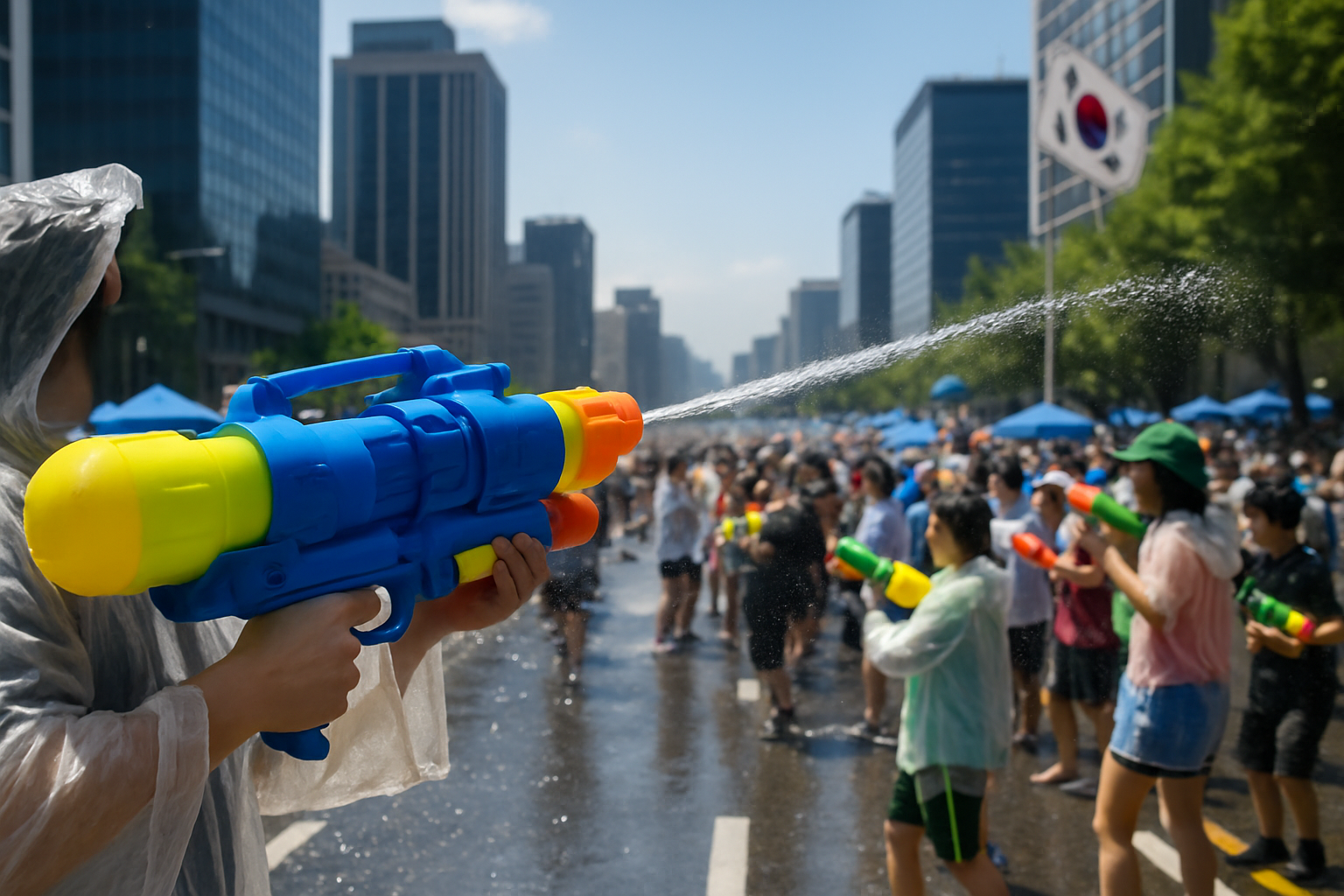
If you have never heard of South Korea's water gun festival, let us just say this: it is exactly what it sounds like, and it is as joyful as you are imagining right now. On Saturday, August 8, 2026, Seoul once again became the backdrop for one of the country's most beloved summer traditions, as participants took to the streets armed with water guns, ready to drench anyone in sight.
So here is the thing about South Korea's summers — they are relentless. Temperatures routinely climb into the mid-to-upper 30s Celsius, and the humidity makes it feel even worse. Against that backdrop, an event where the entire point is to get soaking wet starts to sound less like a novelty and more like a public service.
A Tradition Built Around Beating the Heat
Water gun festivals have become a staple of the Korean summer calendar over the past decade, drawing in locals and tourists alike. The concept is simple: attendees show up with their water guns — ranging from modest pistols to full-on tank-strapped super soakers — and engage in city-wide water battles, turning public squares and streets into arenas of good-natured chaos.
What is really interesting is how these events capture something deeply communal about Korean culture. Strangers become teammates, age gaps disappear, and for a few hours in the peak of summer, the city breathes a collective sigh of cool relief. It is one of those events that photographs beautifully — and this year's scenes, captured by AP photographer Lee Jin-man, were no exception.
More Than Just Fun — A Cultural Moment
Events like the Seoul water gun festival are part of a broader trend of Korea leaning into experiential, participation-based public events that have gained international attention in recent years. Much like how the country's food, music, and film have crossed borders, these kinds of cultural festivals are increasingly attracting visitors from abroad who want more than just a museum visit.
For global audiences who may be planning a trip to Korea, timing a visit around events like this one offers a window into everyday Korean life that goes well beyond the tourist trail. It is spontaneous, it is loud, and frankly, it is a lot of fun.
Jeju National University Joins Global Refugee Education Conversation
Shifting gears now to something a bit more serious, but equally important. While Seoul was wrapping up its summer celebrations, academics and policymakers from across the globe gathered in a very different kind of forum — one focused on one of the world's most pressing humanitarian challenges: education access for refugees.
Jeju National University's Tamna Culture Research Institute, which is based on Jeju Island and focuses on cultural and social research in the region, participated in an international workshop titled "Exploring Refugee Education Pathways in Korea and Beyond." The event was held at the Canadian Embassy in Seoul on July 29 and 30, 2026.
Who Was in the Room?
This was not a small gathering. The workshop brought together a genuinely impressive cross-section of stakeholders, including:
- The Canadian Embassy in Korea
- South Korea's Ministry of Justice
- The UNHCR Korea office (that is the United Nations' refugee agency)
- Gangwon National University's Unification Gangwon Research Institute
- Researchers and civil society organizations from Canada, Japan, Australia, and the Philippines
What made this workshop particularly meaningful was that refugee students themselves were given the floor to share their own educational experiences. That kind of firsthand testimony often cuts through the policy jargon in a way that statistics simply cannot.
What Was Actually Discussed?
The core question on the table was this: how do you build sustainable, accessible pathways for refugees to enter and complete higher education in Korea? Right now, South Korea's refugee education framework is still developing, and there is broad consensus among researchers that the system needs stronger institutional support.
One program that drew a lot of attention was Canada's University Sponsorship model, where universities directly sponsor refugees for admission and provide wraparound support throughout their studies. Participants examined whether a similar framework could be adapted to the Korean context.
The workshop concluded with small group discussions, and attendees reached a general consensus on a few key principles: that universities, government agencies, international organizations, and civil society need to work in closer coordination, and that the legal and administrative foundations for refugee education in Korea need strengthening.
Korea's Refugee Research Network Takes a Bigger Role
Jeju National University's Tamna Culture Research Institute currently serves as the secretariat for Korea's Refugee Research Network, a body that connects domestic researchers and institutions working on refugee-related issues. The institute has made it clear that this workshop is part of a longer-term commitment — not a one-off event.
Going forward, the network plans to continue expanding its ties with international research institutions and advocacy groups, with a particular focus on three areas: guaranteeing the right to education for refugees, developing policies that support stable settlement within Korean society, and fostering greater inter-institutional collaboration.
It is worth noting that South Korea is still navigating its identity as a country that receives refugees, rather than just sending aid abroad. The number of refugee applicants in Korea has grown steadily over the past decade, and the legal and social infrastructure to support them has not always kept pace. Workshops like this one are part of the longer conversation about what kind of role Korea wants to play on the global humanitarian stage.
Two Very Different Stories, One Common Thread
At first glance, a summer water gun festival and an international refugee education workshop do not seem to have much in common. But in a way, both stories touch on something fundamental about how a society chooses to engage with the people in it — whether that means creating shared public joy, or building the systems that give the most vulnerable people a real shot at a future. Both matter, and both are part of what makes Korea a genuinely fascinating place to follow right now.
This article is based on reports from Naver News, Newstown, Lecturernews.