Two Very Different Solutions to the Same Problem
So here's the thing — when you think about a country grappling with a shrinking population and hollowing-out rural communities, you might not immediately picture McDonald's rice chips or university job fairs. But in South Korea right now, both of those things are front-page news, and they're actually connected by the same underlying challenge: how do you keep regional economies alive when fewer and fewer people want to live there?
This week, two separate stories out of Korea paint a surprisingly vivid picture of just how creative — and wide-ranging — the government's response to that challenge has become.
From a Rice Paddy in Hongcheon to McDonald's Nationwide
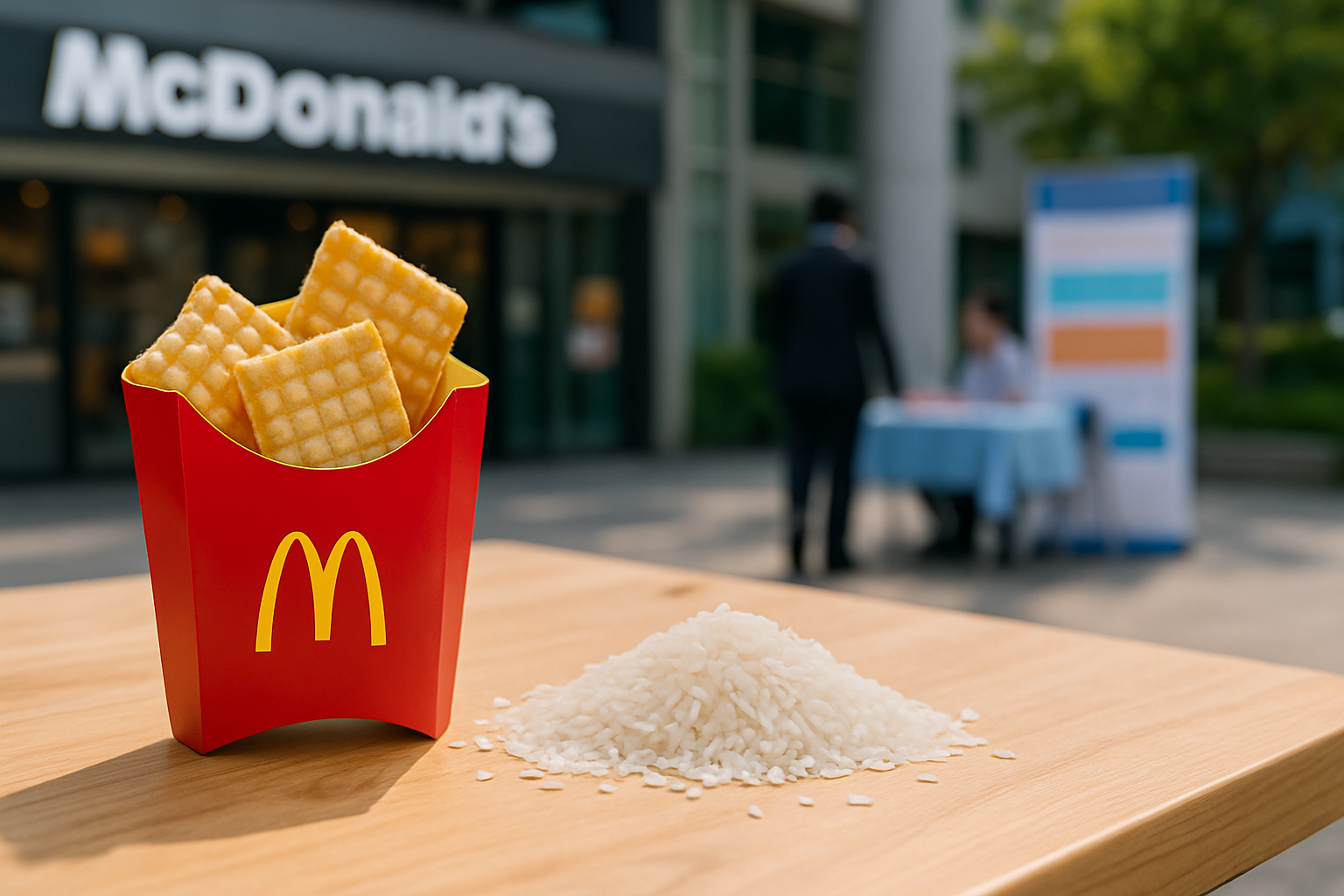
Let's start with the one that's a little more fun. On July 23rd, a snack called the "Hongcheon Woori Rice Chip" quietly appeared on McDonald's menus across South Korea — and it's not a limited-time gimmick. This is a permanent menu item now, available as a side dish alongside burgers, Happy Meals, and even the McCafe morning sets.
The chip is made from Hongcheon River Sura Rice, a premium variety grown in Hongcheon County, a rural area in Gangwon Province in the mountainous northeast of the country. If you haven't heard of it, that's kind of the point — and exactly why this deal matters so much to the people who live there.
A Three-Way Deal Backed by the Government
On July 27th, Hongcheon County, Korea's Ministry of the Interior and Safety, and McDonald's Korea formalized this partnership with a signed MOU (Memorandum of Understanding) at the Seoul Government Complex. What's really interesting is how this came about: Hongcheon County was selected for the ministry's program specifically designed to connect population-declining regions with private companies — a direct government effort to use corporate distribution networks to prop up struggling local economies.
Hongcheon County Mayor Shin Young-jae put it plainly: "Through this collaboration with McDonald's Korea, which has a nationwide distribution infrastructure, we've been able to consistently introduce the excellence of Hongcheon River Sura Rice to consumers across the country."
And the supply chain behind this chip is genuinely local. A regional grain cooperative called Hongcheon Goksan Agricultural Cooperative is supplying 25 metric tons of Sura Rice — handling everything from drying and milling to sorting — to keep production steady. That's not a trivial amount for a small farming community.
What makes this particularly notable is that it's the first product from McDonald's Korea's "Taste of Korea" project — a program spotlighting local regional ingredients — to graduate from a limited-run promotion into a permanent, year-round menu item. That's a big deal for Hongcheon, and potentially a template other rural counties will be watching closely.
Universities as Rural Lifelines: Korea's Foreign Student Rethink
Meanwhile, on the higher education front, Korea's Ministry of Education is also confronting regional decline — but from a completely different angle. The country has been enrolling more and more international students in recent years, but here's the uncomfortable reality: only about 33.4 percent of foreign graduates actually find employment in Korea after finishing their degrees. Compare that to the overall graduate employment rate of 69.5 percent, and you've got a significant gap.
So here's the shift in thinking that's now underway. Instead of treating international students primarily as a source of tuition revenue — which, let's be honest, has been a major motivation for university recruitment — the government is now asking a different question: can these graduates become the skilled workers that Korea's shrinking regional workforce desperately needs?
Recognizing the Universities Getting It Right
This week, the Ministry of Education announced the winners of its first-ever competition recognizing universities that are actually doing this well — helping international students get jobs, start businesses, and put down roots in local communities rather than simply returning home after graduation.
Kyung Hee University took the top prize in the general university category. What caught the ministry's attention was the school's digital badge system — a credentialing platform that certifies students' skills, from Korean language ability to career planning, and sends those verified credentials directly to employers. In just two semesters, the university issued 185 digital badges, and the results showed a meaningful boost in both student engagement and job readiness.
In the vocational college category, Jeonju Vision College — based in North Jeolla Province in the southwest — earned top honors for a program that goes well beyond classroom instruction. The college recruits students through Korean language academies overseas, then walks them through local residency visa processes (specifically the F-2-R visa, which is designed for long-term regional settlement) and connects them directly with regional employers. The outcome: a 42.8 percent employment rate among its foreign graduates, with 67.5 percent settling permanently within the province. Those numbers are genuinely impressive given the national baseline.
Regional Tailoring Is the Key
Other award recipients took similarly hands-on approaches. Kyungsung University in Busan set up a dedicated employment support center reporting directly to the university president — a sign of just how seriously it's taking the issue — and hosted job fairs bringing in 43 regional businesses, boosting foreign graduate employment by over 61 percent year-on-year. And Kyungbok University, located just south of Seoul, built out specialized tracks in the medical beauty industry and partnered with 34 hospitals to help foreign graduates obtain skilled worker visas, known as E-7 visas in Korea's immigration classification system.
Education Vice Minister Choi Eun-ok summed up the government's intent clearly: "We must expand support so that our foreign student policies train the talent our regional industries urgently need and help them settle stably in local communities."
The ministry says it plans to replicate the most successful models from this competition at universities nationwide — a signal that this isn't a one-off initiative, but a fundamental reorientation of how Korea thinks about international students.
The Bigger Picture
What ties the rice chip story and the foreign student story together is a Korea quietly but urgently reinventing how it sustains communities that are being left behind by demographic change. The approaches couldn't look more different on the surface — one involves fast food, the other involves visa policy — but both are responses to the same alarm bell: regional Korea is shrinking, and it needs new ideas fast.
Whether it's a bag of rice chips on a McDonald's counter or a foreign engineering graduate settling down in Jeonju, the goal is the same: keep the lights on in places that might otherwise quietly fade away.
This article is based on reports from Kado, Koreatimes, Naver News.