The Season Koreans Have Been Waiting For
So here's the thing about spring in Korea — for a lot of people, the most exciting part isn't the cherry blossoms. It's the food. Specifically, it's bomnamul: a broad term for the wild greens that push up through the earth as temperatures rise, and which Koreans have been harvesting, cooking, and celebrating for centuries.
Every April and May, something almost ritualistic happens. Families drive out to restaurants near mountain foothills. Hikers detour off trails with plastic bags in hand. Home cooks post foraging hauls on social media. And supermarket shelves of spring greens start to thin out faster than they can be restocked.
This year is no different — if anything, it's more intense. Sales of spring greens at Emart, one of Korea's largest retail chains, jumped 32.8 percent in February and March compared to the same period last year. The average wholesale price of bomdong, or spring cabbage, rose 41.2 percent year-on-year in March, according to transaction data from Garak Market, Seoul's major agricultural wholesale hub. Demand is outpacing supply, and people are still coming.
What Actually Is Bomnamul?
Bomnamul isn't a single plant — it's an entire category. Think of it as Korea's answer to the seasonal produce tradition you find in many cultures, from Japan's sansai mountain vegetables to Europe's foraged spring shoots. But what makes Korea's version distinctive is just how deeply it's woven into everyday food culture, and how many different varieties are involved.
Here are some of the greens you'll encounter this time of year:
- Dureub — Often called the "king of spring greens," these are the young shoots of the Aralia tree. They have a distinctive aroma, a tender texture with a slight crunch, and are only available for a narrow window between April and May. Highly prized, frequently sold out.
- Naengi (shepherd's purse) — One of the first greens to appear in early spring, with a slightly bitter, earthy flavor. Used in soups, pancakes, and raw salads.
- Dallae (Korean wild chives) — Sometimes called "mountain garlic," these pack a punch of garlic-like pungency mixed with a subtle sweetness. Great for waking up a sluggish appetite after winter.
- Chwinamul (aster scaber) — Deep and aromatic, valued for relieving fatigue and supporting eye health.
- Dolnamul (stonecrop) — Sweeter and more delicate, with a clean, refreshing flavor.
- Sanmaneul (wild garlic leaves) — So popular it was named April's featured forest product by the Korea Forest Service. You may have encountered it internationally under the name myeonginamul when it's served pickled.
- Mugwort — Aromatic and versatile, now appearing not just in seasoned side dishes but in mugwort bread and mugwort ice cream.
What's really interesting is how the culinary use of these greens has evolved. They used to be mostly simple banchan — the small seasoned side dishes that accompany Korean meals. Now you're seeing dallae oil pasta, naengi cream pasta, and dessert menus built around mugwort. Spring greens have gone from humble to trendy, without losing their roots.
Why Koreans Are So Devoted to Seasonal Eating
To understand why bomnamul resonates so deeply, you have to know a bit of history. For much of Korean history, winter was a lean season. Families lived on stored foods — fermented kimchi, dried grains, preserved vegetables. By the time spring arrived, fresh produce wasn't just welcome; it was a lifeline. The first tender shoots coming up from the cold ground represented renewal in a very literal sense.
That emotional memory hasn't entirely faded. Today, the anticipation around spring greens carries echoes of that history, even if the stakes are no longer about survival. There's also a strong Korean cultural belief that seasonal produce functions as a kind of natural medicine — that eating what the earth offers at the right time is inherently restorative for the body.
And honestly, there's science to back some of that up. Many spring shoots contain natural bitter compounds that stimulate digestion and appetite. They're rich in vitamins and minerals that may have been lacking through a long winter. Some plants even convert stored carbohydrates into sugars as the weather warms, giving them a subtle natural sweetness that you just don't get from produce that's been grown in a greenhouse year-round.
There's even a term for the fatigue that hits when winter transitions to spring — spring fatigue — and seasonal greens have long been regarded as a remedy for exactly that.
From Older Tradition to Younger Trend
For a while, bomnamul was something you associated more with grandparents than with younger Koreans. That's changing. Health-conscious millennials and Gen Z consumers are increasingly seeking out whole, seasonal, minimally processed foods — and spring greens fit that profile perfectly.
This shift also connects to a broader food culture moment in Korea right now. Earlier this year, the viral food trend was "dujjonku" — a Korean shorthand for Dubai chewy cookies, those rich, kataifi-filled chocolate treats that took social media by storm. Sweet, indulgent, intensely stimulating. For a few weeks, they were everywhere.
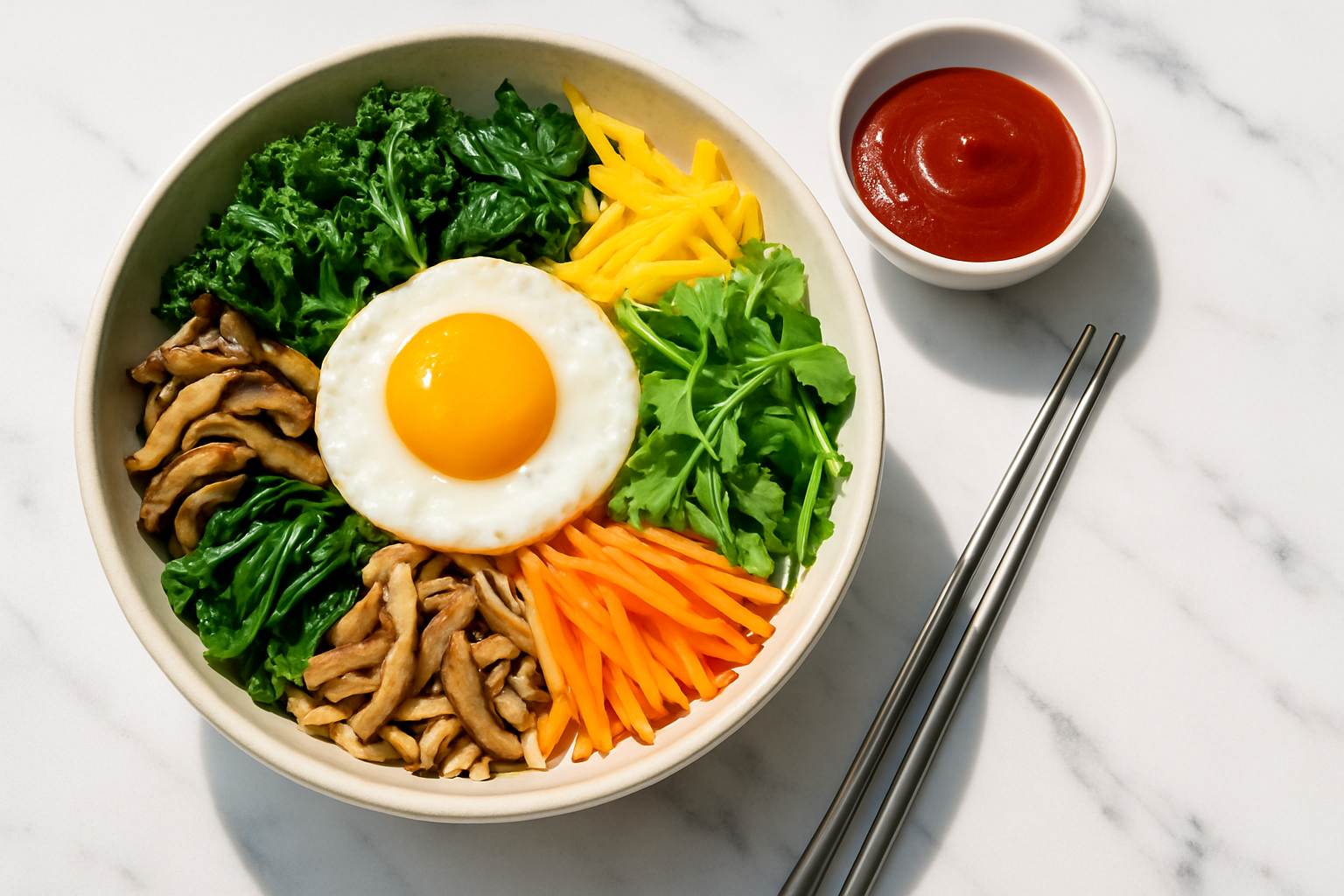
Then bomdong bibimbap — a simple, fresh bowl of rice mixed with spring cabbage and seasoned toppings — quietly took over the conversation. One comment circulating online captured the mood perfectly:
"After eating dujjonku, I felt sorry for my body, so I had bomdong bibimbap."
Hallym University professor Choi Hoon, writing in JoongAng Ilbo, sees this oscillation as deeply human. He argues it reflects homeostasis — the tendency of people to seek balance after exposure to extremes. The brain values scarcity, and once a trend floods the market and social media, that sense of exclusivity evaporates. The trend fades. And people, almost instinctively, swing toward something quieter and cleaner.
It's a pattern that plays out far beyond food, of course. But there's something satisfying about the fact that the pendulum swung from a Dubai-inspired viral cookie all the way to a bowl of spring cabbage rice.
Easy to Find, But Careful Where You Forage
Korea is a mountainous country — about 70 percent of its land is forested — which means spring greens are genuinely accessible to a lot of people. Trails, riverbanks, and open hillsides are full of them in April and May. And plenty of people do go out to collect them personally, sharing tips and GPS-tagged foraging spots in Naver online forums and community groups.
Here's the catch, though: foraging without permission is illegal. Under South Korea's Forest Protection Act, unauthorized harvesting of plants from public parks, forests, or private land can result in penalties of up to five years in prison or fines of up to 50 million won (roughly 33,800 USD). Local governments ramp up enforcement every spring, and the Korea Forest Service's Yeongju National Forest Management Office has launched a special crackdown running through May 31.
There's also a safety issue. Before plants flower and fully develop their identifying features, edible and poisonous species can look remarkably similar. Over the past five years, the Ministry of Food and Drug Safety and the Korea National Arboretum recorded 41 reported cases of people suffering symptoms like abdominal pain after accidentally eating toxic plants — and 80 percent of those cases happened between March and June. Even dureub, one of the most beloved spring greens, contains trace toxins and must be properly blanched before eating.
How to Experience It the Right Way
For those who want to participate in the bomnamul tradition without the legal or safety risks, there are plenty of organized alternatives happening across the country right now.
- The Yangpyeong Yongmunsan Wild Greens Festival runs April 24–26 at Mount Yongmun in Gyeonggi Province, featuring royal court reenactments, a giant bibimbap mixing performance, and cooking sessions.
- The Hongcheon Wild Greens Festival in Gangwon Province (May 1–3) offers direct sales and on-site cooking stations where visitors can prepare and eat what they buy.
- Yanggu County in Gangwon hosts the Yanggu Gomchwi Festival from May 2–5, centered on gomchwi, or Fischer's ragwort, a lesser-known but deeply flavorful spring green.
- The Yeongyang Wild Edible Greens Festival in North Gyeongsang runs May 7–10, with a wild greens market and foraging experiences on Mount Ilwol.
And if you can't make it to any of those, the Korea Forestry Promotion Institute is running an online promotion through May 15 on platforms including Naver Plus Store and Kurly, offering certified seasonal greens like dureub and chwinamul at up to 20 percent off, delivered fresh from their source regions.
Spring in Korea lasts a few weeks. The greens are only at their best for a shorter window than that. If you're in the country right now — or just curious about what seasonal eating looks like when it's genuinely built into a culture — this is the moment to pay attention.
This article is based on reports from JoongAng Ilbo, JoongAng Ilbo, JoongAng Ilbo.