A Saturday Morning Like No Other in Mexico City
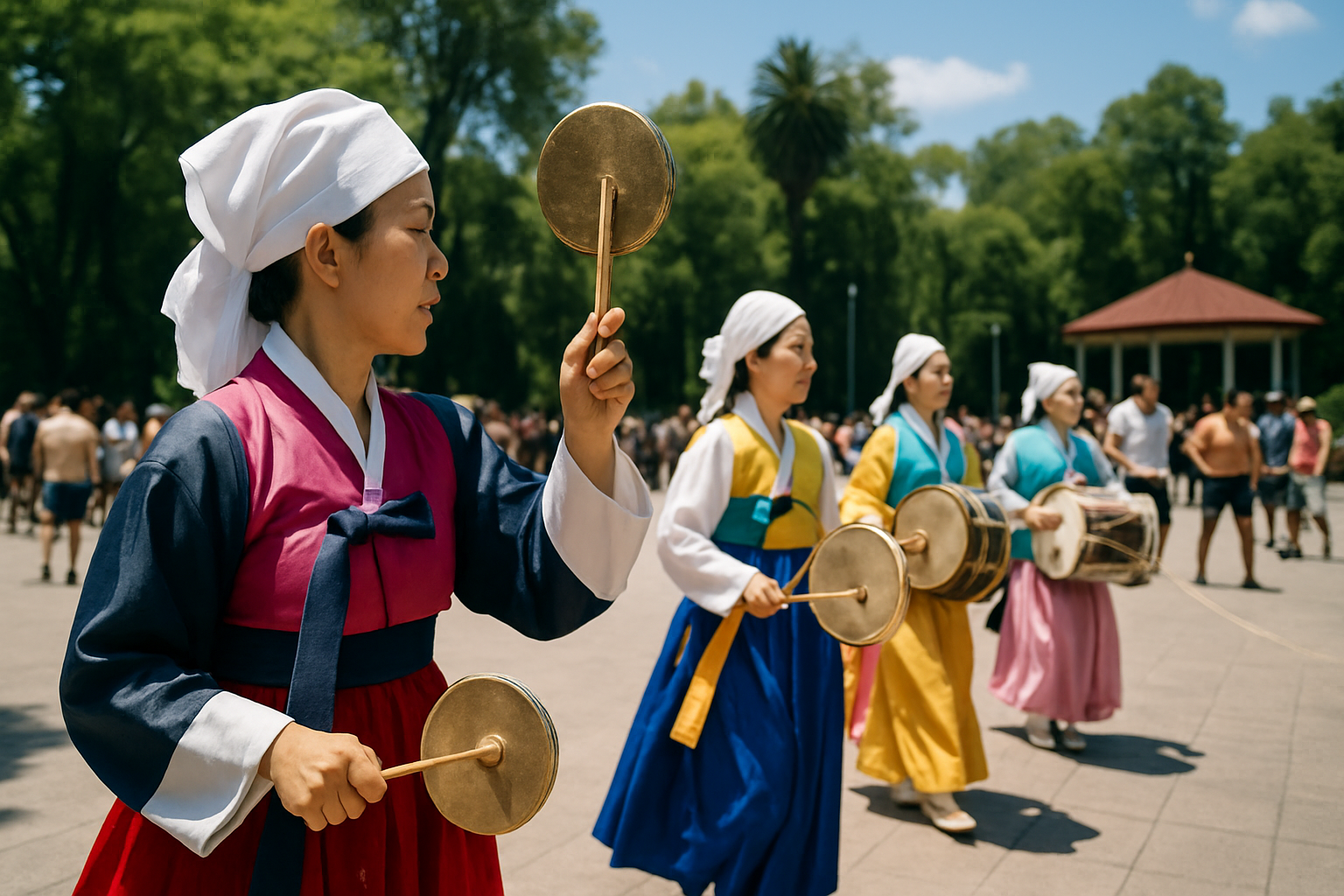
Picture this: a sun-drenched plaza in the heart of Mexico City, hundreds of people gathered under the blazing late-May heat, the sound of traditional Korean percussion filling the air. Women in hanbok — Korea's traditional clothing — are beating kkwaenggwari (small gongs), jing (larger gongs), janggu (hourglass drums), and buk (barrel drums) as they parade through Lindbergh Square. Nearby, adults are taking on a jump rope challenge, shirtless men are juggling soccer balls, and kids are deeply focused on coloring sheets featuring the twelve animals of the Chinese zodiac.
So here's the thing — this wasn't some kind of surreal dream. This actually happened on May 23rd, and it was all centered around one very symbolic dish: bibimbap.
What Was This All About?
The event was organized by the Central America and Caribbean Council of the Korean government-affiliated Advisory Council on Democratic and Peaceful Unification, and it had a full official title to match: the "World Cup Success and Korean Peninsula Peace Wish — Peaceful Unification Bibimbap Event." A mouthful, sure, but the idea behind it is genuinely beautiful.
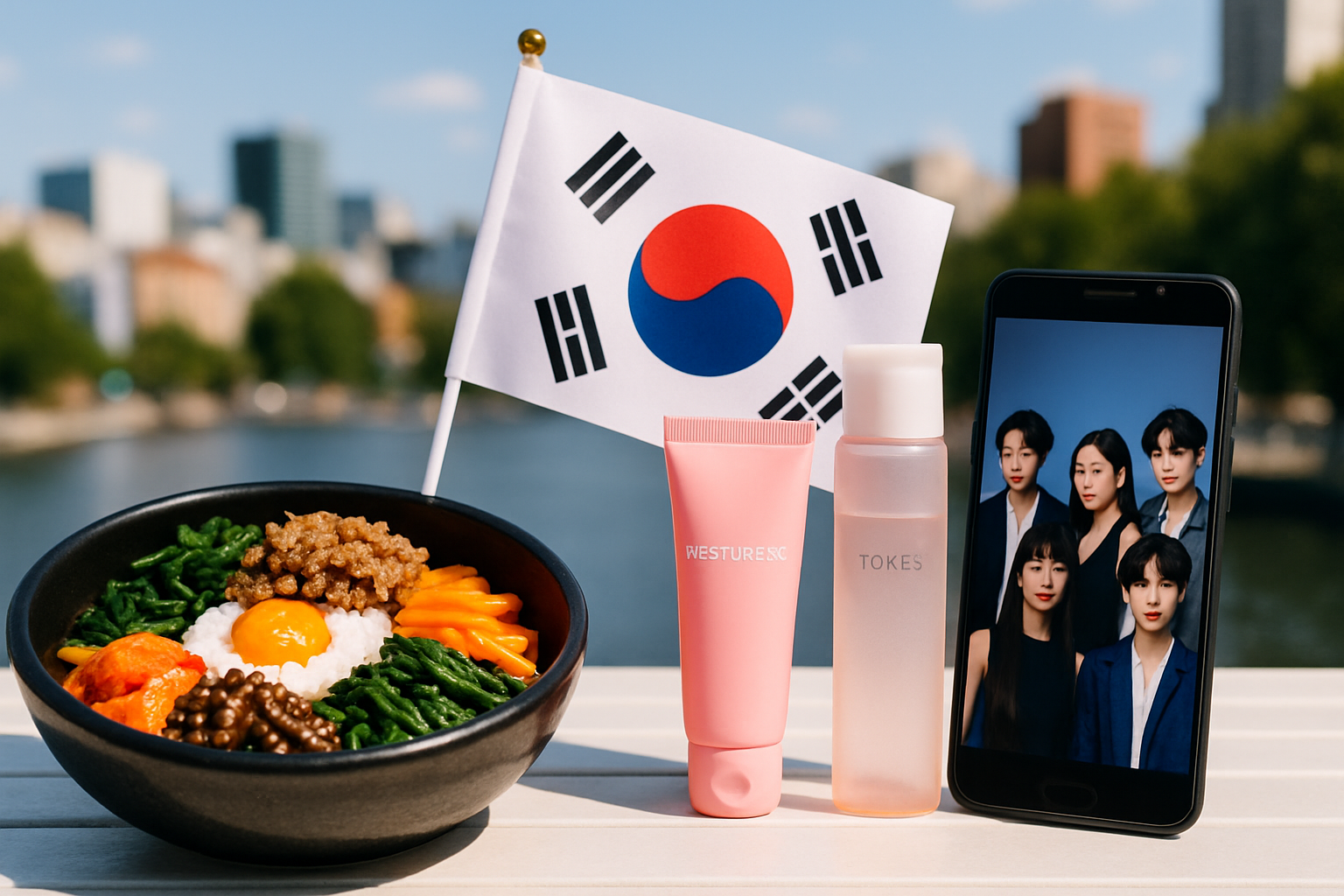
Bibimbap, for those who haven't had the pleasure, is a Korean rice dish where you throw together a colorful mix of vegetables, meat, a fried egg, gochujang (red chili paste), and sesame oil — all in one bowl — and mix everything together. The word literally means "mixed rice." The organizers leaned hard into that metaphor: just like different ingredients come together to create something greater than the sum of their parts, different nations can come together in the spirit of harmony, coexistence, and peace.
And with the 2026 FIFA World Cup — co-hosted by the United States, Canada, and Mexico — right around the corner, the timing couldn't have been more fitting.
Diplomats, a Big Pot, and 400 Servings
As noon approached and the Mexican sun climbed even higher, the main event began. A massive cauldron of bibimbap ingredients was brought to the stage, and a group of dignitaries grabbed oversized wooden paddles to mix it all together. Among them were Lee Jong-hoon, chair of the Central America and Caribbean Council; Korean Ambassador to Mexico Lee Ju-il; Alessandra Rojo, the head of the Cuauhtémoc borough in Mexico City; and Tomas Hart, the Czech Ambassador to Mexico.
Sesame oil was poured in. Gochujang followed. The colors swirled together, and just like that — a giant, crowd-pleasing bowl of bibimbap was ready.
Ambassador Lee Ju-il captured the spirit of the moment in his remarks at the event.
"When people of different cultures and traditions come together with mutual respect, understanding, and solidarity, we all become richer for it. I hope this event brings our two communities closer and reaffirms our shared commitment to peace."
The crowd wasn't just there for the speeches, though. All 400 servings of bibimbap were gone in under an hour. That's a pretty definitive endorsement.
A South African Diplomat Steals the Show
One of the highlights of the event came from an unexpected source. Malosei Kola, a political counselor from the South African Embassy in Mexico, took the mic and delivered what might be the most confident World Cup prediction of the year.
"South Africa will play Mexico in the opening match on June 11th. The winner of this World Cup will be South Africa. To all the other countries who will unfortunately be losing — my deepest condolences."
The crowd loved it. For context, South Africa, South Korea, Mexico, and the Czech Republic are all drawn together in Group A of the 2026 World Cup — so there's a very real chance these nations will be watching each other closely come June. The friendly rivalry was very much in the air.
Locals Are Already Fans
What's really interesting is how warmly the local Mexican community embraced the whole thing. Eric Gonzalez, a 30-year-old Mexico City resident who waited in the long queue under the beating sun, didn't hesitate when asked about bibimbap.
"I love Korean food. I've had bibimbap more than ten times, but this is the best one I've ever had. Bibimbap is my favorite food. I'm going to Korea in the near future — I've decided."
His friend Tania Tares, 29, had already made the trip. "I visited Seoul two years ago and stayed for about a week," she said. "I love everything about Korea — the language, the food, the music. I really want to go back."
These aren't isolated voices. The Korean Wave — or Hallyu, as it's known — has been building a passionate fanbase across Latin America for years now, and events like this one are a reminder of just how deep that cultural connection has grown.
Bibimbap as a Bridge
There's something genuinely moving about the idea of a bowl of rice bringing people together across cultures and continents. The event in Mexico City wasn't just a food festival or a diplomatic photo opportunity — it was a tangible expression of the hope that the World Cup represents: that competition and camaraderie can coexist, that difference can be a source of richness rather than division.
With the 2026 World Cup kicking off in just weeks, and Mexico City set to be one of the most electric host cities in the tournament, events like this one are setting exactly the right tone. And if the empty cauldron and the long lines are anything to go by, bibimbap might just be the unofficial dish of the World Cup.
This article is based on reports from Yonhap News, Bntnews, Enews.