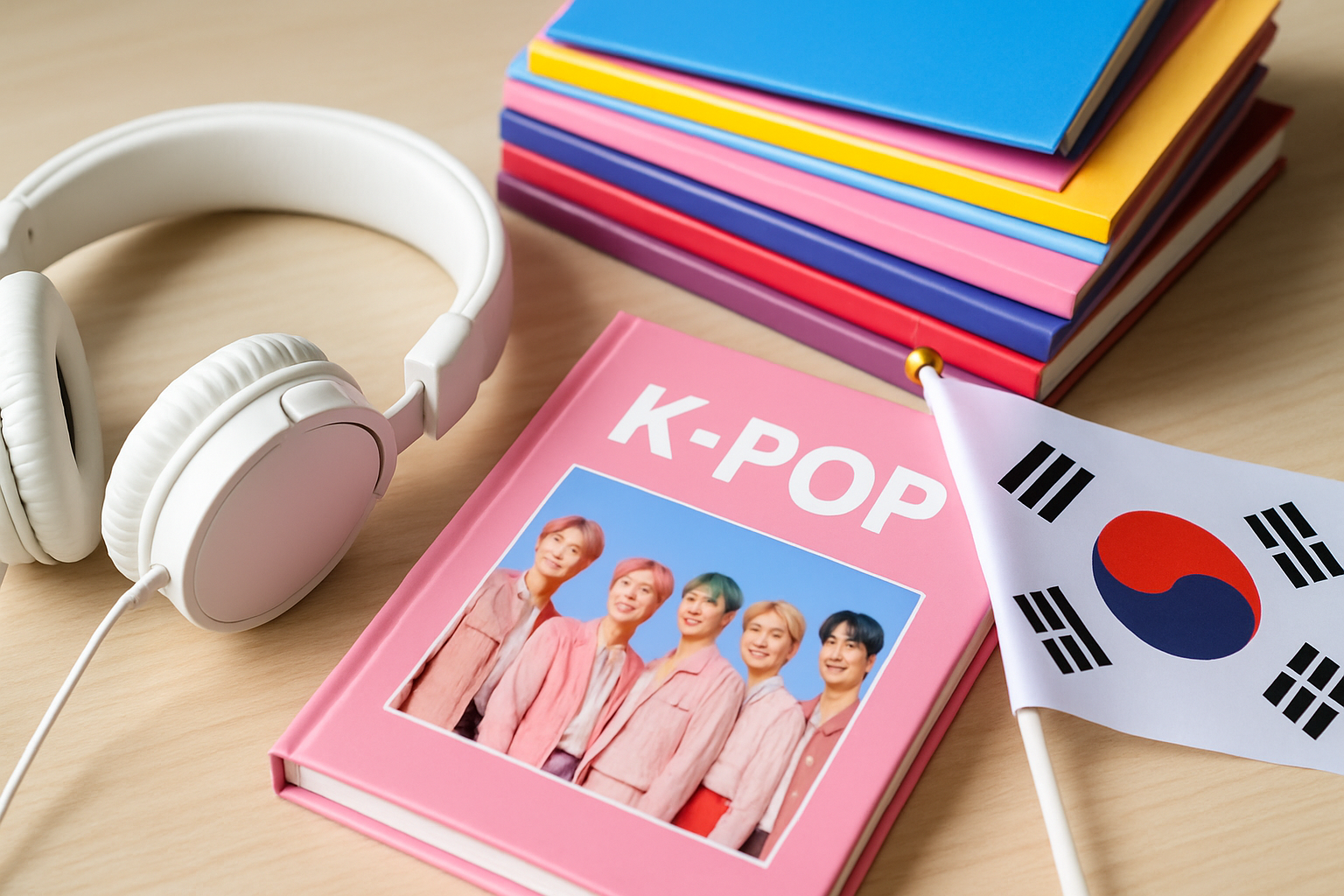
A Genre That Refused to Stay in One Country
So here's the thing about K-pop — it was never really supposed to be a global phenomenon. It started as South Korea's domestic pop music industry in the early 1990s, built on a foundation of catchy melodies, synchronized choreography, and a very particular kind of star-making machine. And yet, somehow, it grew into one of the most powerful cultural exports the world has ever seen. Today, K-pop artists headline stadium tours on every continent, dominate global streaming charts, and move billions of dollars in merchandise, tourism, and media. How did that happen? Let's break it down.
The Origins: Where It All Began
K-pop, short for Korean pop music, traces its modern roots to 1992, when a trio called Seo Taiji and Boys debuted on a Korean televised talent competition and essentially rewrote the rules of Korean entertainment overnight. They blended American hip-hop, rock, and dance music with Korean lyrics — and audiences went absolutely wild for it. That moment is widely credited as the spark that ignited the contemporary K-pop era.
What's really interesting is what happened next. South Korea's entertainment industry responded to that cultural shift by developing a highly structured system for producing pop stars — one that would eventually become the envy of music industries worldwide. Entertainment agencies began recruiting young trainees, sometimes as early as their early teenage years, and putting them through years of intensive coaching in singing, dancing, foreign languages, and media performance. The result was a conveyor belt of incredibly polished, multi-talented artists designed to appeal not just locally, but internationally.
The Idol System: More Than Just Music
Central to understanding K-pop is understanding the "idol" system — a term used in South Korea to describe the carefully crafted pop stars that major agencies produce. The big players in this space include companies like HYBE (formerly Big Hit Entertainment), SM Entertainment, YG Entertainment, and JYP Entertainment. These aren't just record labels — they're full-service entertainment conglomerates that manage every aspect of an artist's public life, from their music and visuals to their social media presence and public persona.
Trainees under these agencies can spend anywhere from one to seven years in intensive preparation before ever debuting. They learn multiple dance styles, take vocal lessons, study Japanese, English, and Chinese, and are schooled in how to present themselves to cameras and fans. It's an extraordinary level of investment — and it shows in the final product.
The idol system also gave birth to the concept of the "group," which is central to K-pop's identity. While solo artists exist, it's the multi-member groups — often featuring anywhere from four to more than a dozen members — that have driven the genre's biggest commercial successes. Think of groups like BTS, BLACKPINK, EXO, TWICE, and aespa, each with carefully defined member roles, distinct visual concepts, and deeply engaged global fanbases.
The Hallyu Wave: Korea's Cultural Export Boom
K-pop didn't go global in isolation. It rode a broader wave of Korean cultural exports known as Hallyu, or the "Korean Wave." Starting in the late 1990s and accelerating through the 2000s, Korean television dramas began finding massive audiences across Asia, particularly in China, Japan, and Southeast Asia. Korean cinema followed, eventually reaching a global peak with Bong Joon-ho's Parasite winning the Academy Award for Best Picture in 2020. Korean food, fashion, beauty products — all of it began flowing outward along the same cultural current.
K-pop was the soundtrack to all of this. And as Korean culture gained broader acceptance and curiosity worldwide, K-pop benefited enormously from the growing appetite for everything Korean.
The Digital Revolution: YouTube Changed Everything
Here's where the story takes a genuinely fascinating turn. K-pop's global explosion would not have happened without the internet — and specifically, without YouTube. In the early 2010s, Korean entertainment agencies made a strategic decision that would prove to be transformative: they put their music videos on YouTube for free, at a time when many Western labels were still resistant to streaming and digital distribution.
The results were staggering. PSY's "Gangnam Style" became the first YouTube video to hit one billion views in 2012, introducing the concept of K-pop to millions of people who had never heard of it. But more importantly, it demonstrated that there was a massive, untapped global audience hungry for Korean content.
Social media platforms — Twitter, Instagram, TikTok, and fan-specific apps like Weverse — then became the infrastructure for K-pop's famously passionate and organized fan communities. These fans, known by group-specific names like "ARMY" for BTS fans or "Blinks" for BLACKPINK fans, don't just listen to music. They stream songs in coordinated campaigns to push tracks up charts like the Billboard Hot 100 or South Korea's Melon chart — the latter being one of Korea's most influential domestic music ranking platforms, roughly equivalent to the UK Singles Chart in its cultural weight.
BTS and the Breakthrough Moment
No conversation about K-pop going global is complete without talking about BTS. The seven-member group — RM (Kim Nam-joon), Jin (Kim Seok-jin), Suga (Min Yoon-gi), J-Hope (Jung Ho-seok), Jimin (Park Ji-min), V (Kim Tae-hyung), and Jungkook (Jeon Jung-kook) — debuted in 2013 under HYBE and spent years building an international fanbase through genuine, unfiltered social media engagement at a time when most K-pop acts maintained a carefully managed distance from fans.
By 2018, BTS had become a genuine global superpower. They addressed the United Nations General Assembly, became the first K-pop act to top the Billboard Hot 100 with an English-language single, and sold out stadiums from Los Angeles to London. Their success didn't just prove that K-pop could compete on the world stage — it fundamentally changed how the global music industry thought about non-English-language pop music.
"Music has no borders" became more than a cliche — BTS proved it with numbers, with sold-out arenas, and with a fanbase that organized across dozens of languages to push their music to the top of every chart that mattered.
The Sound, the Look, the Experience
So what actually makes K-pop, K-pop? A few defining characteristics set it apart from other pop genres:
- High-production music videos: K-pop MVs are cinematic events, often featuring elaborate sets, stunning fashion, and intricate visual narratives — and they're produced with budgets that rival small Hollywood productions.
- Synchronized choreography: Dance is not an afterthought in K-pop — it's central to the art form. Groups rehearse routines for months, and "dance practice" videos often rack up tens of millions of views on their own.
- Concept-driven releases: Each album or single "era" comes with a distinct visual concept — a specific aesthetic, color palette, fashion direction, and sometimes an accompanying narrative or lore that fans can dig into.
- Fan engagement infrastructure: From physical album packages with photo cards and booklets to fan membership platforms and live-streaming apps, K-pop has built a remarkably sophisticated ecosystem for fan participation and monetization.
A Global Industry, Not Just a Trend
At this point, it's safe to say that K-pop is no longer a trend or a niche interest — it's a fully established sector of the global entertainment economy. Groups like BLACKPINK have headlined Coachella. Korean acts regularly appear on late-night American talk shows. Western artists from Halsey to Coldplay have collaborated with K-pop stars. And a growing number of K-pop groups now include members from the United States, Europe, and Southeast Asia, reflecting both the genre's global ambitions and its genuine international appeal.
What started as South Korea's domestic pop music scene has become one of the defining cultural forces of the 21st century. And if the last decade is any indication, it's not slowing down anytime soon.
This article is based on reports from Hitnews, Insight, Breaknews.