A Concert, a City, and a Pricing Crisis
So here is the situation: BTS, one of the biggest acts in the world, is set to perform at Busan's Asiad Main Stadium in June — and the city is in full chaos mode when it comes to accommodation. Prices at hotels near the venue have skyrocketed to levels that are genuinely hard to believe, and fans are furious.
According to reporting from the Busan Ilbo, a 2-to-3-star hotel in the Seomyeon area of Busan's Busanjin district was charging 745,000 Korean won — roughly 560 US dollars — for a room on the night of June 12, one of the concert dates. That same room was listed at just 164,000 won the week before, and 160,000 won the week after. That is more than a 4.5x spike. Another hotel in the Yangjeong-dong neighborhood jumped from around 50,000 won on regular weekends to 557,000 won on concert night — nearly a tenfold increase.
And those numbers are backed up by official data. Back in February, South Korea's Fair Trade Commission, alongside the Korea Consumer Agency, surveyed 135 accommodation businesses in Busan ahead of the concert. They found that average room rates on the concert Saturday were 2.4 times higher than the surrounding weekends. For motels specifically — the budget-friendly staple of Korean domestic travel — prices were nearly 3.3 times their normal rates.
Fans Are Voting With Their Wallets — Against Busan
What is really interesting here is how the fan community has responded. Rather than simply grumbling, many BTS fans — known globally as ARMY — are actively organizing to minimize their spending in Busan altogether.
Social media and Korean online communities have been flooded with posts like "I'm just doing a day trip because I can't afford to stay overnight," "I booked a place in Gimhae instead" — that is a neighboring city with Busan's international airport — and perhaps most pointedly, "I'm going to bring my own snacks and water, grab a fast food meal, and spend as little money in Busan as possible." One fan wrote bluntly that the city had developed a reputation for "one-shot greed," and she was determined not to contribute to it.
This kind of coordinated economic pushback from fans is notable. BTS concerts have historically brought enormous economic benefits to host cities — sometimes referred to as the "BTS Special" effect in Korean media — so the prospect of international fans actively withholding spending is not a small thing.
Why Can't the City Just Stop It?
This is where things get a bit frustrating, even from a policy standpoint. Busan's city government has been running inspection teams since late April, partnering with special judicial police, the Fair Trade Commission, and consumer protection bodies to monitor accommodation businesses around the Asiad stadium. They are specifically looking for unregistered lodging operations, businesses that fail to post their rates publicly, and places that charge more than their posted prices.
But here is the legal catch: if a hotel simply writes the inflated price on its official rate card, local authorities have no power to penalize them. There is currently no law capping how much a business can charge, even during major events. The Korean government announced a plan in February at a National Tourism Strategy Meeting to address exactly this — proposing immediate business suspensions for price violations and requiring hotels to pre-declare seasonal and special-event rate ceilings. However, implementing those measures requires amendments to both the Public Health Control Act and the Tourism Promotion Act, and as of now, neither has been revised in time for the June concerts. The bureaucratic coordination between multiple agencies has slowed everything down, leaving Busan's city government with its hands largely tied.
Enter the Temples
So if hotels are price-gouging and the law can't stop them in time, who is filling the gap? Buddhist temples, as it turns out.
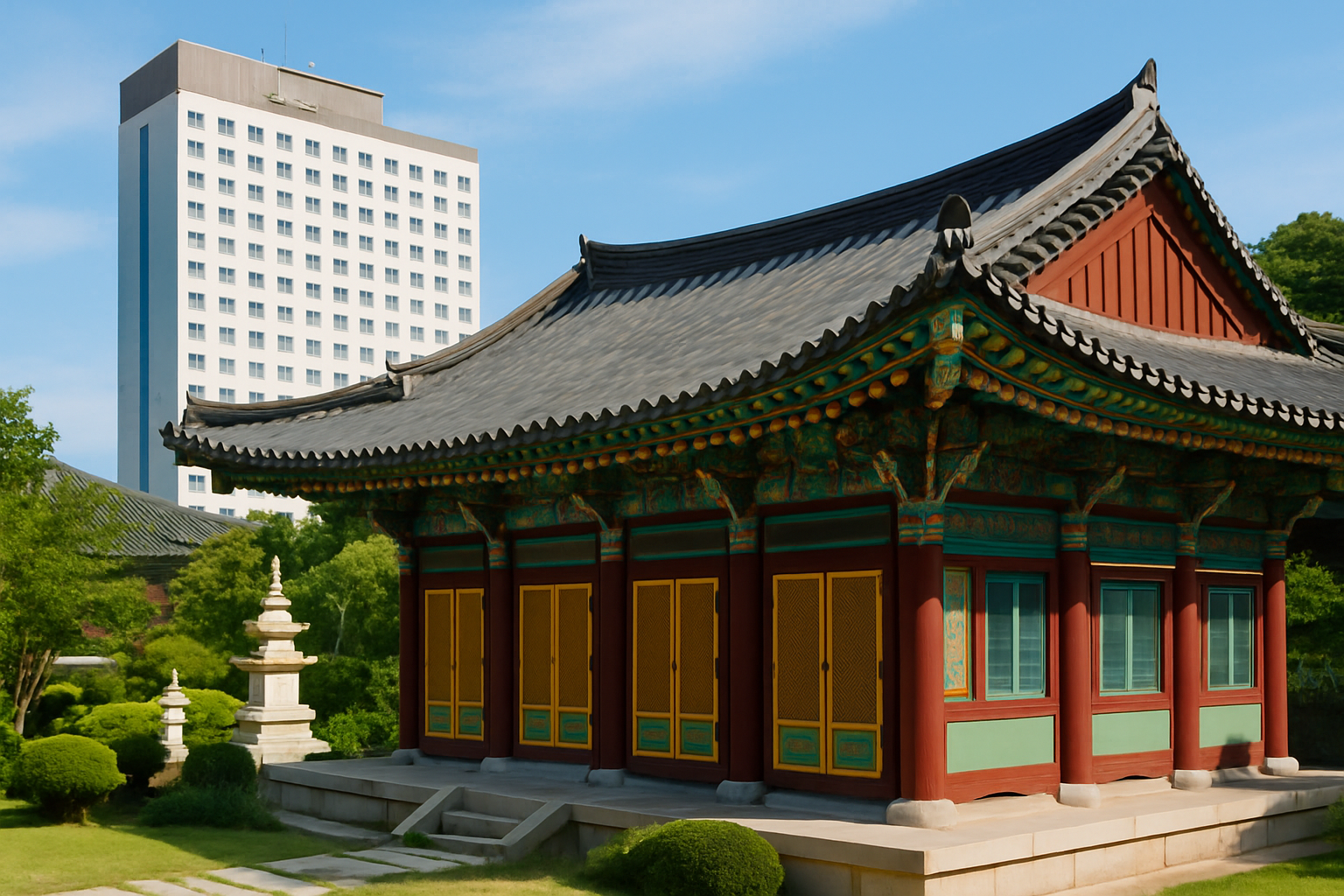
The Korean Buddhist Cultural Business Agency — the cultural arm of the Jogye Order of Korean Buddhism, the country's largest Buddhist denomination — has announced it will open temple accommodation to BTS fans traveling to Busan for the concerts. Eight temples across the Busan and South Gyeongsang region are participating, including the historically significant Beomeosa and Naewonjeongsa in Busan, along with Seongamsa, Hongbeopsa, Seongjusa in Changwon, Daegwangsa in Changwon, Tongdosa in Yangsan, and Pyochungsa in Miryang.
Participants will have access to temple rooms, communal meals known as gongyang, and basic temple culture programs, depending on each temple's capacity and schedule. There is a catch, of course — these are active religious and practice spaces, so guests will need to follow each temple's rules on check-in and check-out times and communal living guidelines. The agency is also looking into providing basic information and interpretation support for international visitors.
"The BTS Busan concert is an important cultural event that brings fans from around the world to Korea and to Busan," a spokesperson for the Korean Buddhist Cultural Business Agency said. "We want to share the spirit of generosity and hospitality that temples represent, and help visitors leave with a safe and warm memory."
The Bigger Trend: "Templcations" Are Already Having a Moment
And here is some context that makes this temple initiative feel less like a last-minute workaround and more like a natural fit for the moment: temple stays, called "templstay" in Korea, are genuinely having a cultural resurgence right now — especially among younger Koreans and foreign tourists.
The concept, called "templcation" in Korean internet slang — a blend of "temple" and "vacation" — has exploded in popularity among people in their 20s and 30s. According to the Jogye Order's cultural agency, 67.2 percent of reservations for their discounted "Double Happiness Templstay" program this May were made by people aged 20 to 39. That is a dramatic jump from 42 percent the previous year. Demand was so intense that the program's booking site crashed under the traffic load, with the entire month of May selling out within a single day of reservations opening — a booking frenzy that Korean media compared to trying to snag tickets for an idol concert.
There is even a temple in the middle of Hongdae, Seoul's famously lively youth entertainment district, called Hongdae Seonwon, which blends traditional temple aesthetics with a modern urban wellness concept. The venue reported over 3,200 visitors so far this year alone, with reservations more than doubling compared to the same period last year.
What is driving this? Experts point to a combination of factors. There is growing interest in mindfulness and mental wellness among young Koreans living through economic uncertainty. Temple stays offer yoga, tea ceremony, Taekkyeon martial arts, and meditation at a much lower price point than comparable wellness retreats or hotels. Professor Seong Hae-young of Seoul National University's Department of Religious Studies put it well: "As life becomes more unpredictable, the desire for healing among young people has grown stronger. Buddhism, unlike some other religions, doesn't impose heavy doctrinal demands, which makes it feel relatively accessible to people in their 20s and 30s."
Foreign tourists are also showing up in significant numbers. Last year, total temple stay participants reached 349,236 people, of whom 55,515 were international visitors — a figure that has been growing year on year.
An Unexpected Silver Lining
So what started as a pretty dispiriting story about price gouging and regulatory failure has a genuinely interesting twist. BTS fans from around the world who might not have otherwise considered a temple stay could end up spending a night — or two — in a centuries-old Korean Buddhist temple, participating in morning meditation and communal meals, all because the hotels were too greedy.
The Korean Buddhist Cultural Business Agency seems well aware of this opportunity. As their spokesperson noted, they hope this initiative becomes a chance for international fans to discover Korean Buddhist culture and the temple stay experience beyond the concert itself. For many global ARMY members, it might just become the most memorable part of the whole trip.
This article is based on reports from Naver News, Naver News, Naver News.