Washington Keeps the Door Firmly Closed
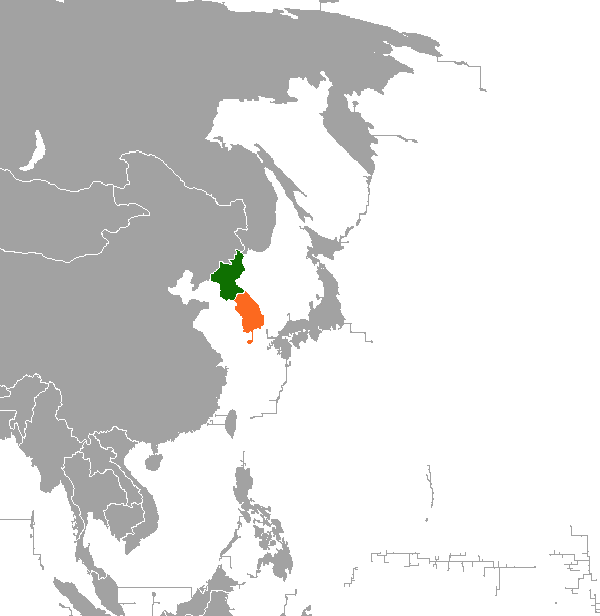
So here's the thing — if you're an American citizen with dreams of visiting North Korea, those plans are going to have to wait at least another year. The U.S. State Department has officially announced it will extend its travel ban on American citizens traveling to North Korea, keeping the restriction in place from September 1, 2025 through August 31, 2026.
The notice was posted to the Federal Register on Monday, July 21, and the reasoning hasn't changed much from prior years. Washington says there continues to be a "serious risk" of arrest and long-term detention for U.S. citizens and nationals — conditions it describes as constituting an "imminent danger to their physical safety."
"The Department of State has determined there continues to be serious risk to U.S. citizens and nationals of arrest and long-term detention constituting imminent danger to their physical safety."
What's really interesting is how routine this has become. The travel restriction was first implemented back in 2017, largely in response to the death of Otto Warmbier — the American college student who was detained in North Korea in 2016 and returned to the U.S. in a coma, dying shortly after. Since that initial ban, the State Department has simply renewed it every single year, with no sign that the underlying conditions have improved enough to change course.
What the Ban Actually Means
Under the measure, all U.S. passports are declared invalid for travel to, in, or through North Korea. That's a pretty sweeping restriction — it's not just a travel advisory telling Americans to be careful, it's a hard prohibition. The only way around it is to obtain special validation from the State Department, which is granted only in very limited circumstances, such as for journalists or humanitarian workers with specific justification.
For context, North Korea is one of the most isolated nations on Earth. Even before the U.S. travel ban, tourism there was tightly controlled through state-approved tour operators, and travelers had virtually no freedom of movement. Since the COVID-19 pandemic, North Korea has maintained near-total border closures, making the ban somewhat academic in practice — but legally and symbolically, the annual renewal keeps the U.S. government's official position clear.
No Signs of Change on the Horizon
Given the current state of U.S.-North Korea relations — which remain deeply frozen, with no meaningful diplomatic engagement in recent years — there's little reason to expect this ban to lapse anytime soon. The pattern of annual renewals suggests Washington sees no imminent shift in the risk environment inside North Korea for American travelers.
So if you were planning a trip to Pyongyang, it looks like August 31, 2026 is your next checkpoint — though, frankly, don't hold your breath.
Meanwhile, Inside Korea: Two Domestic Stories Worth Watching
Shifting gears a bit — while the North Korea travel ban is the headline grabber today, there are a couple of interesting developments happening on the Korean peninsula itself that speak to how South Korean regions are thinking about their futures.
A Small County with Big Tourism Ambitions
In North Chungcheong Province, a relatively small administrative county called Jeungpyeong-gun is making a surprisingly savvy move to attract summer tourists. On July 21, Jeungpyeong County signed a formal partnership agreement with the Korea Airports Corporation, and the two parties are wasting no time putting it into action.
Through August 2, a dedicated promotional pop-up called the "Jeungpyeong Tour Pass Promotion Center" is operating right inside the domestic terminal at Cheongju International Airport — one of the main regional airports serving central South Korea. Travelers passing through can learn about the Jeungpyeong Tour Pass, which is a bundled tourism product designed to make exploring the county's attractions easier and more affordable. Think of it like a city pass, but for a rural county that most international visitors wouldn't typically have on their radar.
The booth isn't just a brochure stand, either. There are SNS photo authentication events, dice games, and freebies — the kind of participatory stuff that actually gets people to stop and engage rather than walk past. Jeungpyeong County Governor Lee Jae-young even showed up in person to play the games and chat with travelers, which is a nice touch.
The geography here actually makes this strategy make sense. Jeungpyeong is only about 15 minutes by car from Cheongju Airport, making it a genuinely convenient detour for travelers. The county is hoping to draw visitors to spots like the Edu Farm Special Zone Tourist Complex and Jwagusan Recreational Land — nature and agri-tourism attractions that fit the growing appetite for slower, experience-based travel in South Korea.
South Gyeongsang Province Bets on AI for Manufacturing
Further south, Gyeongnam Province — formally South Gyeongsang Province, one of South Korea's major manufacturing heartlands — is pushing hard to get its factories thinking about artificial intelligence. On the same day, July 21, the province held its first "Manufacturing AX Innovation Seminar" at the I-Square Hotel in Gimhae City, drawing about 50 participants from local manufacturing firms, Gyeongnam Technopark, and the Korea Electronics Technology Institute (KETI).
"AX" here refers to AI Transformation — essentially the manufacturing sector's version of the broader digital transformation wave that's been reshaping industries globally. The seminar is part of a national initiative from South Korea's Ministry of Trade, Industry and Energy, focused on building a foundation for AI adoption across industrial sectors.
What's notable is the province's track record backing this up. Since 2023, Gyeongnam has already provided digital transformation consulting to 11 local companies and helped identify 65 new business and R&D projects through industry-academia-research collaboration. This isn't just talk — there's real pipeline activity happening.
The Gimhae event is just the first stop. Seminars are planned for Jinju and Changwon as well — Changwon being one of South Korea's most important industrial cities, home to major machinery and defense manufacturing. Later in August, the province plans to host the "Gyeongnam Industrial AI Competition," open to both university students and working professionals, to build grassroots enthusiasm for AI in manufacturing.
"We will disseminate best practices through regional seminars and actively support the adoption of AI by manufacturing companies so that AI can be utilized as a means of manufacturing innovation to enhance productivity and quality." — Park Hwan, Head of the Artificial Intelligence Industry Division, Gyeongnam Province
It's a good reminder that some of the most consequential stories in Korea aren't always about Pyongyang or Seoul — sometimes they're about how a county of 37,000 people markets itself at an airport, or how a provincial government is quietly trying to future-proof its factory floors. Both matter, and both are worth paying attention to.
This article is based on reports from Yonhap News, Breaknews, Breaknews.