A New Kind of Iconic
There is a quiet revolution happening in K-pop right now, and it does not look like what you might expect. For years, the industry operated on a fairly rigid visual playbook — soft features, delicate styling, a very specific idea of feminine beauty that groups were expected to embody almost without question. But a new wave of fourth and fifth generation girl groups is tearing that playbook apart, and doing it with a kind of confidence that feels genuinely refreshing.
LE SSERAFIM, ILLIT, and KATSEYE — three groups that represent very different corners of the current K-pop landscape — are at the center of this conversation. What makes this interesting is that these are not underground acts pushing an avant-garde agenda. These are some of the most commercially visible girl groups in the world right now, and they are using that platform to challenge what "iconic" beauty actually means.
So Here's the Thing About "Pretty" in K-Pop
For a long time, the standard for beauty in the K-pop idol world was heavily codified. Think porcelain skin, a certain facial structure, understated makeup, and an overall aesthetic that leaned toward soft and approachable. Groups that deviated too far from that standard often faced harsh public scrutiny, particularly in South Korea's online communities where appearance-based commentary is, to put it mildly, extremely common.
What's really interesting is that LE SSERAFIM, ILLIT, and KATSEYE have each taken a distinctly different approach to dismantling that standard — and all three are finding major success doing it.
LE SSERAFIM: Strength Over Sweetness
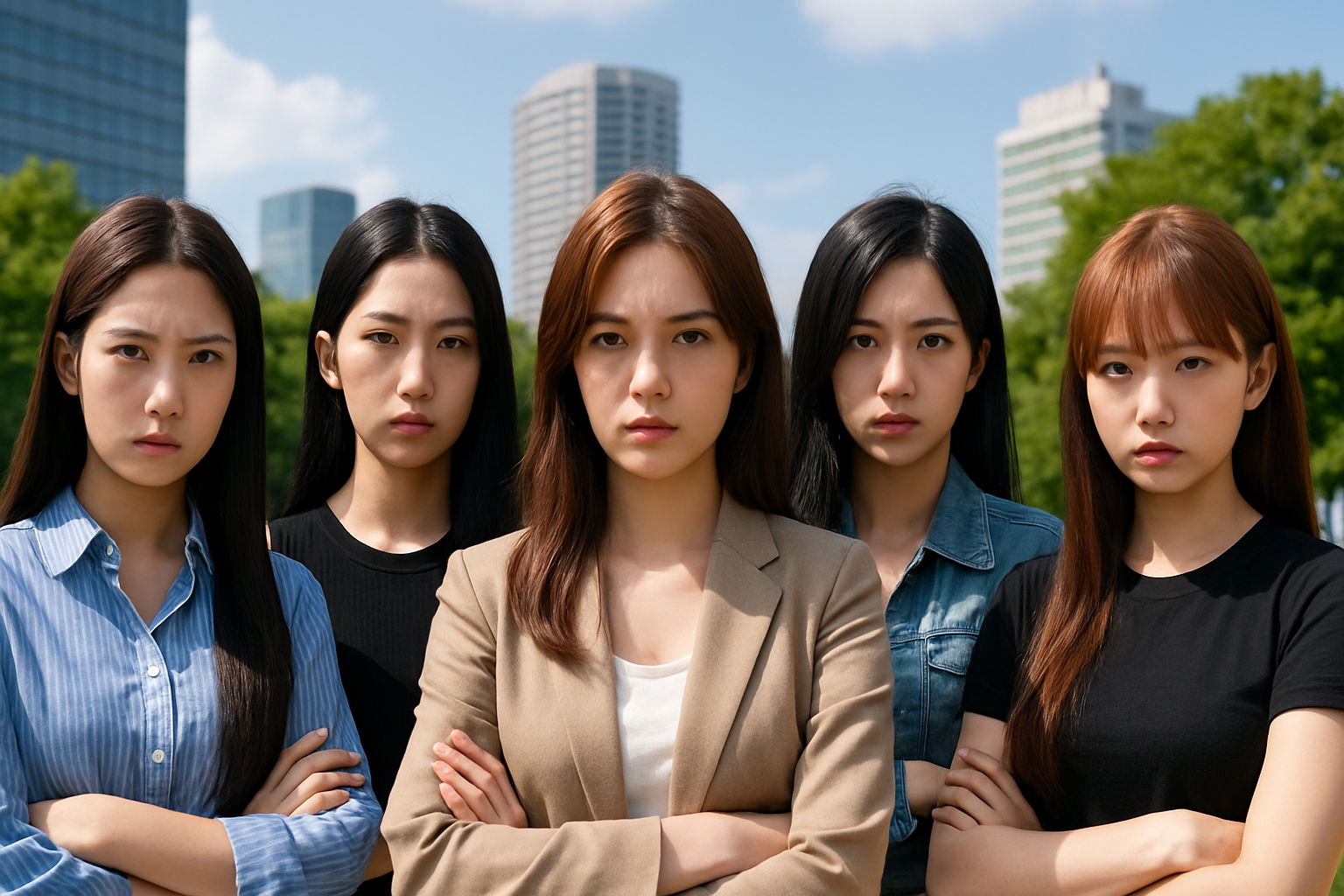
LE SSERAFIM, formed under Source Music (a subsidiary of HYBE), debuted in 2022 and almost immediately became a lightning rod for conversation around idol beauty standards. Rather than leaning into a soft or delicate image, the group has consistently pushed a concept built around athleticism, sharpness, and a kind of unapologetic intensity. Their performances are physically demanding in a way that is quite deliberate — the group has spoken openly about their training regimen, and it shows in the way they carry themselves on stage.
Their visual identity leans into strong lines and a confidence that reads as almost confrontational at times — and that is very much the point. In a market that has long rewarded a certain kind of approachable prettiness, LE SSERAFIM made it clear early on that they were not particularly interested in being approachable in the traditional sense. Their aesthetic says: watch us, but on our terms.
ILLIT: The Unexpected Charm Offensive
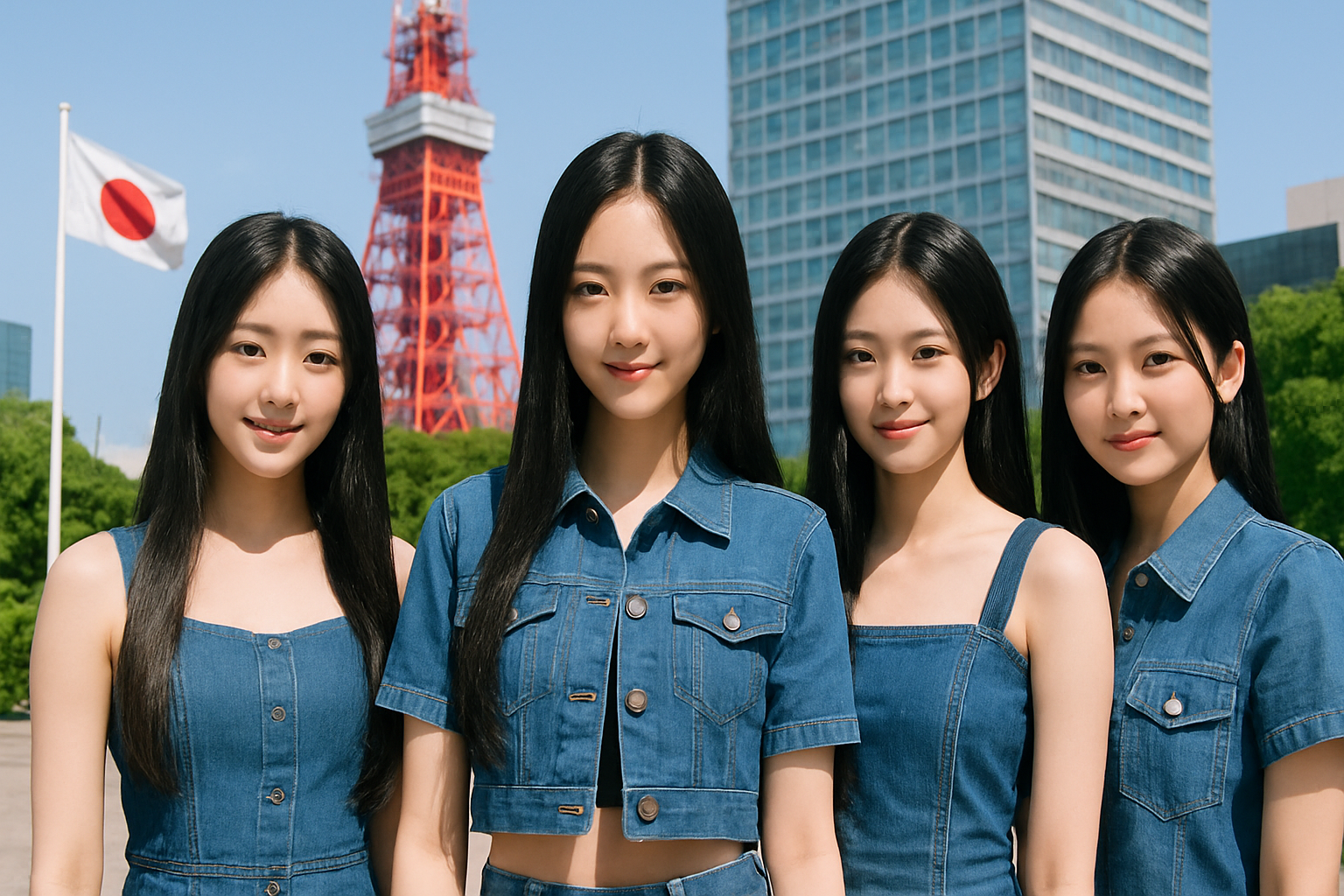
ILLIT, also a HYBE group (debuting under BELIFT LAB in 2024), came out of the gate with a slightly different energy. Their visual concept plays with a kind of effortless, almost accidental charm — less polished perfection, more the feeling of catching someone in a genuinely unguarded moment. It is a subtle but important distinction.
What has made ILLIT's approach so effective is the way it subverts expectation through simplicity. In a genre known for maximalist production and highly choreographed image-making, their aesthetic deliberately dials things back. The result is something that feels almost paradoxically more striking precisely because it is trying less hard. For a generation of fans who have grown up saturated with visual content, that kind of restraint registers as genuinely refreshing — and yes, iconic in its own way.
KATSEYE: The Global Wildcard
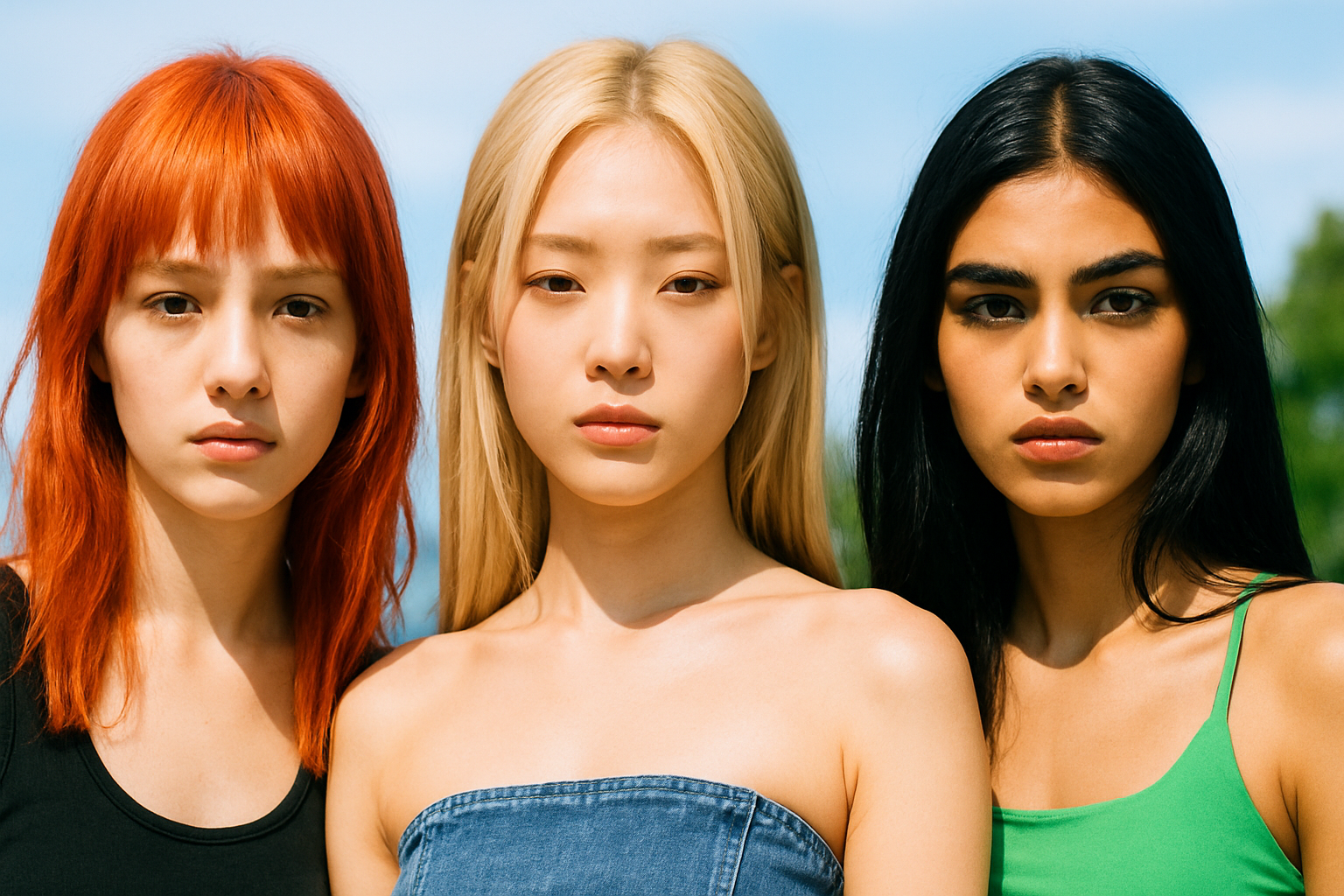
KATSEYE is perhaps the most fascinating case of the three. Formed through HYBE and Geffen Records' collaborative global audition program, the group is multinational by design, with members from the United States, the Philippines, Switzerland, and South Korea. That international makeup is not just a logistical detail — it fundamentally shapes their visual identity in a way that neither LE SSERAFIM nor ILLIT can fully replicate.
KATSEYE brings a diversity of facial features, body types, and stylistic references that is genuinely unusual for a group operating within the K-pop framework. And rather than trying to smooth over those differences into a uniform aesthetic, the group and their creative team have leaned into that variety as a feature, not a bug. Each member brings something visually distinct to the table, and together they make an argument that "K-pop pretty" can be a far more expansive category than the industry has historically allowed.
The Reversal That Makes It "Iconic"
What ties all three groups together is the nature of the reversal they represent. In Korean entertainment media, the term "반전 매력" — roughly translated as "reversal charm" or "unexpected appeal" — refers to the quality of surprising people by being different from what they anticipated. It is a deeply valued quality in Korean pop culture, and all three of these groups have it in abundance, albeit expressed in very different ways.
The reversal here is not just aesthetic. It is also conceptual. Each group, in their own way, is making a case that the most memorable, most culturally resonant version of a K-pop girl group is not necessarily the one that fits most neatly into the established template. Sometimes the iconic choice is the one that breaks the rule entirely.
Why This Moment Matters
It would be easy to overstate this — K-pop's beauty standards remain strict and its industry pressures intense. But the commercial success of groups like LE SSERAFIM, ILLIT, and KATSEYE does carry a real message to the industry at large. When groups that challenge conventional visual norms consistently top charts, sell out arenas, and generate massive international fanbases, it becomes harder for labels and stylists and A&R teams to argue that deviation from the old playbook is a risk.
The rules of pretty in K-pop are not gone. But they are, unmistakably, being rewritten. And these three groups are holding the pen.
This article is based on reports from Atstar1, Joynews24, Kbsnet.