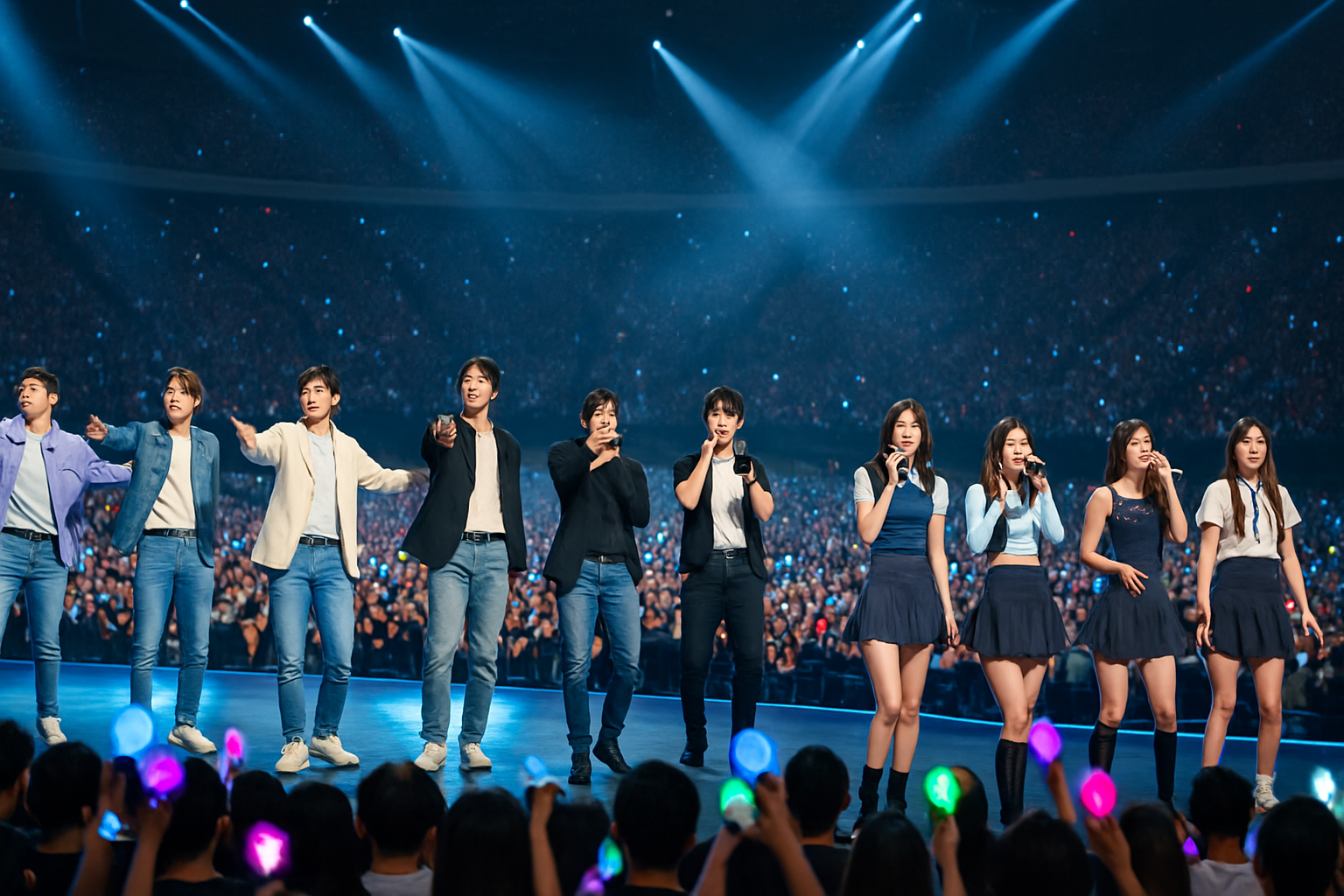
A New Kind of Korean Cool
So here's something worth paying attention to: a relatively under-the-radar Korean fashion brand called Acubi has quietly become one of the most talked-about names in global style circles — and a lot of that buzz is being driven by K-pop idols who seem to genuinely love the brand, not just wear it for a paycheck.
If you've been scrolling through K-pop fan accounts or fashion corners of social media lately, you've probably noticed a certain aesthetic popping up again and again. Clean, muted tones. Soft silhouettes. A kind of effortless, understated elegance that doesn't scream for attention but somehow always gets it. That, in a nutshell, is what people are calling "Korean quiet cool" — and Acubi has become one of its defining symbols.
What Is Acubi, Exactly?
For global readers who might not be familiar, Acubi is a South Korean fashion brand that's built its reputation on a very specific visual language: think washed-out pastels, vintage-inspired cuts, and pieces that feel simultaneously retro and contemporary. It doesn't follow the loud, logo-heavy playbook of many mainstream fashion labels. Instead, it leans into a kind of thoughtful restraint that resonates deeply with a generation that's grown a little tired of maximalism.
What's really interesting is how Acubi managed to carve out this identity in a fashion market as competitive and trend-driven as South Korea's. Seoul's fashion scene is famously fast-moving — trends come and go at a pace that would exhaust most industry veterans. Yet Acubi has managed to feel timeless rather than trendy, which is arguably a much harder thing to pull off.
The K-pop Connection
Here's where it gets especially fascinating. K-pop idols in South Korea carry enormous cultural weight. When a well-known idol is spotted wearing something — whether it's in an airport photo, a behind-the-scenes video, or a casual social media post — that item can sell out within hours. It's a phenomenon the Korean internet has its own vocabulary for, and brands live and die by it.
So here's the thing: when K-pop idols started wearing Acubi not in official brand campaigns, but in their personal, off-duty moments, it sent a very particular message. It suggested authenticity. These weren't polished, contract-driven endorsements. They looked like genuine personal style choices — and that distinction matters enormously to fans who have become increasingly sophisticated at reading the difference.
The brand's aesthetic also maps neatly onto a broader shift in how younger Korean celebrities are choosing to present themselves. The era of the perfectly curated, untouchably glamorous idol image is giving way to something more human and relatable. Acubi fits that mood perfectly — it's aspirational without being unattainable, cool without trying too hard.
Understanding "Korean Quiet Cool"
The phrase "quiet cool" — sometimes referred to internationally as "quiet luxury" — describes a sensibility that prioritizes quality, subtlety, and a certain kind of confident understatement over flashiness. In Korea, this concept has taken on its own distinct cultural flavor.
Korean quiet cool isn't just about spending less or avoiding logos. It's a whole aesthetic philosophy rooted in the idea that true style doesn't need to announce itself. It shows up in the careful choice of fabric, the precise cut of a sleeve, the way neutral tones are layered together. It's deeply intentional, even when it appears effortless — which, if you think about it, is a very Korean approach to a lot of things.
This sensibility has been building in Korean street style for years, nurtured in neighborhoods like Seongsu-dong and Yeonnam-dong in Seoul, where independent designers and vintage stores have long catered to a crowd that's more interested in individuality than in following the latest fast-fashion cycle. Acubi emerged from that ecosystem and has done an exceptional job of translating it into something that resonates beyond Korea's borders.
Why This Matters Globally
The global reach of Korean pop culture — what's often called the Korean Wave, or Hallyu — has created an enormous audience of people around the world who are tuned in to Korean trends in music, film, food, and beauty. Fashion is increasingly part of that conversation, and brands like Acubi are benefiting from it in real time.
What's striking is the way this particular trend travels. Unlike some K-pop fashion moments that feel very specific to a certain idol's visual concept or a particular music video aesthetic, Korean quiet cool is remarkably easy to translate across cultures. The muted palette, the relaxed silhouettes, the emphasis on wearability — these are things that resonate with people in Paris, New York, and Tokyo just as readily as they do in Seoul.
There's also something worth noting about the timing. Global audiences are in the middle of a broader cultural conversation about sustainability, slow fashion, and the value of buying less but buying better. Korean quiet cool, with its emphasis on pieces that last and looks that don't expire after a single season, slots neatly into that conversation.
The Authenticity Factor
One of the most important things driving Acubi's rise is something that's genuinely hard to manufacture: authenticity. In an era where consumers — especially younger ones — are acutely aware of when they're being marketed to, the organic adoption of a brand by cultural figures carries a weight that no advertising budget can replicate.
When fans see their favorite idol reaching for an Acubi piece on a casual day off, it doesn't feel like a transaction. It feels like a recommendation from someone whose taste they trust. That's an incredibly powerful position for a brand to be in, and it's not something that happened by accident. Acubi's aesthetic has been consistent and coherent enough that it genuinely attracts a certain kind of customer — including, it turns out, some of the most image-conscious people in one of the world's most style-aware industries.
What's Next for Korean Quiet Cool?
So where does this go from here? The honest answer is that it's hard to say — fashion trends are notoriously difficult to predict, and the very quality that makes quiet cool appealing (its resistance to overt trendiness) makes it equally resistant to easy categorization as a "moment" that will pass.
What seems more certain is that the global appetite for Korean cultural exports isn't slowing down, and fashion is becoming an increasingly significant part of that story. Brands like Acubi are helping define what Korean style looks like on a world stage — not the maximalist, performance-driven glamour often associated with K-pop visuals, but something quieter, more personal, and in many ways more lasting.
And for a generation of global consumers who are looking for exactly that kind of style — thoughtful, understated, genuinely cool — Korean quiet cool might just be exactly what they didn't know they were looking for.
This article is based on reports from Breaknews, Koreaherald, Koreaherald.