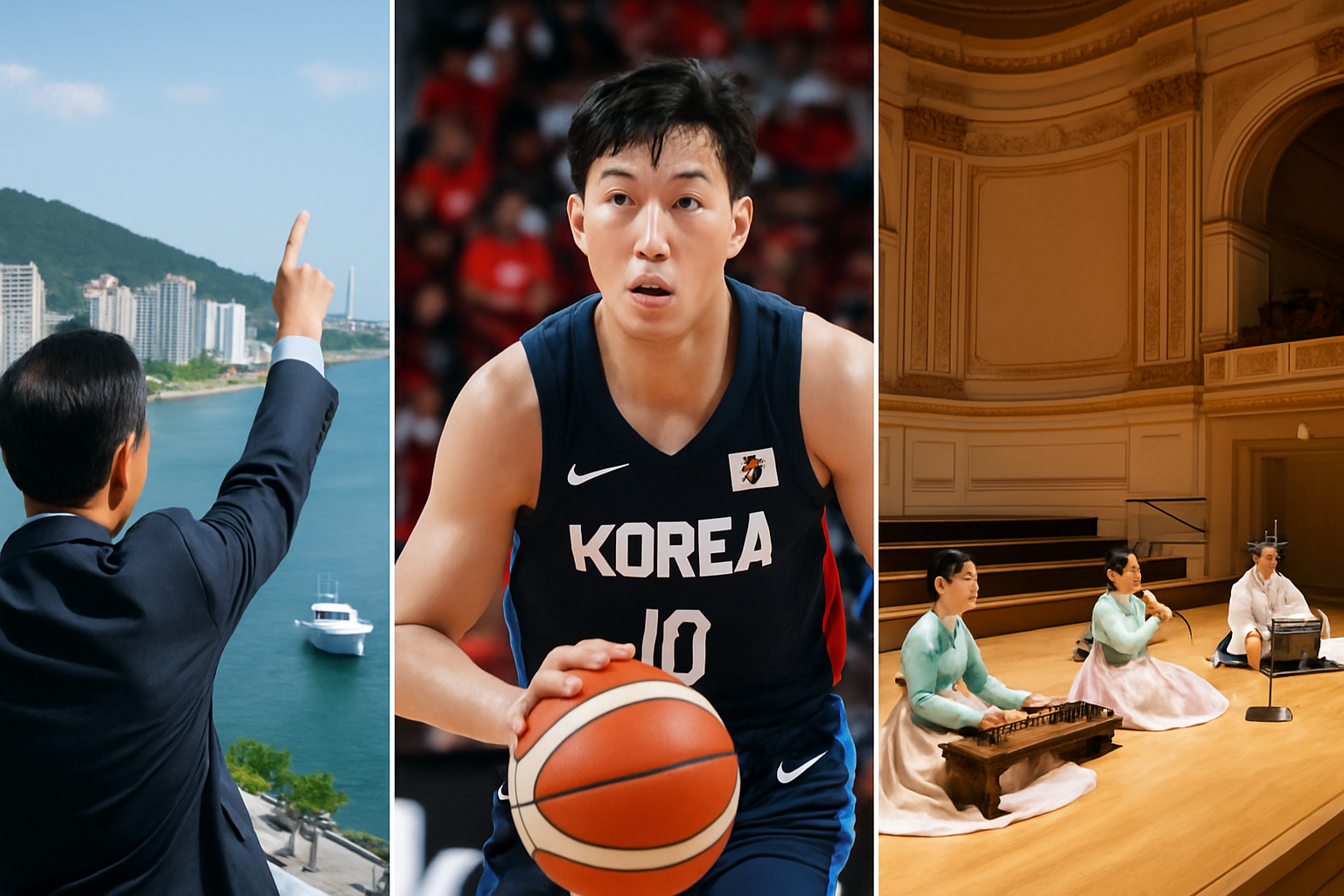
Unbeaten Again: Team Korea Makes It Two in a Row
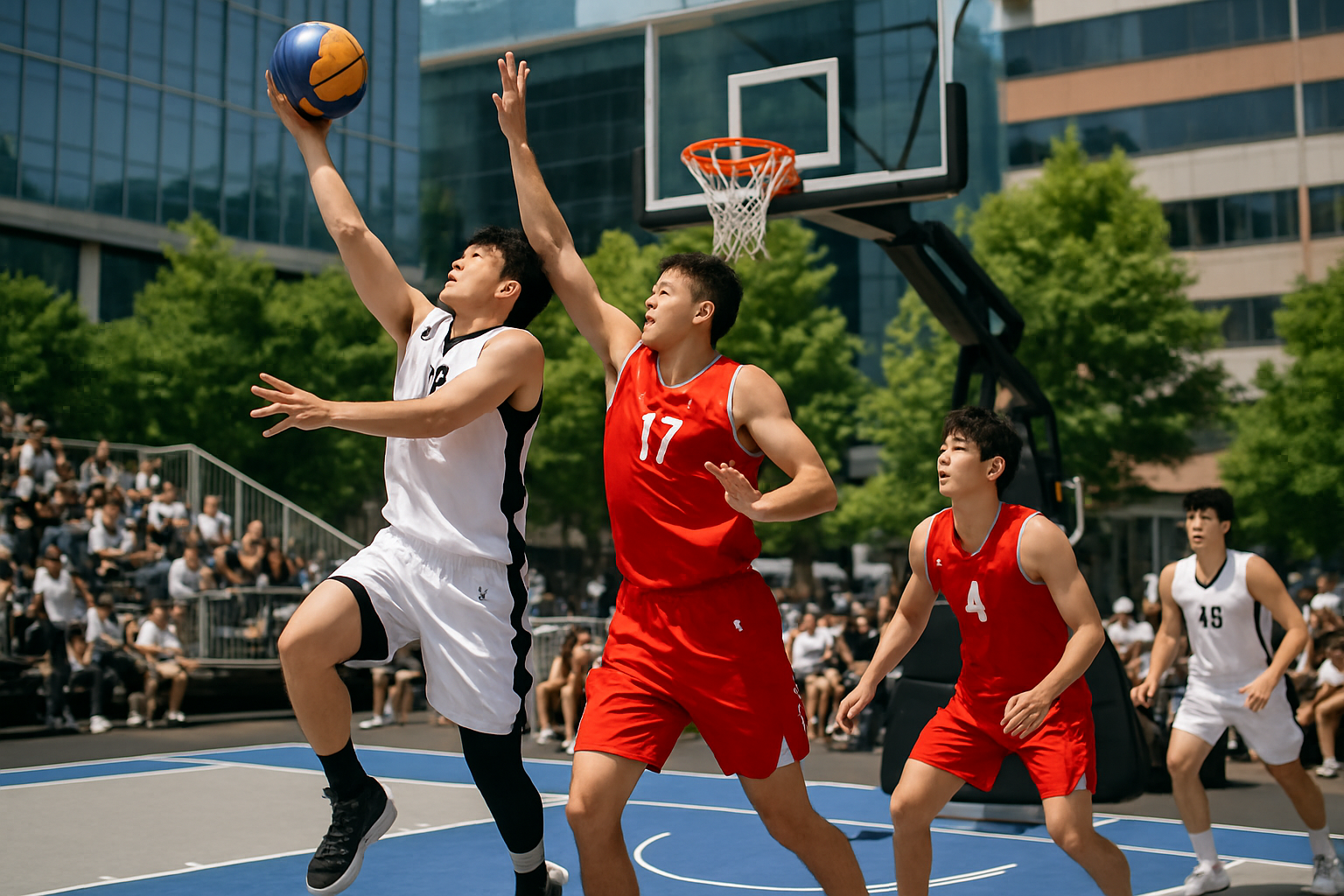
So here's the thing about Korea's 3x3 basketball national team right now — they are just not losing. At the 2026 KBA 3x3 Prime League Round 2, held on May 23 and 24 at a special outdoor court at One Mount in Goyang, Gyeonggi Province, Team Korea went a perfect 7-for-7 to claim their second consecutive tournament title. They did the same thing at Round 1. Back-to-back. Undefeated both times.
The squad is made up of four university players: Lee Ju-young and Kim Seung-woo from Yonsei University, Lee Dong-geun from Korea University, and Gu Min-gyo from Sungkyunkwan University. For context, these are three of the most historically competitive universities in Korean sports, so there is no shortage of pride and competitive fire on this roster.
In the Round 2 final, Team Korea defeated Black Label Sports by a score of 22-16, capping off another dominant run through the bracket. The runner-up spot went to Black Label Sports — a squad made up of experienced 3x3 veterans Park Min-su, Lee Hyeon-seung, Seok Jong-tae, and No Seung-jun — who rebounded from a semifinal exit in Round 1 to reach the final this time around.
Lee Ju-young: Still Learning, Still Winning
After the final whistle, Lee Ju-young, who has been the standout performer throughout both tournaments, gave a characteristically humble post-game assessment. "I'm grateful to have placed well in every 3x3 competition I've entered so far," he said. "We didn't have much practice time, so I feel like we weren't even at 50 percent — I'm just relieved the results turned out well."
What's really interesting is how self-critical he was even about the first tournament win. He described Round 1 as feeling "chaotic," saying the team lacked experience in that setting. But rather than dwelling on it, he used it as a learning curve. By Round 2, he said the team had figured out how to manage games more smartly — rotating players more frequently, conserving energy, and avoiding unnecessary expenditure of effort early on.
In 3x3 basketball — a fast-paced, half-court format played to 21 points or a 10-minute time limit — stamina management and shot selection are crucial. Lee identified the two-point shot (which in 3x3 is any basket made from beyond the arc, equivalent to a three-pointer in traditional five-on-five) and drive-and-kick plays as the most critical elements of his game. "The two-point shot is the most important thing," he said. "To create those opportunities, someone needs to drive into the lane and kick it out — that's the role I have to play."
The Asian Games Are the Real Target
Team Korea was not assembled just to win a domestic league. The entire project is geared toward the 2026 Nagoya-Aichi Asian Games, scheduled for September. The KBA (Korea Basketball Association) structured the team's participation in the Prime League as an invited, non-registered side — meaning they don't pay entry fees and, in turn, don't receive prize money or international tournament berths.
That's exactly why the FIBA 3x3 Challenger qualification slot — awarded to the Round 2 winner — went to runner-up Black Label Sports instead of Team Korea. The berth is for the Sukhbaatar Challenger, set for June 23-24 in Sukhbaatar, Mongolia. A KBA official confirmed the arrangement: "Team Korea is there to gain 3x3 experience ahead of the Asian Games. They do not receive prize money or international competition benefits — those go to the paying participants." If Black Label Sports cannot attend due to scheduling conflicts (the event falls on weekdays), the spot would pass to third-place finisher COSMO, and then to fourth-place Han Sol Remicon if needed.
Now, back to the Asian Games ambitions. Korea's track record in 3x3 at the Asian Games is actually pretty encouraging. At the 2018 Jakarta-Palembang Games, they reached the final before falling to China, taking home silver. At the 2022 Hangzhou Games, they made the semifinals. Both results outperformed Korea's showing in the traditional five-on-five tournament, which makes sense — 3x3 at the Asian Games tends to draw less of the top professional talent, leveling the playing field somewhat.
Lee Ju-young acknowledged the growing belief that a gold medal is within reach, but he isn't getting complacent. "Since the Asia Cup, a lot of people have been saying we could win gold at the Asian Games, and I think that's given us a bit more confidence," he said. "But countries like China, Mongolia, Qatar, and Iran have really strong physical players, so it's going to be tough." For reference, Korea finished as runners-up at the 2026 FIBA 3x3 Asia Cup held in Singapore in April — a result that has fueled optimism back home.
Japan, as the host nation, will also be a factor, as will Singapore, which has been investing heavily in its 3x3 program in recent years. The road to gold is competitive, but Team Korea is building momentum at exactly the right time.
A Different Story Back at Yonsei
Here is where the narrative gets a bit more complicated for Lee Ju-young personally. While he has been thriving on the national team stage, his university club — Yonsei University — has been struggling. Yonsei is one of the traditional powerhouses of Korean college basketball, historically fighting for first and second place in the league. But recently, the team has dropped three straight games and slipped to the middle of the standings.
Lee didn't shy away from taking responsibility. "Right now, we are absolutely not a team competing for the title," he said plainly. "I want to take on the mindset of a challenger, climb back up from the bottom, and find the form that Yonsei fans are hoping to see." It was a candid, grounded admission from someone who, on the national team side of things, is doing everything right.
That dual reality — dominant in a national team setting, rebuilding in the university league — actually says a lot about Lee's character. He's not resting on the Prime League trophies. He's keeping score on both fronts, and on the Yonsei front, he knows there's work to be done.
What to Watch Next
With the 2026 Nagoya-Aichi Asian Games on the horizon, all eyes will be on how Team Korea continues to develop their chemistry and game management. The Prime League format is giving them exactly what the KBA intended — real competitive reps at a FIBA-certified level, without the pressure of needing to chase ranking points or international berths. For Lee Ju-young and his teammates, each tournament is another step in a deliberate, focused build toward September's gold medal opportunity.
This article is based on reports from Sportalkorea, Naver News, Breaknews.