A Community Rooting for Two Things at Once
So here's a story that doesn't get told often enough. When people think about Korean football fans, they picture the massive street rallies back home — thousands of people in red shirts flooding the plazas of Seoul. But there's a quieter, equally passionate version of that story playing out in Guadalajara, Mexico, right now.
About 450 Korean residents call Guadalajara home, making it a modest but tight-knit community in Mexico's second-largest city. And with the FIFA World Cup bringing the Korean national team — coached by Hong Myung-bo — straight to their doorstep, the local Korean association is buzzing with a kind of excitement that most of them didn't see coming.
"We Never Imagined They'd Come Here"
Heo Dae-young (50), a Korean restaurant owner who has lived in Mexico for 24 years, put it simply: "When they first said the World Cup would be held in Mexico, I never imagined the Korean national team would actually come to Guadalajara. And I definitely didn't think we'd end up in the same group as Mexico."
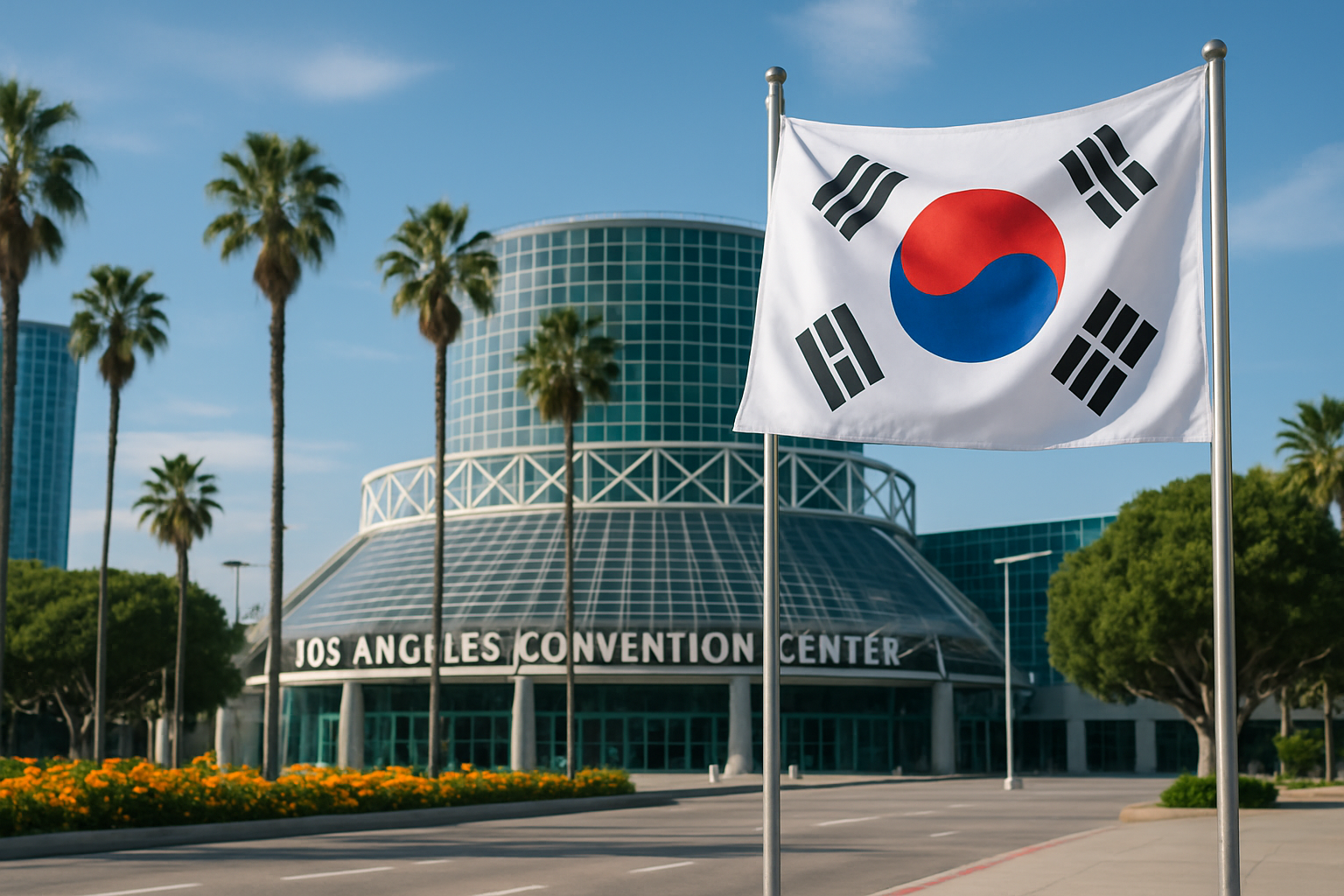
He laughed about the irony of it all. Los Angeles, with its massive Korean-American population, would have made for a louder crowd. "In that sense, I almost feel sorry for the team," he said. "But still — my heart is pounding."
What's really touching about Heo's story is the generational layer to it. He was part of the generation that experienced the electric atmosphere of the 2002 Korea-Japan World Cup, when South Korea's run to the semifinals sent the entire nation into a kind of collective euphoria that older fans still talk about with misty eyes. Now, he wants his four children to feel something like that.
"We know what that feeling was like — the heat, the passion of 2002. This time, I really hope our kids get to experience that at least once."
And they're making it happen. About 150 members of the local Korean community plan to pack into the Guadalajara stadium to cheer on the team for the match against Czech Republic. The day before, local Korean youth gathered at their church to make cheering signs — including one that reads "Guadal's Red Devils," a nod to the famous nickname of Korea's official supporter group, the Red Devils.
The Complicated Joy of Playing the Host Country
Here's the thing, though — this isn't a straightforward situation for Koreans living in Mexico. When your national team plays the country where you live and run a business, things get complicated fast.
Heo was candid about it. "Honestly, as an adult and as someone running a business here, I can't exactly be overjoyed about playing Mexico," he admitted. He noted that Mexican fans can sometimes be swept up by outside agitation, and that a Korean victory could create friction in the community. It's the kind of nuanced reality that immigrant business owners navigate quietly, and it rarely makes the headlines.
But then he smiled and added: "Still, I hope the team beats Mexico — so our young Korean kids here can feel proud of who they are. And honestly? We can afford to accept the loss with a smile on our faces."
From "Chino" to "Korea" — A Shift in Recognition
That pride has been a long time coming. Heo recalled a harsher reality from when he first arrived in Mexico, when Korean immigrants were often dismissed or lumped together under the derogatory term "chino" — a catch-all slur for East Asians in parts of Latin America, regardless of actual nationality.
"We were ignored, we faced discrimination," he said. "But now, as Korea's global standing has risen, we're recognized. We're part of the community."
That transformation is visible in his restaurant. As K-culture — from K-pop to K-drama to Korean food — has exploded in global popularity, Mexican customers now arrive with detailed knowledge and specific expectations. They know what tteokbokki (spicy rice cakes, one of Korea's most beloved street foods) is supposed to taste like. They ask for kkakdugi (fresh kimchi) as a side dish. They've even come around on the acquired taste of aged kimchi stew — something that used to confuse customers is now a dish they specifically request.
"I wear a uniform that says 'KOREA' at work, and I tell you — I can't even run a red light in that thing," he laughed. "If I litter or cut someone off in traffic, it reflects on all of us."
Setting the Record Straight on Guadalajara
Heo also wanted to address something that's been weighing on the community. Earlier this year, in February, Guadalajara saw significant unrest after Mexican federal forces eliminated the leader of the Jalisco New Generation Cartel, triggering a power struggle between criminal organizations. The news coverage alarmed people abroad — including many Korean fans considering traveling to the city for the World Cup.
"The situation was brought under control much faster than some reports suggested," Heo said. "A lot of the fear was driven by misinformation and fake news. The soldiers you see on the streets are essentially like the old public safety police in Korea — they're there for routine security, not because there's an active crisis."
On that note, the Guadalajara Korean Association — which had been dormant for six years — has officially reorganized in time for the World Cup, specifically to help visitors from Korea feel safe and welcomed.
"We want people coming from home to have a safe and enjoyable experience — watching the games, exploring the city," Heo said. "Please don't worry. Come, and enjoy yourselves."
A Moment That Reaches Across Generations
What makes this story resonate beyond football is what it represents for Korean diaspora communities around the world. The Korean immigrants who came to Mexico — the first wave dating all the way back to 1905, when roughly 1,000 Koreans sailed to Mexico in search of opportunity — built something lasting over 121 years. Today, around 13,000 Koreans live across Mexico.
For Heo and the 450 Koreans of Guadalajara, this World Cup isn't just about a scoreline. It's about watching your kids hold up a handmade sign in a foreign city, feeling the same heartbeat you felt decades ago, and knowing that the country you came from is, finally, undeniably, recognized.
The Red Devils have landed in Guadalajara. Just a smaller, quieter, more personal version of them — and they're just as ready.
This article is based on reports from Starin, Ikld, Edaily.