A City at the Center of Something Bigger
So here's something worth paying attention to: while Seoul often gets the spotlight in conversations about Korean culture going global, Busan has been quietly doing some genuinely fascinating things. This week alone, the port city made headlines for an innovative K-pop tourism experiment, hosted a major international streaming conference featuring cutting-edge AI dubbing technology, and is the backdrop to a broader story about Korean creative ambitions on the world stage. Let's break it all down.
BTS Fans, Local Homes, and a New Kind of K-Tourism
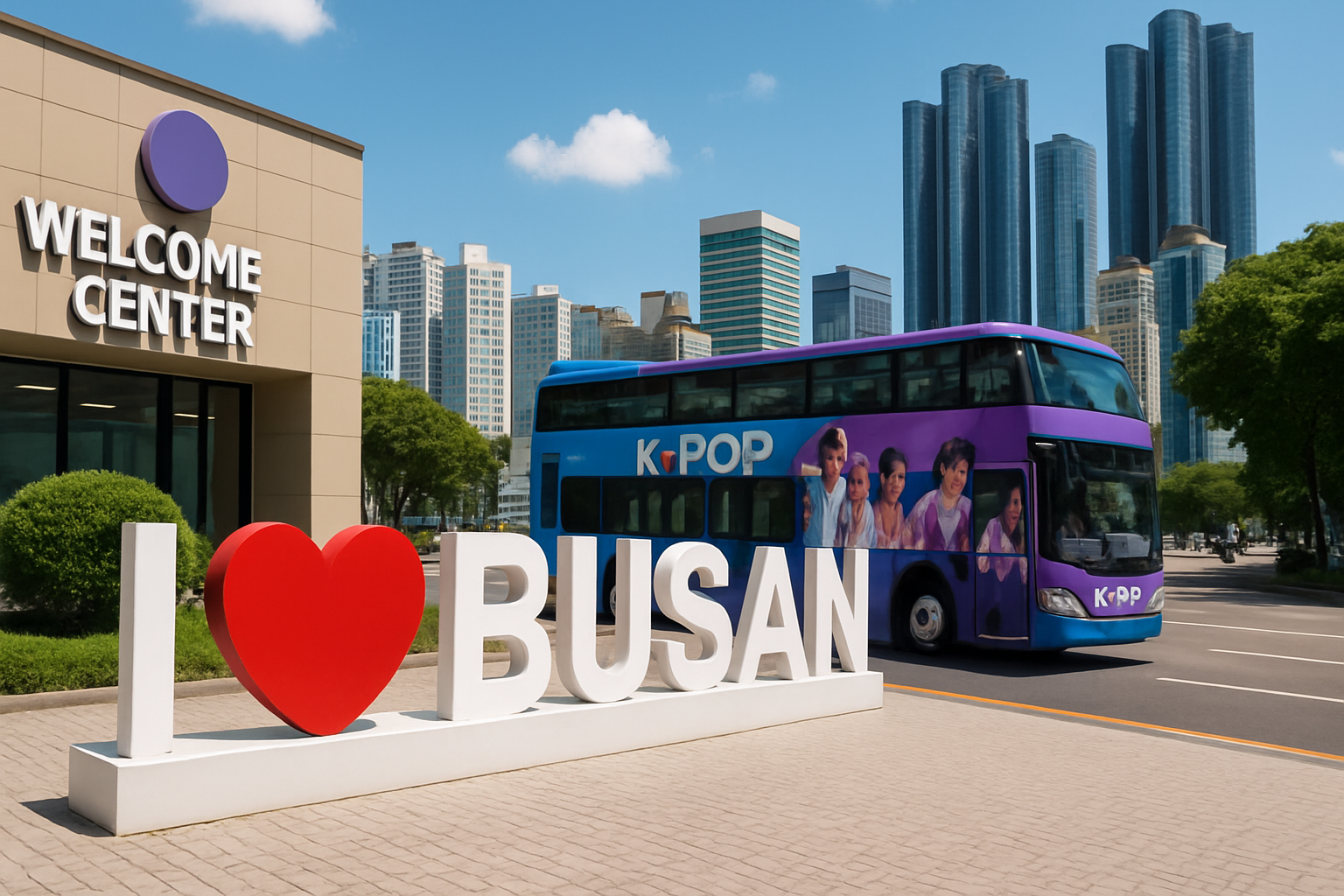
First up — and this one is really heartwarming — a project called K-POPSTAY BUSAN 2026 just wrapped up, and it's being called a potential blueprint for a whole new model of K-pop tourism.
Here's the setup: BTS, the globally dominant K-pop group, held a world tour stop in Busan. As anyone who's tried to book a hotel during a major concert knows, accommodation during these events becomes a nightmare. Prices spike, rooms sell out months in advance, and fans from overseas are left scrambling.
But instead of leaving international fans to fight over hotel bookings, a shared-stay platform called WeHome organized something different. They matched 65 overseas ARMY — that's what BTS fans call themselves — from 15 different countries with local Busan residents willing to open their homes. These weren't just transactional arrangements. Guests and hosts ate meals together, walked the city's alleys side by side, and attended the concert as a group.
What's really interesting is what this experiment proved. It wasn't just about solving a lodging shortage — it was about connecting global fans directly with the everyday lives of Korean people. A fan flying in from Brazil or the Philippines didn't just see Busan through a hotel window; they experienced it through the eyes of someone who actually lives there.
"Locals and global ARMY, brought together not by a booking platform, but by a shared love for music and genuine curiosity about each other's lives."
Organizers are framing this as a new model for K-tourism — one that moves beyond simply filling seats at concerts and starts building real human connections between Korea and the world. Whether it scales up remains to be seen, but as a proof of concept, it's hard not to be impressed.
AI That Doesn't Just Translate — It Performs
Meanwhile, also in Busan, something very different but equally significant was happening at the Korea International Streaming Festival, or KISF 2026. This is Korea's only major global streaming industry event, co-hosted by the Ministry of Science and ICT and the city of Busan, running from June 18 to 21 at the Busan Cinema Center and Paradise Hotel Busan.
Among the speakers at the opening day summit — which also included representatives from Samsung Electronics, CJ ENM, Studio Dragon, and global research firm Omdia — was a company called Hudson AI, Korea's first startup dedicated specifically to AI media dubbing.
Their CEO, Shin Hyun-jin, made a point that cuts right to the heart of how Korean content travels globally. He argued that the real competitive edge in AI dubbing is no longer about how fast you can produce a dubbed version, or even how cheaply. It's about how well the technology understands context — emotional, cultural, relational context.
Think about it this way: when you watch a Korean drama and the characters speak in ways that reflect their social hierarchy, their emotional restraint, or the specific dynamic between a sunbae (senior) and hoobae (junior), a word-for-word translation doesn't capture any of that. It just sounds flat. What Shin is describing is a move toward what the industry calls transcreation — not just translating what's said, but recreating how it feels for a different cultural audience.
The Technology Behind the Vision
Hudson AI's platform, called Hudson Studio, handles the full pipeline of dubbing production: separating voices from background audio, identifying individual speakers, translating, and then synthesizing new voice performances that aim to preserve the emotional tone of the original. The company is now pushing deeper into what's called agentic AI — systems that can make contextual decisions autonomously, rather than simply following preset rules.
Shin was candid that human oversight is still essential right now. Translators and localization experts still review the output. But his argument is that as the technology matures, the gap between "translated" and "performed" will narrow significantly.
"Expressions that can be interpreted differently across cultures, speech patterns stemming from character relationships, and the emotional nuances of scenes remain areas that require sophisticated understanding," Shin said at the summit.
Hudson AI is already expanding partnerships beyond Korea — working with media companies in North America and Japan. And given how hungry global audiences are for Korean content right now, the timing feels exactly right.
A Musical That Traveled to Europe and Came Back Changed
And then there's a story that brings together Korean creative ambition, European theater, and a 15-year journey of artistic persistence — the return of a musical called Turandot to the Daegu International Musical Festival, or DIMF.
A bit of background: DIMF was launched in 2006 by the city of Daegu with a very specific goal — to establish the city as Asia's musical theater hub. It's now Korea's only international musical festival, and this year it's celebrating its 20th anniversary, running from June 19 to July 6, 2026, with 35 productions and 122 performances across the city.
The centerpiece of this anniversary edition is the return of Turandot — a musical adaptation of Giacomo Puccini's classic opera of the same name. And the story of this production is genuinely remarkable.
From Skepticism to Slovakia and Back
When DIMF first staged Turandot in 2011 as the opener of its fifth edition, the reaction was mixed at best. Festival executive director Bae Sung-hyuck recalled at a recent press conference that critics questioned the very idea of turning a beloved opera into a musical. Some even argued that "Turandot and Daegu have nothing in common."
But the festival pushed forward. The production toured to China. Then, in 2018, it was staged in Slovakia — becoming the first Korean musical ever licensed to Eastern Europe. That's not a small thing. That's a Korean original production being picked up and performed in a country where K-culture has historically had minimal presence.
Now, seven years later, the Slovak production has come home. Hungarian theater director Robert Alfoldi, who staged the Slovak version, has returned to direct this revival, bringing with him a dramatically reimagined aesthetic. Gone is the orientalist visual spectacle of the original staging. In its place is a near-bare stage, designed to push the drama entirely onto the actors and their internal emotional lives.
The themes, Alfoldi explained, are now framed around "human relationships, loneliness, and the search for someone to love." That's a long way from exotic pageantry.
The Cast Returns
What makes this revival even more meaningful is that key cast members have returned with it. Lee Gun-myung, who has played the lovesick prince Calaf since the 2011 premiere, is back — and he's said that performing on a stripped-down stage forces him to dig deeper than ever before. And Lisa, returning to the title role of Turandot after a decade away, describes her character as now showing "more human" reasons for the cold armor she wears.
To mark the festival's 20th anniversary, DIMF has named musical actors Jeong Sun-ah and Kim Ho-young as ambassadors. Kim is a particularly fitting choice — he was the very first recipient of the DIMF Rookie Award when the festival launched two decades ago.
The Bigger Picture
So what connects a BTS fan homestay program, an AI dubbing startup, and a musical that crossed into Eastern Europe? At some level, they're all part of the same story: Korean culture is no longer content to simply export a product. It's looking for deeper, more meaningful ways to travel — through people's homes, through emotional performances that don't lose themselves in translation, and through original creative works that earn their place on stages far from where they started.
And Busan, perhaps more than any other city right now, seems to be at the center of that conversation.
This article is based on reports from Newscj, Venturesquare, Koreaherald.