A Diplomatic Trip That Changed the EV Game
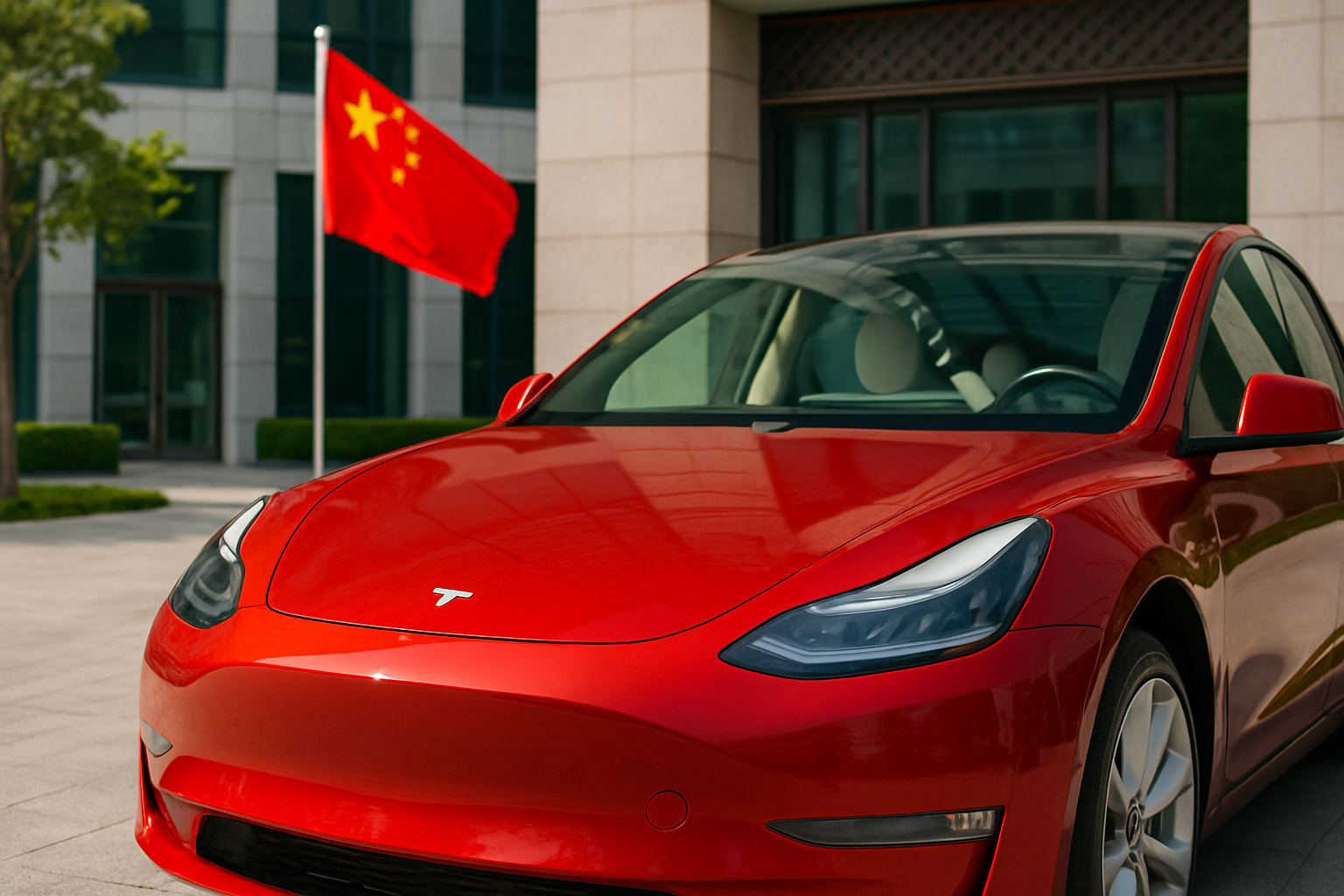
Here is something worth paying attention to: just one week after Elon Musk joined Donald Trump's state visit to Beijing as part of the official delegation, Tesla walked away with something it had been chasing for years — Chinese regulatory approval for its Full Self-Driving system, known as FSD. That is not a coincidence, and analysts are not treating it like one.
On May 22, Tesla announced via social media that its "Supervised FSD" is now available in ten countries simultaneously, including the United States, China, and South Korea. But it is the China approval that is making the biggest waves — and for good reason.
Why China Was Such a Hard Nut to Crack
China's autonomous driving market has been one of the most tightly regulated and fiercely competitive in the world. After a fatal crash involving Xiaomi's SU7 electric vehicle in March of last year, Chinese regulators tightened the screws significantly — banning automakers from even using the term "autonomous driving" in marketing, forcing companies to rebrand features as "driving assistance" or "intelligent driving" instead.
So when Tesla managed to get FSD across the regulatory finish line in that environment, it raised eyebrows across the industry. Gary Ng, chief economist at Natixis Corporate and Investment Banking, put it plainly:
"Trump's visit to China likely accelerated the long-delayed FSD approval. Tesla's entry will intensify market competition and help accelerate innovative development of autonomous driving in China."
In other words, geopolitics and business just became very difficult to separate in this story.
Tesla's Market Share Problem
To understand why this approval matters so much to Tesla, you need to look at the numbers. Back in 2020, Tesla held about 16 percent of China's electric vehicle market — a dominant position that reflected the company's early mover advantage. Fast forward to 2025, and that share has cratered to around 6 percent, eroded steadily by a wave of aggressive local competitors like BYD, Xpeng, and Huawei-backed automakers who know Chinese roads, Chinese consumers, and Chinese data infrastructure far better.
FSD was always Tesla's technological trump card — a feature designed to remind buyers that, whatever the price tag, you are getting something the local competition cannot quite match. Yale Zhang, managing director of Automotive Foresight, explained it this way:
"Some Chinese consumers still believe Tesla's technology is superior to domestic brands. If FSD performs reliably on Chinese roads, it could ease recent skepticism about autonomous driving technology and help the entire industry move forward."
Tesla had already been doing the groundwork for this moment — running a local AI data center in China and developing localized training capabilities tuned to Chinese road conditions. The regulatory hurdle was the last piece of the puzzle.
What "Supervised FSD" Actually Means
Before anyone gets the impression that China's roads are about to be filled with driverless Teslas, it is worth being clear about what the approved system actually does. Tesla's own documentation states that Supervised FSD "handles turns and lane changes under the driver's active supervision, but does not make the vehicle fully autonomous and requires immediate intervention when necessary."
By the standards set by the Society of Automotive Engineers (SAE), the international body that defines levels of vehicle automation, this system sits close to — but does not fully qualify as — Level 3 autonomy, which is the threshold where a car can manage most driving tasks without constant human attention. China has been moving to legalize Level 3 "conditional autonomous driving," and two state-owned automakers received the first Level 3 manufacturing licenses back in December of last year. Tesla is riding that wave.
The Competition Is Not Standing Still
Tesla's approval is significant, but its Chinese rivals are not exactly rattled. Huawei has announced plans to invest up to 80 billion yuan — that is roughly 17.7 trillion Korean won, or about 11 billion US dollars — over the next five years to build out the computing power behind its semi-autonomous driving systems. BYD and Xpeng, meanwhile, have years of accumulated data from Chinese roads that Tesla will have to work hard to match.
The Chinese government, for its part, has made clear it intends to champion domestic players. The dual approach of opening the door to Tesla while simultaneously fast-tracking licenses and standards for local companies reflects a careful balancing act — one that is as much about keeping trade tensions manageable as it is about building a world-class domestic EV industry.
South Korea Is Next in Line — But Waiting
For Korean Tesla owners, the China news comes with a complicated feeling. Korea was listed as one of the ten countries in Tesla's FSD announcement, and the company has been going through the process of obtaining a temporary operating permit and running beta tests on Korean roads. So the question on many local owners' minds is simple: when exactly does "listed as a supported country" translate into actually being able to use the feature?
The Korean regulatory process for advanced driver assistance systems has its own timeline and requirements, and Tesla has not given a firm date for a full domestic rollout. For now, Korean owners are watching what happens in China very closely — if FSD performs well there and public confidence in the technology recovers, it could build momentum for faster approvals in other markets too.
The Bigger Picture: Cars Are Becoming IT Platforms
What the FSD story in China illustrates, on a broader level, is the direction the entire automotive industry is heading. The car is no longer just a machine with an engine — it is increasingly a software-defined, electronically controlled platform on wheels. That shift, driven by the rise of electric vehicles and what the industry calls SDVs (Software Defined Vehicles), is reshaping not just what cars do, but what goes inside them.
Korean conglomerates are already moving aggressively in this space. Samsung Electronics is expanding its digital cockpit business through its subsidiary Harman, while LG Electronics is doubling down on in-vehicle infotainment and electronics solutions through its VS (Vehicle component Solutions) division.
Even smaller, specialized Korean companies are finding opportunity in this transition. LINKED, a Korean motor technology company founded in 2004, built its reputation supplying vibration motors — the tiny components that make your smartphone buzz — to the consumer electronics industry. Now, it is ramping up mass production of electric motors for automotive electronics applications, targeting everything from powered seats and side mirrors to door actuators and cooling valves. The company holds more than 20 patents in vibration and electric motor technology and has stated plans to expand further into home appliances and robotics.
According to Fortune Business Insights, the global automotive motor market is projected to reach approximately 110 billion US dollars by 2034, with the Asia-Pacific region — including South Korea — expected to lead that growth.
So here is the thing: the race for the future of transportation is not just being run by the Teslas and BYDs of the world. It is also being run by the companies building the precise, miniaturized, high-efficiency components that make those vehicles actually work — and the geopolitical forces that decide where the technology gets to go.
This article is based on reports from Venturesquare, Naver News, Businesspost.