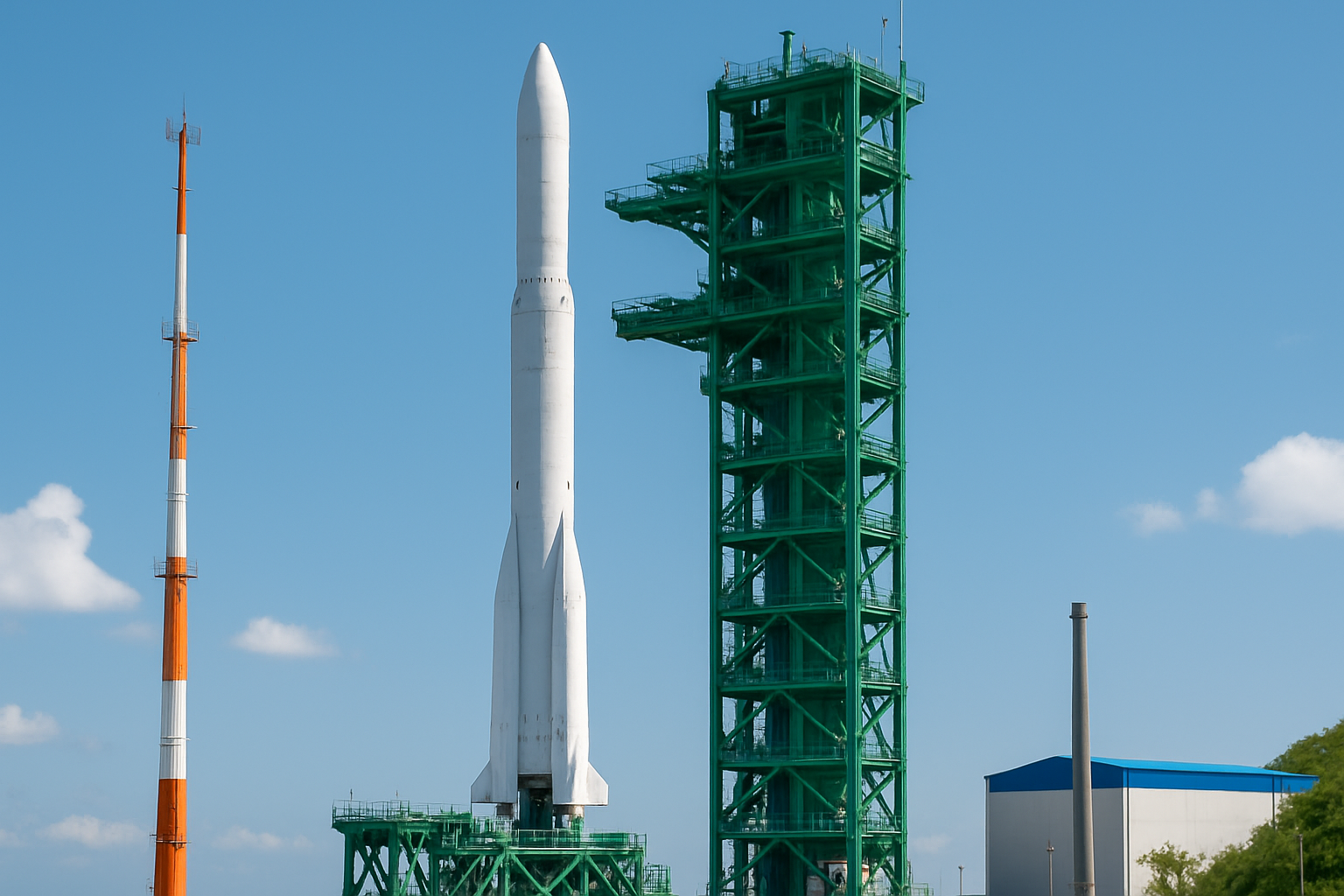
A New Era for South Korea's Space Ambitions
So here's the thing about building a serious space program — it's not just about rockets. A huge part of the equation is the regulatory infrastructure that lets you actually get those rockets off the ground, repeatedly and efficiently. And that's exactly what South Korea is now working to fix.
On August 11, the Korea AeroSpace Administration — better known as KASA, the country's dedicated space agency established in 2024 — announced a significant revision to the Space Development Promotion Act. The changes are designed to reduce bureaucratic friction for commercial and government space operators, and they're set to take effect on February 12, 2027.
What's really interesting is the timing here. South Korea has been aggressively expanding its space ambitions, with its homegrown Nuri rocket having successfully reached orbit and a growing pipeline of commercial satellite launches on the horizon. The old permit system, where operators had to apply for approval every single time they wanted to conduct a launch, was starting to look like a bottleneck that the country simply couldn't afford.
What's Actually Changing?
Bundled Launch Permits
The headline change is this: under the revised rules, anyone planning to conduct multiple launches from the same site over a five-year window can now apply for all of those permits in a single request. Previously, every individual launch required its own separate permit application — a time-consuming process that made it harder for operators to plan and commit to launch schedules well in advance.
For South Korea's growing roster of private space companies, this is a meaningful shift. It brings the country's regulatory framework closer in line with how more mature space markets operate, where predictability and forward planning are essential for attracting investment and customers.
Launch Safety Zones
The revision also introduces a formal concept of a "launch safety zone." Under the new framework, KASA will have the authority to designate areas near launch sites as restricted zones, subject to specific building and land-use controls. This gives the agency real teeth when it comes to managing the physical environment around launch infrastructure — an important step as South Korea looks to develop and potentially expand its launch facilities.
A National Security Carve-Out
There's also a notable addition on the defense side of things. A new clause grants the South Korean defense minister the authority to approve launches of projectiles when national security is the stated purpose. KASA noted that this provision is intended to allow the government to move more quickly when launches are tied directly to the protection of the country — a consideration that carries particular weight on the Korean Peninsula, where the security environment remains complex.
Why This Matters Beyond the Technical Details
South Korea is not just building rockets for the sake of it. The country has laid out an ambitious roadmap that includes lunar exploration, next-generation satellite systems, and a burgeoning commercial space sector. KASA, which consolidated the country's space functions under one roof when it was launched last year, has been tasked with turning that roadmap into reality.
Regulatory reform might not grab headlines the way a successful rocket launch does, but it's the kind of foundational work that determines whether a space program can scale. By making it easier to plan multi-launch campaigns and by formalizing safety standards around launch sites, South Korea is signaling that it's thinking about the long game.
The five-year bundled permit window, in particular, is worth paying attention to. It essentially allows launch operators to lock in a schedule and regulatory standing for an entire program cycle, rather than navigating bureaucracy launch by launch. For companies trying to build a business around reliable, repeatable access to space, that kind of certainty is genuinely valuable.
Looking Ahead
With the revised act not taking effect until early 2027, there's still time for both KASA and the broader space industry to prepare for the transition. But the direction of travel is clear: South Korea wants to be a competitive player in the global space economy, and it's willing to reshape its regulatory environment to make that happen.
Keep in mind that South Korea is entering this race at a moment when the commercial launch market is intensifying globally, with major players across the United States, Europe, and increasingly Asia all vying for position. Getting the permitting process right is one of those unglamorous but critical factors that could give Korean operators — both public and private — a genuine edge.
So while the February 2027 effective date might feel distant, the announcement itself is a meaningful marker of where South Korea's space program is headed. Faster approvals, clearer safety frameworks, and stronger national security provisions — it's the regulatory architecture of a country that's done playing catch-up.
This article is based on reports from Kado, Yonhap News, Ggmedinews.