Samsung Crosses a Historic Milestone
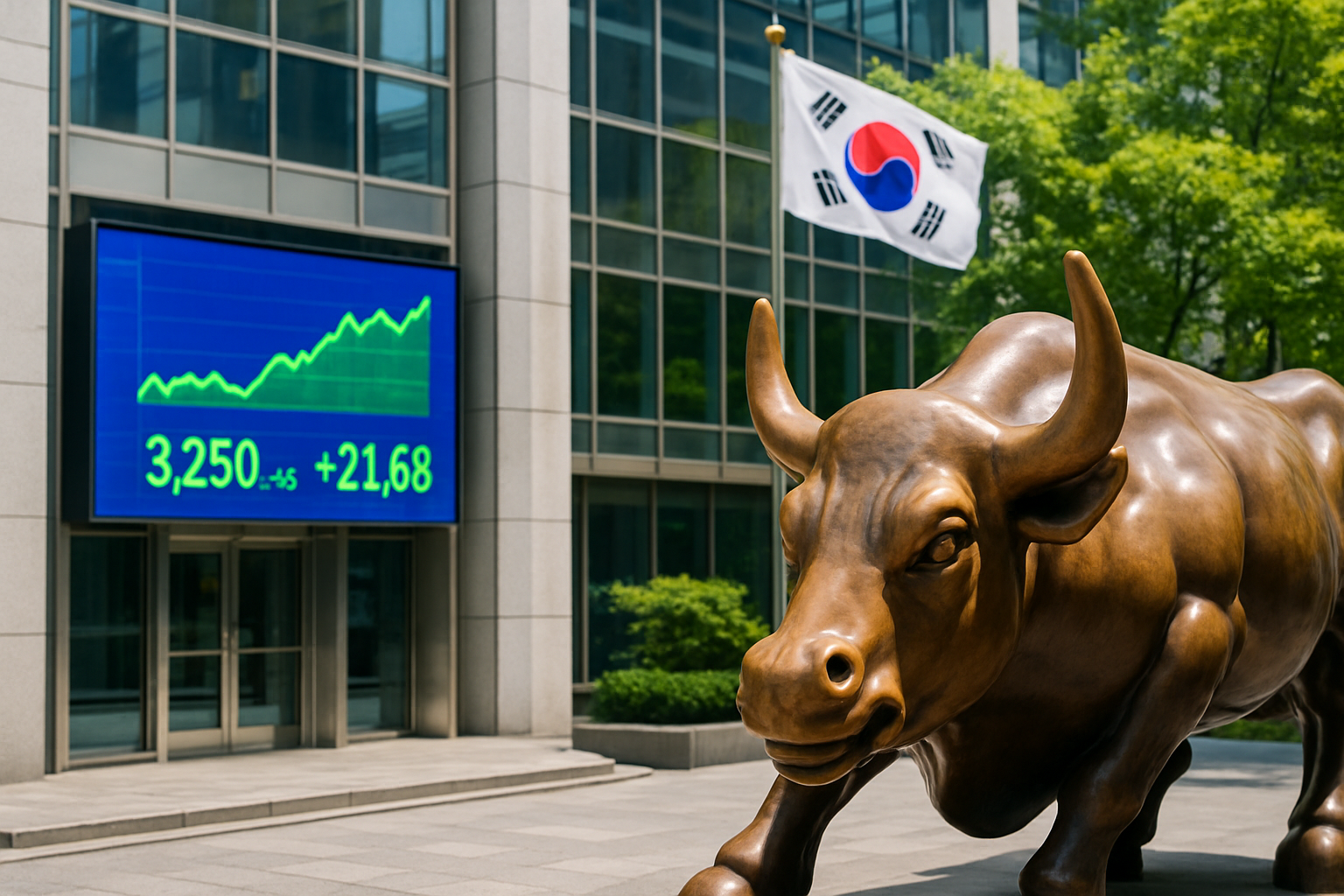
So here is the thing about May 29 in South Korea — it was a big day on multiple fronts. Let's start with the headline that had the financial world buzzing: Samsung Electronics crossed the 2,000 trillion won mark in combined market capitalization for the very first time in its history.
Shares of Samsung Electronics closed at 317,000 won (roughly $211 USD) on the Korea Exchange, up nearly 5.84% from the previous session. That is not a small jump — and it actually set a new record closing price since the company's 2018 stock split, blowing past the previous high of 307,000 won that had been set just two days earlier on May 27. At one point during the trading session, the stock touched 319,000 won, a 6.51% intraday surge.
Samsung's preferred shares also had a strong session, closing at 202,500 won — up 6.08%. When you add up the market cap of the common shares (1,853.27 trillion won) and the preferred shares (162.48 trillion won), you get a combined figure of 2,015.75 trillion won. That is a historic first for the company.
What Drove the Rally?
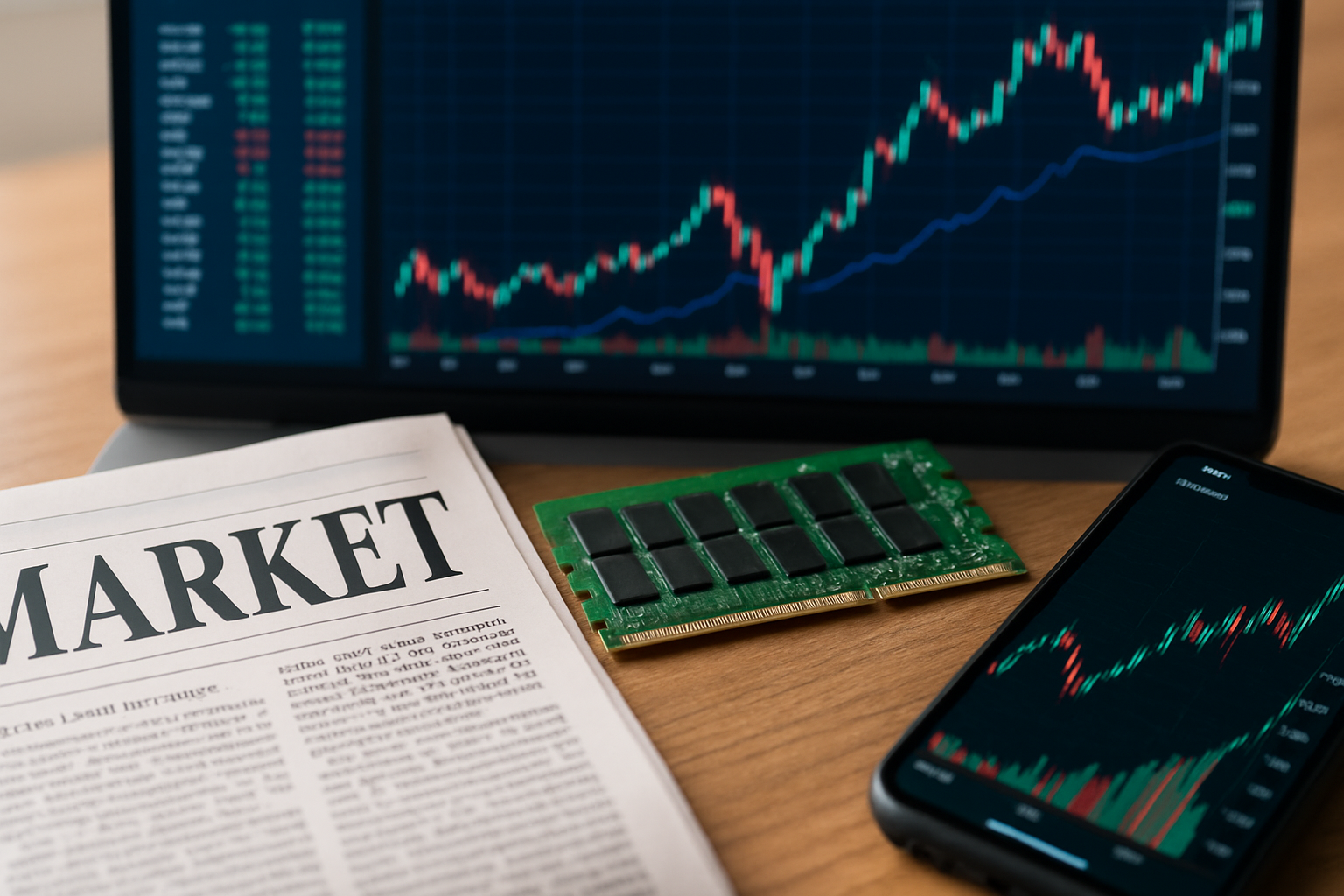
What is really interesting is the mix of factors that pushed Samsung over that milestone. The biggest catalyst appears to be Samsung's confirmation that it has become the first company in the world to begin shipping samples of HBM4E — the seventh-generation High Bandwidth Memory chip. HBM, or High Bandwidth Memory, is the specialized chip architecture that powers AI accelerators, and it has been at the center of a fierce race between Samsung, SK Hynix, and Micron.
On top of that, it emerged that both Samsung Electronics and SK Hynix participated as "strategic infrastructure partners" alongside Micron in Anthropic's recent Series H funding round. Anthropic, the American AI safety company behind the Claude family of AI assistants, is reportedly targeting an IPO within the year — so being named as a strategic partner in that round is a pretty meaningful signal of where these Korean chipmakers sit in the global AI supply chain.
Global market sentiment also helped. All three major US indices hit all-time highs overnight, partly on news that the United States and Iran had reached a memorandum of understanding to end hostilities, pending final approval from President Donald Trump. The S&P 500 rose 0.58%, the Nasdaq climbed 0.91%, and the Philadelphia Semiconductor Index — closely watched by chip industry observers — gained 1.00%.
SK Hynix Also Surges, But Foreign Investors Sell
SK Hynix, Samsung's main domestic rival in the memory chip space, also continued its upward run, closing at 2,333,000 won — up 1.92%. During intraday trading it briefly hit 2,379,000 won, breaking its own all-time intraday high. SK Hynix's market cap came in at approximately 1,662.73 trillion won, which is actually 89.72% of Samsung Electronics' market cap. That gap has been narrowing, and it tells you a lot about just how well SK Hynix has been performing lately.
Here is the twist though: despite the euphoria, foreign investors were actually net sellers on the day. SK Hynix topped the list of net-sold stocks by foreign investors, with 1.029 trillion won worth of shares sold, while Samsung Electronics came in second with 324.1 billion won in net foreign selling. It is a classic case of "buy the rumor, sell the news" — or perhaps profit-taking after a strong run. Either way, it is worth watching how foreign positioning evolves in the coming sessions.
Seoul's Seosomun Overpass Demolition Finally Finished
Shifting gears now to a story that has gripped Seoul this week — the Seosomun Overpass collapse and its aftermath.
To catch you up: on Tuesday, May 27, a section of the Seosomun Overpass in central Seoul partially collapsed during a routine on-site safety inspection. The overpass had already been undergoing a planned demolition since August of last year due to longstanding safety concerns — the structure was originally built back in 1966. The collapse killed three people and injured three others, sending shockwaves through the city.
Fast forward to Friday, May 29, and Seoul city authorities announced the completion of emergency demolition work on the overpass's upper structure. The work wrapped up at 9:40 p.m., approximately 79 hours after the collapse first occurred. The city had resumed demolition work after the labor ministry gave the green light Thursday evening.
"The emergency demolition work conducted on the upper structure of the Seosomun Overpass from midnight has been completed as of 9:40 p.m." — Seoul City Government statement, May 29
Rail Services Returning to Normal
One of the major downstream effects of the collapse was the suspension of the Gyeongui Line railway service, which runs through the affected area. That disruption rippled across Seoul's already complex transit network. The good news is that KORAIL — the Korea Railroad Corporation, South Korea's state-run rail operator — announced a phased return to service.
Workers were scheduled to complete overnight maintenance and safety checks to allow the first Gyeongui Line trains to run by Saturday morning. For the broader network, including KTX high-speed rail services, KORAIL projected an 84.8% operation rate on Saturday, rising from 73.7% on Friday. Full normal service across all lines was expected to resume by Sunday.
It is worth noting that investigators have not let up in the background. Police raided both the Seoul city government and the engineering company involved in the demolition project, and prosecutors have formed a dedicated team to probe the incident. President Lee has already called for stern punishment for those found responsible.
Local Elections: Campaign Trail Hits Gangwon Province
And then there is the political story unfolding ahead of South Korea's June 3 local elections — specifically on the campaign trail in Gangwon Province.
May 29 marked the first day of early voting, and the Democratic Party of Korea was out in force in Yeongwol County, a rural district in the mountainous interior of Gangwon Province. Woo Sang-ho, the Democratic candidate for Gangwon Governor, joined forces with Park Sun-gyu, the party's candidate for Yeongwol County Governor, for a joint campaign rally at the Yeongwol Nonghyup Intersection.
Woo, a veteran politician who previously served as Senior Secretary for Political Affairs at the Blue House (South Korea's presidential office), spoke warmly of Park, recounting how Park had personally visited him years ago — before even holding office — to seek budget support for Yeongwol's development. "I was deeply moved by his visit, which was made with the sole determination to revitalize his hometown," Woo said, adding that such earnestness is exactly what a county governor needs.
Big Promises for a Small County
What made the rally particularly eye-catching were the policy visions on offer. Park Sun-gyu laid out a bold agenda for Yeongwol, a county perhaps best known for its limestone cave formations and the scenic Donggang River. His proposals include:
- Converting limestone caves into AI data center infrastructure and developing a national industrial complex
- Pursuing official National Garden designation for the Donggang River corridor
- Expanding cultural tourism content to draw more visitors
Park made clear he sees the governor's race as directly tied to these ambitions. "Candidate Woo Sang-ho must become governor so that we can push forward Yeongwol's major long-standing projects with speed, leveraging his connections to the central government," he told the crowd.
National Assembly member So Byeong-hun also joined the rally to lend his support, calling Woo "a proven politician who has defended democracy in South Korea." Actor Woo Hyun also appeared at the event, adding some star power to the proceedings. The crowd of local residents and merchants responded enthusiastically, with early voting already underway as South Koreans head to the polls ahead of the June 3 election day.
This article is based on reports from Businesskorea, Yonhap News, Breaknews.