When Hair Dye Becomes a Political Statement
So here's the thing — in South Korea, picking an outfit or dyeing your hair the wrong color at the wrong time can set the entire internet on fire. And rapper Lee Young-ji just found that out the hard way.
Lee Young-ji, one of South Korea's most popular young rappers and TV personalities, posted photos of herself on Sunday sporting newly dyed red hair and a red shirt. Sounds pretty normal, right? Except the timing could not have been more loaded — this was just days before South Korea's June 3 local elections. Within hours, the post was flooded with speculation that she was signaling political support for the People Power Party, which uses red as its signature color.
The backlash was swift enough that by the very next day, Lee Young-ji had dyed her hair back to black. She followed up with a new post featuring her more subdued look, along with a public apology. It was a remarkable turnaround — less than 24 hours from red to black to sorry.
Why Colors Carry So Much Political Weight in Korea
If you're not familiar with South Korean political culture, this might all seem a little baffling. Here's the context that makes it make sense. In South Korea, the two dominant political parties are closely tied to specific colors: blue represents the Democratic Party, and red represents the People Power Party. This color-coding is deeply embedded in how media, voters, and the general public talk about and visualize politics.
Because of this, public figures — especially celebrities with massive followings — can find themselves in hot water simply because of the hue of a shirt, a pair of contact lenses, or even an emoji. Some people view these choices as indirect political endorsements, whether intentional or not. It's a uniquely intense dynamic that doesn't really have a direct parallel in most other countries' pop culture landscapes.
What's really interesting is that this isn't a fringe concern. It has real consequences — as Lee Young-ji's rapid hair reversal clearly demonstrates.
Lee Young-ji Is Not Alone: The Karina Controversy, Again
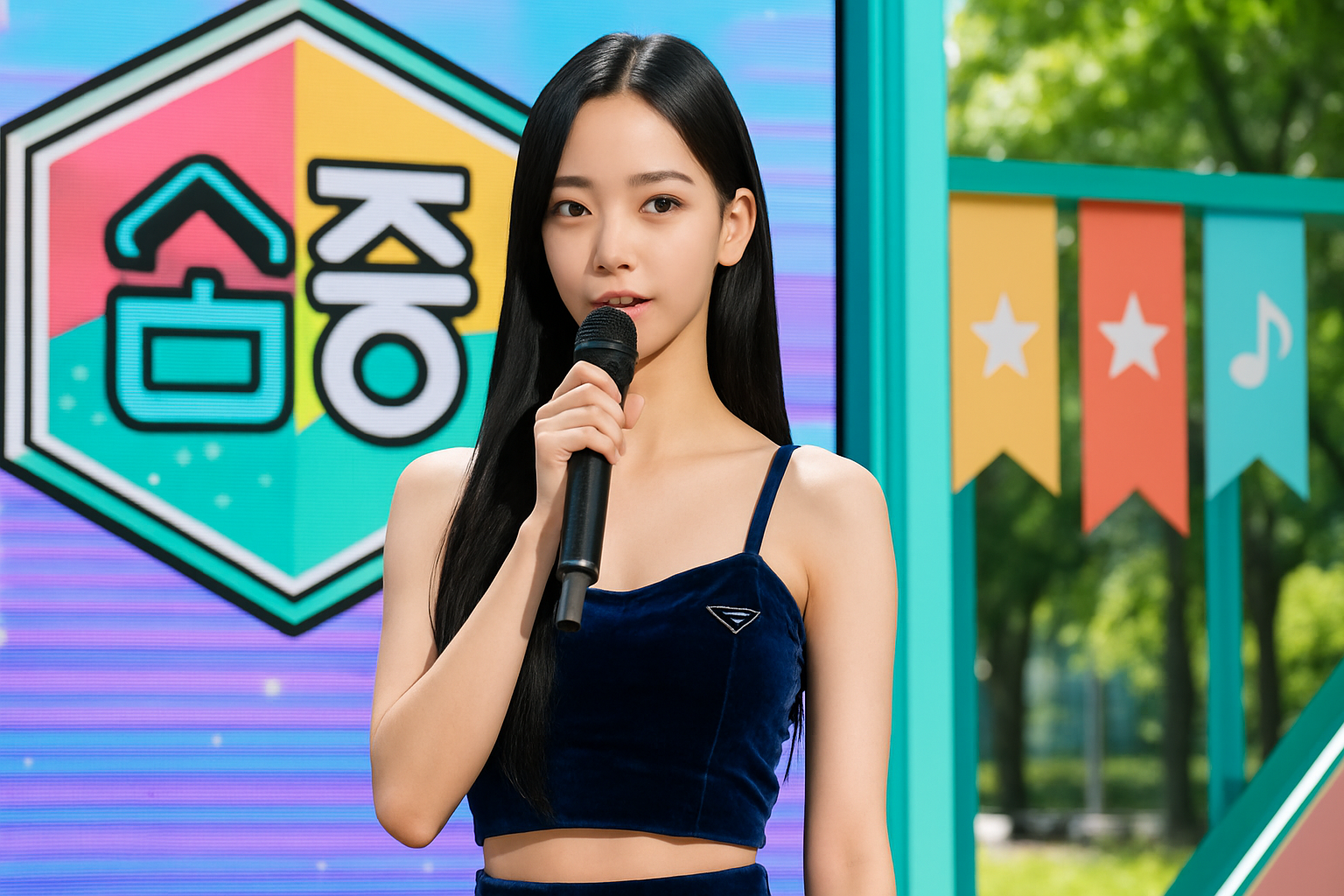
Lee Young-ji's situation immediately reignited conversations about Karina (Yoo Ji-min), a member of the globally popular K-pop girl group Aespa. On Tuesday — just one day before the June 3 elections — Karina uploaded a series of Instagram photos wearing a bright blue sleeveless top and, in some images, blue contact lenses. The Democratic Party's color is blue, and the timing of the post was not lost on South Korean internet users.
Online reactions were divided. Some felt that reading political meaning into a celebrity's clothing choice is a stretch, particularly when the outfit in question looked more like a stage costume than a deliberate political statement. Others, however, pointed to Karina's history as important context.
That history dates back to last year's presidential election period, when Karina posted a photo of herself wearing a red jacket with the number 2 on it. In that election cycle, both the color red and the number 2 were associated with the People Power Party, and the post triggered a wave of online debate and even drew commentary from political figures. Karina deleted the photo almost immediately and issued a public apology. Her agency, SM Entertainment, also released an official statement at the time.
As of the time of reporting, Karina's latest blue post remained online, and SM Entertainment had not issued any comment.
A Broader Debate About Celebrity Influence
So where does this leave us? The reactions to both Lee Young-ji and Karina reflect a genuine tension in South Korean society about the role of celebrities during election season. On one side, there are people who argue that holding public figures accountable for color choices is excessive and stifles normal self-expression. On the other, there are those who believe that celebrities — who command audiences of millions — carry a responsibility to be mindful of how their posts might be interpreted during politically sensitive periods.
It's worth noting that South Korea has some of the most engaged and politically aware fandoms in the world. K-pop fans in particular are known for analyzing every detail of an idol's public image, and that scrutiny doesn't switch off during election season. If anything, it intensifies.
In South Korea, public figures sometimes spark controversy simply with the hue of their clothing, accessories, emojis, or social media posts, which some people interpret as indirect political endorsements.
Lee Young-ji's decision to dye her hair back to black and apologize within a single day suggests that, at least for her, the pressure was too immediate to ignore. Whether that was the right call — or whether celebrities should feel compelled to make that call at all — is the question South Korean fans and commentators are still debating.
The Bigger Picture
What this moment really highlights is just how much political and cultural pressure exists around celebrity expression in South Korea, especially in the K-pop and K-hip-hop world. These are industries built on image management, and election season adds an entirely new layer of complexity to that.
For global fans watching from the outside, it can be easy to dismiss these controversies as overreactions. But understanding the color-coded political system in Korea, and the sheer scale of influence these artists wield, makes it clear why these moments generate such intense discussion — and why a single Instagram post can lead to a full hair color reversal by the next morning.
Meanwhile, life goes on for Aespa — the group recently dropped their second studio LP, "Lemonade," on May 29, featuring collaborations with artists including G-Dragon, Ty Dolla $ign, and Becky G. But for now, it's the color of Karina's top, not the tracklist, that has everyone talking.
This article is based on reports from Naver News, Koreaherald.