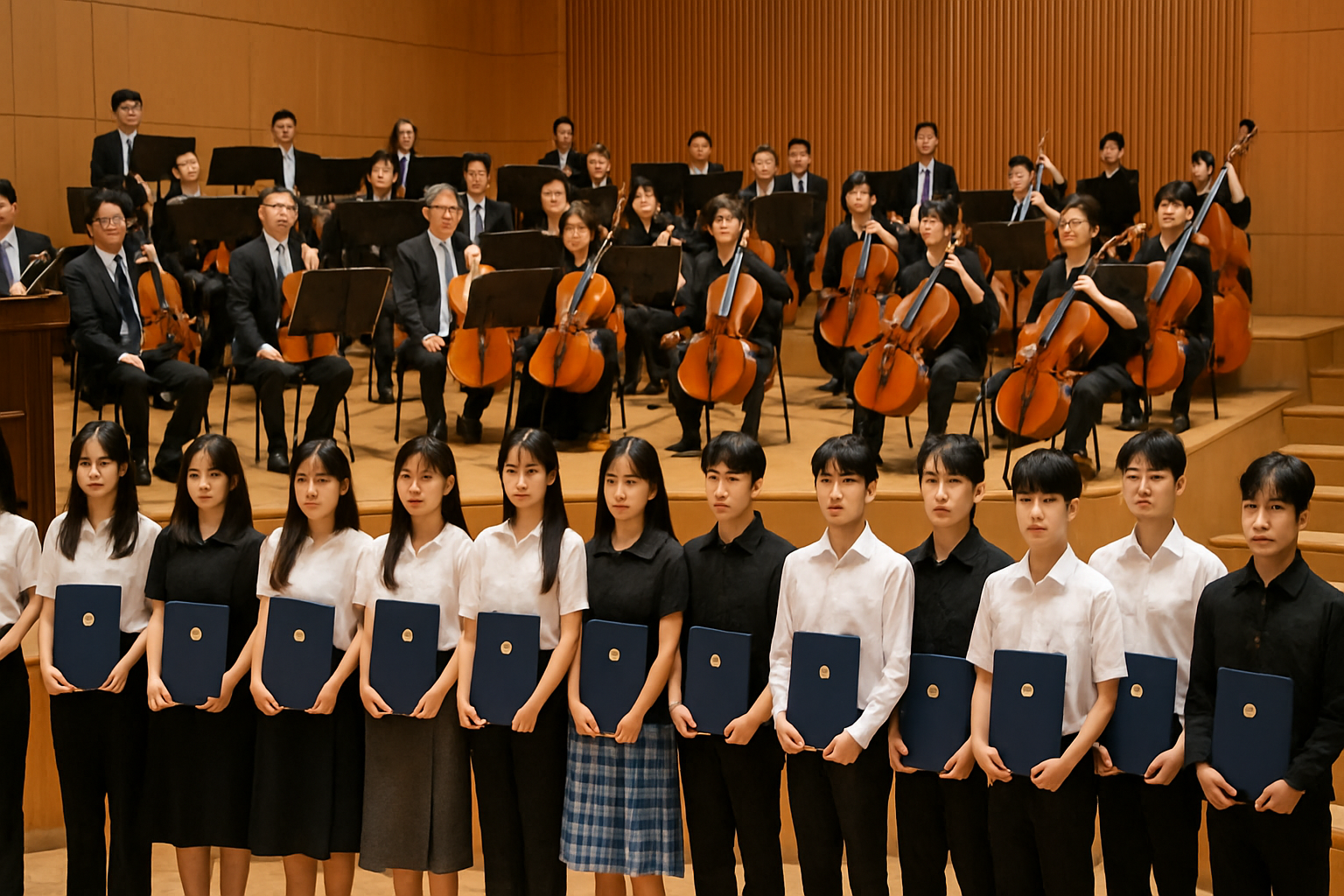
A Scholarship Ceremony With a Bigger Story Behind It
So here is a story that does not get told enough — a government-backed social enterprise quietly building a pipeline that takes kids from rural Korean villages all the way to music conservatories. On July 1st, the Korea Racing Authority Social Contribution Foundation held its "2026 KRA Social Contribution Foundation Music Talent Scholarship Ceremony," and the headline number is 19 students receiving university scholarships. But to really understand why that matters, you have to go back to 2011.
Meet KYDO — The Orchestra That Started It All
In 2011, the KRA Social Contribution Foundation launched a youth orchestra called KYDO, which stands for Korea Young Dream Orchestra. The idea was straightforward but genuinely ambitious: bring together talented young musicians from rural and fishing communities across Korea, give them a stage, give them training, and then make sure the story does not end when the concert does.
What is really interesting is how the foundation structured this as a long-term ecosystem rather than a one-off program. KYDO is not just a feel-good performance project — it is designed to be a feeder system. Students who spend at least a year actively participating in the orchestra become eligible for scholarships to pursue music at the university level. The logic being that rural students who already have the talent and the work ethic should not have their futures cut short simply because of where they grew up.
The Numbers From This Year's Ceremony
This year's scholarship ceremony delivered some concrete results worth walking through:
- 11 undergraduate students each received 1 million Korean won (roughly 730 USD) toward their tuition.
- 8 graduate students each received 2 million won (approximately 1,460 USD).
- One student received full support to study at an overseas music institution — a notable step up for the program.
- Among the 19 recipients, 7 students — 4 undergraduates and 3 graduate students — came directly from active KYDO membership, meaning they moved seamlessly from the orchestra stage into higher education with financial backing.
The foundation currently operates 12 regional KYDO ensembles across the country, steadily expanding access to rural and coastal youth who might otherwise have no structured path into professional music education.
Why This Matters Beyond the Music World
The KRA Social Contribution Foundation is the philanthropic arm of the Korea Racing Authority — the state-run organization that oversees horse racing in Korea. The fact that horse racing revenue is being channeled into rural arts education is not something that gets highlighted often, but it is a meaningful part of how Korea structures its public benefit obligations from state-owned enterprises.
What makes this particular program notable is that it is closing a loop that most arts support programs leave open. A lot of youth orchestra initiatives exist in Korea, but very few come with a built-in scholarship mechanism that explicitly tracks students from childhood participation all the way into college enrollment. This year's ceremony represents the first time the foundation has formally extended that pipeline to include graduate-level students heading to overseas programs — a signal that the scope of the initiative is growing.
"We hope these graduate students will become a source of pride by continuing their studies abroad and connecting globally," a KRA Social Contribution Foundation official said. "We will keep building this program so that rural youth can discover and develop their potential through music."
The Bigger Picture for Rural Arts Education in Korea
Korea's urban-rural divide in arts education is a well-documented challenge. Seoul and other major metropolitan areas have dense networks of private music academies, called hagwon, where students receive intensive individual instruction from an early age. In rural and fishing communities, that infrastructure simply does not exist at the same level. Programs like KYDO are designed to partially bridge that gap by bringing ensemble-based training directly to those communities — and now, by ensuring that students who show promise can afford to continue their education at the university level.
The foundation's approach of combining community orchestra participation with merit-based scholarships is relatively rare in Korea's arts support landscape, and this year's ceremony — with its first overseas scholarship recipient — suggests the model is maturing in a meaningful way.
This article is based on reports from Youngnong, Cstimes, Gukjenews.