A Startup Tackling One of Aviation's Biggest Blind Spots
So here's the thing about the future of flight — we are living through one of the most exciting periods in aviation history. Hundreds of companies worldwide are racing to build electric air taxis, personal flying vehicles, and next-generation aircraft. But there is a question that does not get nearly enough attention: before any of these aircraft carry a single passenger, how do you actually prove they are safe?
That is the problem a small but ambitious Korean deep-tech startup called FLYTO (플라이투, CEO Park Hae-jin) is setting out to solve — and they are doing it with a platform that combines real flight data, physics-based simulation engines, and 3D digital twin environments.
The Verification Gap Nobody Is Talking About
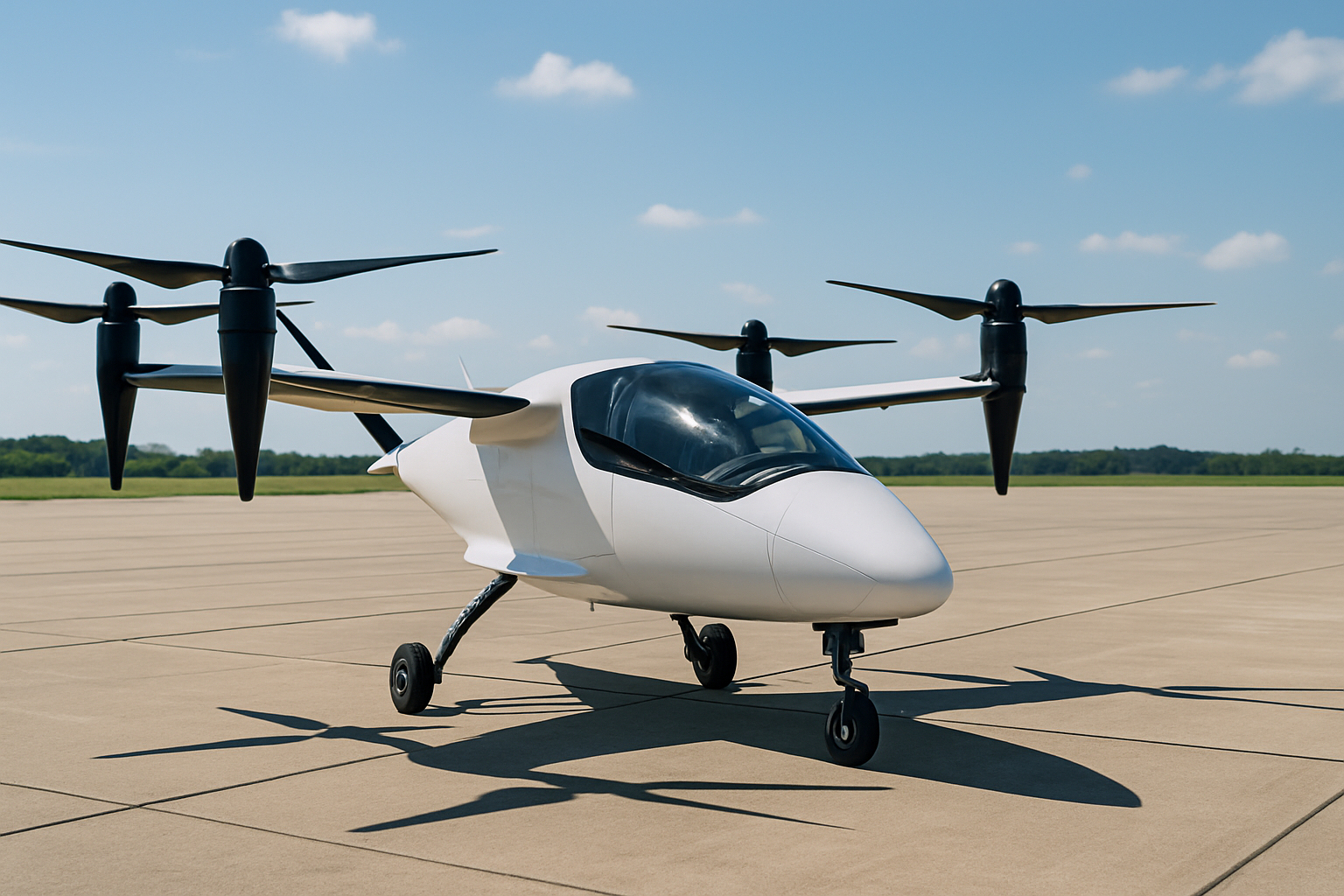
Here is some context that puts the scale of this challenge into perspective. Right now, more than 450 developers globally are working on over 1,100 different eVTOL — that stands for electric vertical takeoff and landing — concepts. Think of these as the electric air taxis you have probably seen in headlines. The Advanced Air Mobility, or AAM, market is projected to hit around 137 billion dollars by 2035. That is an enormous industry in the making.
But the verification infrastructure to support all of that innovation? It has not kept pace. A single real-world test flight in South Korea costs roughly 300 million Korean won — about 230,000 US dollars — and that is before you factor in the aircraft itself, the pilots, airspace clearance, insurance, an engineering team, and the right weather conditions. And if something goes wrong, you are looking at investigations, redesigns, and significant delays before you can fly again.
What's really interesting is that the industry does not just need more test flights. It needs a smarter way to validate aircraft before those expensive, high-stakes flights even happen.
What FLYTO Actually Does
FLYTO, founded in 2024 and headquartered at Incheon Startup Park, approaches this with a single integrated platform and what they call a unified verification workflow. The team brings over 20 years of combined aviation experience to the table, and their solution connects three core technologies.
- Real flight data collection: FLYTO developed their own Flight Data Acquisition Unit, which captures live data from actual aircraft — speed, attitude, altitude, control inputs, engine status, and more.
- Physics-based flight engine: That real-world data is then fed into a flight physics engine that models the unique characteristics of each specific aircraft type.
- 3D digital twin environment: Finally, operators can run simulated scenarios inside a detailed virtual recreation of terrains, cities, airports, and vertiports — the landing pads designed for air taxis.
The result is a system where engineers can test dozens or even hundreds of scenarios — urban low-altitude flight, emergency situations, route deviations, sudden weather changes, air traffic control delays, vertiport approaches — in a virtual environment before risking a single real flight. All of this is packaged under their core product, called VeriAero (베리에어로), which also generates traceable verification records, which is critical for regulatory certification processes.
From Concept to Real Customers — In One Year
Now, a lot of deep-tech startups have impressive technology decks but not much to show in terms of actual business. FLYTO is a notable exception. Within just one year of being founded, the company already hit approximately 300,000 US dollars in revenue — which, for a hardware and deep-tech company, is a meaningful early milestone.
Their customer list includes aviation training institutions like Korea National University of Transportation, where they supplied training simulators. They also delivered a Boeing 737NG operational check MRO simulator — MRO stands for Maintenance, Repair and Overhaul, the technical side of keeping commercial aircraft airworthy. Landing a Boeing-class project this early in a company's life is no small thing.
On the investment and IP side, FLYTO has secured 350,000 dollars in domestic seed funding, holds two registered patents with one more pending, one PCT international patent application, and one defense technology transfer. They are also certified under ISO 9001, 14001, and 45001 standards.
Going Global, One MOU at a Time
FLYTO is not staying domestic. The company has already signed memorandums of understanding with partners across five countries — the United States, India, Vietnam, the Philippines, and Hong Kong — covering areas from UAM flight simulation and eVTOL verification to aviation training and component co-development.
Their geographic strategy is pretty well thought out. The United States is their gateway to global credibility, specifically through FAA certification pathways. The Middle East and UAE are targeted as hubs for future mobility and smart city commercialization. And Southeast Asia, with its rapidly growing aviation training demand, is where they plan to expand their education-focused products.
In the US specifically, FLYTO is working with a partner called Peniel Infrastructure on UAM flight simulation and vertiport operations. They are also in talks with Dubai-based TRANSWORLD and China's Ruili Airlines for additional collaborations.
UKC 2026 and the Next Chapter
FLYTO was selected to participate in the Innovation and Entrepreneurship Symposium startup pitching competition at UKC 2026 — the US-Korea Conference organized by the Korean-American Scientists and Engineers Association, or KSEA — taking place in Orlando, Florida in August 2026. The conference is one of the most prominent platforms connecting Korean and American science and engineering communities, and it is a meaningful stage for a startup looking to establish credibility in the US market.
CEO Park Hae-jin, who joined the global media meetup at Incheon Startup Park on July 29 via video call due to an overseas schedule, was straightforward about what drives the company.
"Innovative aircraft are emerging rapidly, but the infrastructure to repeatedly verify their safety before commercial operation is lacking. We want to reduce development costs and risks by validating aircraft performance and operational safety in a virtual environment — based on real flight data — before a single actual flight takes place."
He added that the company's ambition goes well beyond being a domestic simulator supplier: "We aim to grow into a global AAM aviation simulation and verification platform company."
Why This Matters for the Future of Flight
The AAM industry tends to get a lot of coverage for the flashy hardware — the sleek electric aircraft renderings, the promises of urban air taxis by a certain year. What gets far less attention is the unglamorous but absolutely critical work of verification and safety validation. Regulators, insurers, and the flying public will ultimately demand rigorous proof before these vehicles go mainstream.
FLYTO is building exactly the kind of infrastructure that sits between a great engineering concept and a certified, commercially viable aircraft. And doing it from Korea — a country with a strong aviation manufacturing and training sector — gives them both the technical foundation and the proximity to some of Asia's fastest-growing aviation markets.
It is early days, but the foundation looks solid. Keep an eye on this one.
This article is based on reports from Naver News, Naver News, Kr.