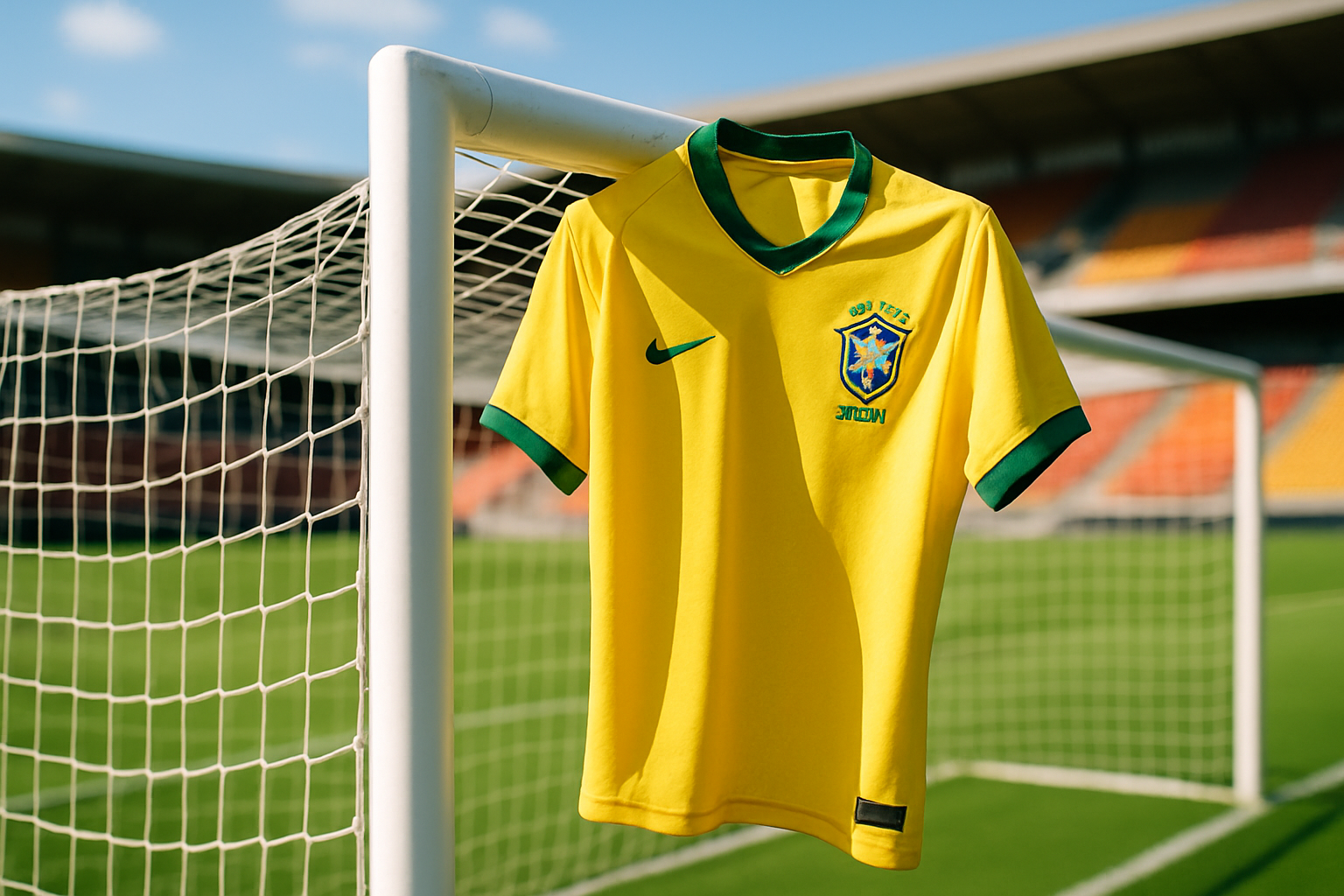
The Fall of Football's Most Storied Nation
So here's a story that football fans around the world are still processing. Brazil — the country that invented the beautiful game as the world knows it, the five-time World Cup champions, the nation that gave us Pelé, Ronaldo, and Ronaldinho — went out in the Round of 16 at the North and Central America World Cup, beaten by Norway. And just like that, their World Cup drought stretched to 28 years and counting.
The loss on July 6th sent shockwaves through the global football community, and major sports outlets everywhere have been asking the same uncomfortable question: what on earth happened to Brazil?
The Superstar Problem
The British newspaper The Times put it bluntly — Brazil simply has no superstar. And when you look at the teams that have been thriving at this tournament, that point hits hard. Think about it: Argentina has had Lionel Messi. France has had Kylian Mbappé. Norway, the very team that knocked Brazil out, has Erling Haaland. England has Harry Kane. These are players who don't just perform — they elevate everyone around them and make their teams believe.
Brazil? The Times argues that the last player to truly fill that role was Ronaldo — the original, the Phenomenon — back in 2002. That's over two decades without a genuine talisman. And in modern football, that's an eternity.
"Successful teams have iconic players who inspire their teammates, like Messi for Argentina and Mbappé for France. Brazil has had no such player since Ronaldo in 2002." — The Times
American outlet Sports Illustrated added more detail to the picture. They pointed to Casemiro, Brazil's 34-year-old central midfielder, as a player clearly past his peak. And beyond that, they noted there was simply no reliable number-nine striker — no clinical forward to step up and be the difference-maker when it counted most.
Neymar's Painful Cameo
Now, you cannot talk about Brazil's failure without addressing Neymar. Coach Carlo Ancelotti — yes, the legendary Italian manager who took the Brazil job — made the bold call to bring Neymar to this World Cup instead of João Pedro, who had scored 23 goals for Chelsea last season. It was a sentimental decision, and it backfired spectacularly.
Neymar, hampered by injury, played just 37 minutes across the entire tournament. He scored once — a penalty — and that was it. When Brazil were eliminated, he wept. But less than a week later, he was photographed at a poker tournament in Las Vegas, which, as you can imagine, did not go over well back home.
What's really interesting is how this episode captures a broader criticism that has followed Brazil's players for years: a perceived lack of professionalism and work ethic. Brazilian football analyst Benjamin Bach put it sharply, saying Brazil should have shown even just twenty percent of the fighting spirit Argentina displayed when they came from 0-2 down to beat Egypt 3-2. Against Norway in the second half, trailing and seemingly resigned to their fate, Brazil recorded just 34 percent ball possession — the lowest figure for a Brazilian World Cup side since 1966.
Joga Bonito Is Missing — And Here's Why
Here's where the story gets really fascinating, and a little sad. Brazil's football identity has always been built around what they call "Joga Bonito" — literally "play beautifully." It's that expressive, creative, dribble-heavy style that once made Brazil must-watch television at every World Cup. But analysts argue that style has been quietly dying for years.
The Times identifies the root cause as early emigration. Previous generations of Brazilian stars — Ronaldo, Ronaldinho, Rivaldo — developed their skills in Brazil's domestic league first, mastering their craft before heading to Europe. Today's teenagers are leaving for European clubs before they've fully developed. And once they're in the European system, which prizes passing, structure, and collective organization over individual flair, that distinctly Brazilian magic gets coached out of them.
A System in Disarray
Beyond individual talent, Brazil's football infrastructure has been crumbling for years. The Brazilian Football Confederation has had eight different presidents since a corruption scandal forced one out in 2012. The national team has gone through four managers in just four years. For context, France suffered World Cup heartbreak, overhauled their entire system, and came back stronger — they're in the semifinals of this tournament. Brazil, meanwhile, rested on the laurels of past glory.
There is no nationwide academy system in Brazil. There are no mandatory youth development standards. The country that once produced the greatest players in history is now operating without the structural foundations that modern football powerhouses consider basic requirements.
And then there's the broader social picture. Historically, Brazil drew on waves of African and European immigrants to widen its talent pool. Today, immigrants make up less than one percent of Brazil's population. Compare that to France at 14 percent and England at 17 percent — both of whom are still competing deep into this tournament.
Brazilian outlet Meia Hora summed it up on their front page with a headline that stung: "Brazil's golden World Cup eras ended with Garrincha, then Pelé, then Romário, then Ronaldo."
A Warning for Others — Including South Korea
Brazil's story carries a lesson that extends beyond South America. South Korean football experts have drawn uncomfortable parallels to their own national setup. South Korea has been fortunate to have genuinely world-class players in Son Heung-min, the Tottenham Hotspur captain widely considered one of the best players of his generation, and Lee Kang-in, the creative Paris Saint-Germain midfielder. But the concern is that Korean football has leaned too heavily on those individual talents rather than building a sustainable system beneath them.
Critics have pointed to the MIK — "Made In Korea" — football philosophy, which emphasizes speed and aggression, as a slogan that has remained disconnected from grassroots reality. If Brazil's collapse teaches us anything, it's that past greatness and catchy football philosophies are no substitute for genuine structural investment, consistent leadership, and a clear development pathway for the next generation.
Brazil will regroup. They always do. But whether they can find their next Ronaldo — or whether that era of Brazilian football truly is over — is a question the football world will be debating for a long time to come.
This article is based on reports from Kado, Naver News, Joongang.