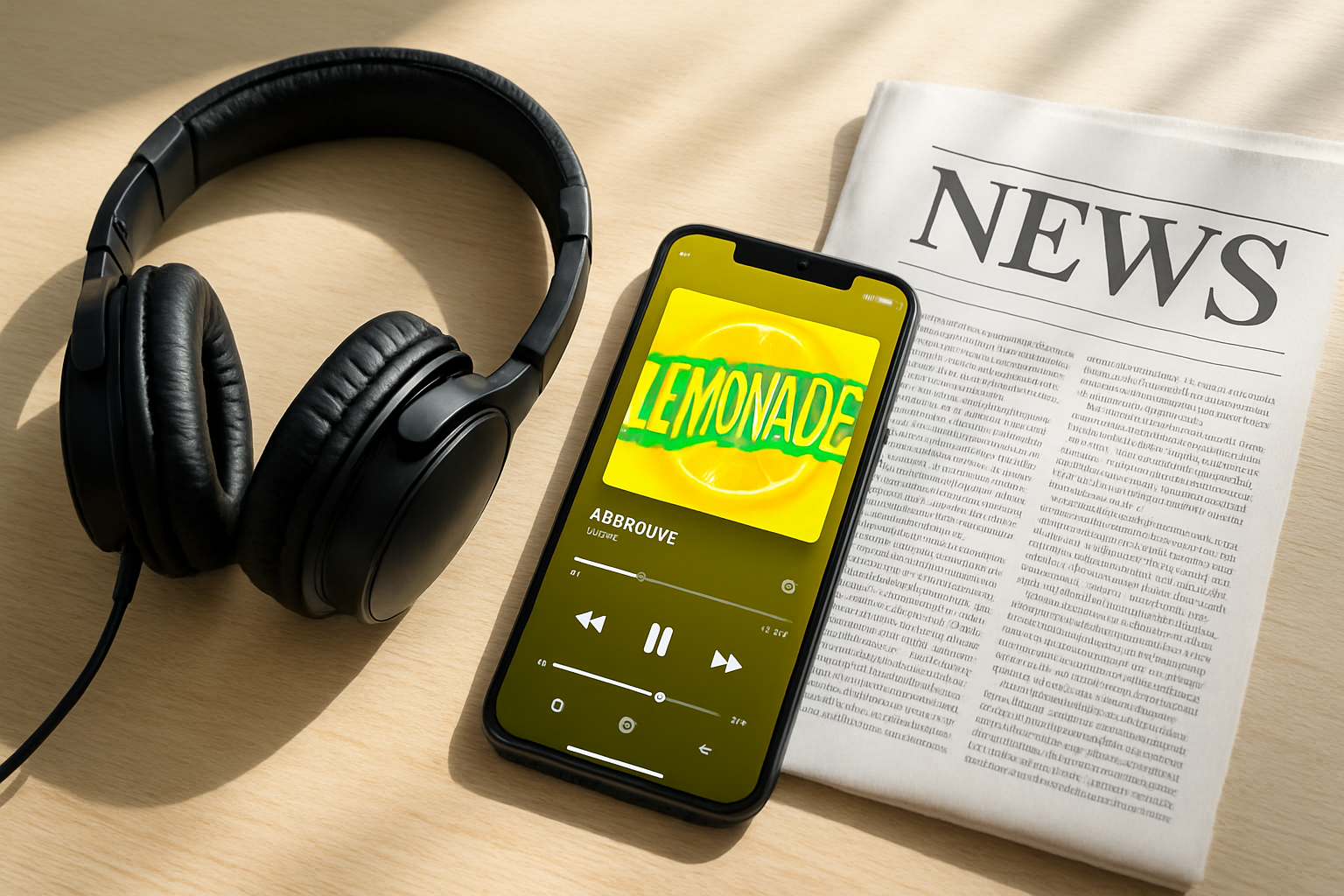
When K-Pop Meets the Singularity
Futurist Ray Kurzweil once wrote about "the singularity" — the moment when technological progress transcends biological limits and everything changes forever. It's a bold reference point, but here's the thing: if you've been following aespa lately, it actually fits. With the release of their second studio album LEMONADE, the four-member SM Entertainment group — Karina (Yoo Ji-min), Winter (Kim Min-jeong), Giselle (Uchinaga Aeri), and Ningning (Ning Yizhuo) — hasn't just dropped a new record. They've crossed a threshold.
What's really interesting is how far their artistic universe has evolved since their 2020 debut. Back then, aespa's concept was already unlike anything else in K-pop: each member exists alongside a digital alter-ego called an "æ" (pronounced "ae"), blurring the lines between the real and the virtual. It was provocative, futuristic, and genuinely unlike anything the industry had seen. But LEMONADE takes that foundation and builds something far more philosophically layered on top of it.
From Digital Doubles to a Full Multiverse
The album operates within what aespa calls "Chapter 3: Complexity," a narrative chapter in their ongoing lore involving the concept of "cracks" — fractures between the real world and the virtual one. So here's the thing about what makes this narrative so compelling: the group doesn't treat these fractured, alternate versions of the self as threats to be feared or enemies to be defeated. Instead, they face them head-on.
The album poses a genuinely interesting philosophical question: if a perfect copy of you were created — same consciousness, same memories — but then placed in a completely different environment from that moment forward, would they still be you? aespa's answer, woven through the music and the storytelling, is a resounding and graceful "no." And rather than finding that unsettling, the group frames it as a reason for growth. The fractures in their universe become the engine of their evolution, not the cause of their undoing.
This is a mature, nuanced form of storytelling that goes well beyond the typical K-pop "concept album." It's the kind of narrative depth that earns genuine critical attention — and clearly, it's resonating with audiences worldwide.
The Sound of "Sour Metal" Gone Sweet
Musically, LEMONADE is aespa doing something they haven't done quite like this before. Long known for their signature "metallic" sonic identity — a cold, weighty, industrial edge that fans affectionately call "쇠맛" (roughly translated as "iron taste" or "metal flavor") — the group has dialed in something new here: a sweet-and-sour dimension that makes the familiar feel fresh.
The title track "LEMONADE" is built around a defiant, empowering metaphor: life throws you lemons, and aespa's response is to grind them up and drink the whole thing with a grin. The production leans on heavy basslines and synth-wave direction, while prioritizing clap sounds over traditional drum patterns — a rhythmic choice that gives the whole track an infectious, cocky swagger.
The album's guest features are genuinely impressive. Latin pop star Becky G (Rebbeca Marie Gomez) appears on a special version of "LEMONADE," and the collision between her powerful rap delivery and aespa's chant-heavy vocal style creates a texture that feels wholly new. It's not a simple feature — it's a real creative clash that generates something unexpected.
Then there's "WDA (Whole Different Animal)," a pre-release track featuring G-DRAGON (Kwon Ji-yong) — a solo artist and former member of legendary Korean group BIGBANG, who is widely considered one of the most influential figures in K-pop history. His presence here, layered over an industrial hip-hop beat, amplifies the album's themes of fractured identity to an almost unsettling degree. It's one of the most talked-about collaborations on the record.
American R&B artist Ty Dolla $ign (Tyrone William Griffin Jr.) also appears on "Switchblade," a track that uses the metaphor of a folding knife to describe flexible strength — and it works. Rounding things out is "'Til We Die," a pop-rock number that showcases just how wide aespa's genre range actually is.
aespa in the City: Taking the Lemonade to the Streets
The album's release wasn't confined to streaming platforms and music show stages. In Seoul's Yeouido Hangang Park — a popular riverside public space in the heart of the city — SM Entertainment installed a large-scale interactive pop-up installation themed around "LEMONADE." Passersby could walk up, touch the installation, and watch aespa appear from behind a giant lemon. No ticket required. No fan club membership needed. Just curiosity.
Nearby shopping centers expanded the experience further, with world-building spaces and dedicated listening zones. The reaction from both fans and general public was telling.
"When people see something this large and vibrant, they get curious — they wonder what this project is about, and then they might listen to the music and become fans," said one visitor at the installation.
"It's an open space, and it felt like it could really appeal to foreigners too. It made me feel like aespa really is a global idol group now," said another.
This kind of city-as-stage approach is becoming a hallmark of top-tier K-pop rollouts. BLACKPINK partnered with the National Museum of Korea for a new release, and BTS turned Seoul landmarks and Las Vegas into full cultural experiences. aespa is now firmly in that conversation.
The Charts Are Listening
Critical acclaim and creative ambition are great — but the numbers are backing them up. "LEMONADE" debuted at number 95 on the UK Official Singles Chart (covering the chart week of May 5–11), marking aespa's first-ever entry on that chart. For a K-pop group to debut on the UK singles chart at all is significant; for a group doing it for the first time with their second studio album's title track, it signals genuine global traction.
On the American side, the album LEMONADE is projected to enter the top 10 of the Billboard 200 — the main US album chart — on the chart dated June 13. If that happens, it will be aespa's third time in the Billboard 200 top 10, cementing their status as one of the very few K-pop acts capable of that kind of sustained Western chart performance.
Three Axes, One Unstoppable Group
There's a compelling way to think about what makes aespa work as a cultural force, and it maps neatly onto a three-dimensional coordinate system. The X-axis is their concept — endlessly evolving, always original, never repeating themselves. The Y-axis is the members themselves: four performers who bring genuine agency and presence to every piece of the narrative, making the abstract feel real. And the Z-axis? That's "MY" — the name of aespa's fandom — an audience that doesn't just consume the lore, but actively interprets, debates, and expands it.
As long as all three of those dimensions are in balance, aespa doesn't just participate in the K-pop landscape. They anchor it.
So here's where we land: aespa took the sourest lemons the industry could offer — sky-high expectations, a wildly complex concept that could have collapsed under its own weight, and a global market that doesn't always reward ambition — and they made something genuinely remarkable out of it. LEMONADE isn't just a good K-pop album. It's a statement about what the genre can be when a group commits fully to its own vision and has the talent to back it up.
This article is based on reports from Newsis, Mt, Yonhapnewstv.