A Declassified Report That Could Change the Conversation
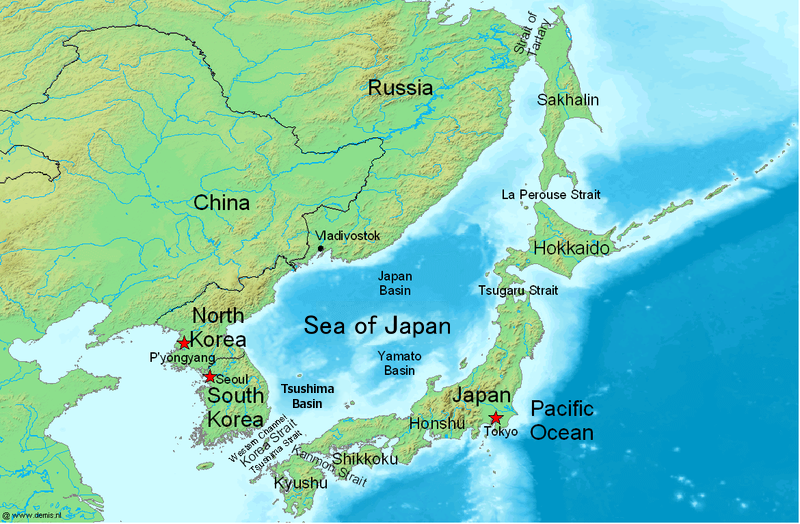
So here's the thing — when it comes to the long-running territorial dispute over Dokdo, a small rocky island cluster in the East Sea claimed by both South Korea and Japan, new historical evidence doesn't come along very often. But when it does, it matters. And a document just brought to light by South Korean researchers may be one of the most significant finds in years.
The Northeast Asian History Foundation, a South Korean research institution, announced on July 7th that it has uncovered a declassified U.S. military intelligence report from 1948 that explicitly describes Dokdo — referred to in Western historical documents as "Liancourt Rocks" — as "a part of Korea." This is the first time a document of this kind has been confirmed, and it's already making waves in diplomatic and academic circles.
What the Document Actually Says
The report in question is a 222-page classified investigation file compiled by the U.S. Far East Air Forces (FEAF) on June 24, 1948. It was discovered at the U.S. National Archives and Records Administration (NARA) by Jeon Gap-saeng, a research professor at Sungkonghoe University's East Asian Research Institute, who recently donated a copy to the Foundation.
The document was originally written to investigate a serious incident: on June 8, 1948, U.S. military aircraft used Dokdo as a bombing practice target, killing and injuring dozens of Korean fishermen who were working in the area at the time. The subsequent investigation report — meant to explain how this tragedy happened — ended up containing a remarkably candid admission.
"Although it was clearly established in September 1947 that Liancourt Rocks was a part of Korea, it is evident that this never became common knowledge, and the island was perceived as belonging to Japan."
What's really interesting is that the report doesn't just acknowledge Dokdo's Korean status in passing — it frames the bombing incident partly as a consequence of internal miscommunication within U.S. forces, stemming from incorrect assumptions that the island was Japanese territory.
Why This Matters for the Ongoing Dispute
To understand why this document is significant, you need a bit of background on how Japan has historically framed its claim to the island. Japan has long pointed to the 1951 San Francisco Peace Treaty — the agreement that formally ended World War II in the Pacific — as evidence that the United States recognized Dokdo as Japanese territory. The treaty's list of islands to be returned to Korea did not explicitly include Dokdo, and Japan argues this omission was intentional.
Japan has also cited two key diplomatic documents from the negotiation process: the 1949 Sebald Proposal, in which U.S. diplomat William Sebald suggested Dokdo be recognized as Japanese, and the 1951 Rusk Letter, in which U.S. official Dean Rusk indicated the U.S. did not believe Dokdo was Korean territory. These documents have been central to Japan's argument for decades.
But here's where the 1948 FEAF report becomes a game-changer. Hong Seong-geun, director of the Dokdo Research Division at the Northeast Asian History Foundation, argues that this newly confirmed document fundamentally reframes those later communications.
"The Sebald Proposal and the Rusk Letter, which were used to argue that Dokdo is Japanese territory, are merely evidence of a temporary distortion of the United States' established understanding that Dokdo is Korean land."
In other words, the 1948 document suggests that the U.S. military's baseline position — before any diplomatic wrangling — was that Dokdo belonged to Korea. The subsequent documents that Japan relies on, according to this interpretation, represent a deviation from that established view, not a definitive U.S. policy position.
The Bigger Picture
Dokdo is currently administered by South Korea, which maintains a small police detachment on the islands. Japan, however, continues to formally claim the islands as "Takeshima" and includes them in its official territorial maps and school textbooks — a recurring source of friction between the two neighboring countries.
The discovery of this 1948 report adds a new primary source to a debate that has largely been fought over the same set of documents for decades. Whether it will shift Japan's official position is unlikely in the near term — territorial disputes rarely move that quickly — but it does give South Korean scholars and diplomats a powerful new piece of evidence to reference in ongoing historical and legal arguments.
The Northeast Asian History Foundation has indicated it plans to continue researching the document and its implications. For now, the 222 pages sitting in the U.S. National Archives have added a compelling new chapter to one of Northeast Asia's most enduring territorial controversies.
This article is based on reports from Joongang, Jnilbo, Gukjenews.